THE ADVENTURE COLLECTIVE® · Independent discovery and booking for outdoor travel

A six-day private circuit from Delhi to Agra, Jaipur and Pushkar that pairs sunrise at the Taj with Rajput forts and Pushkar’s holy lake. Expect early starts, private AC transport, and cultural highlights with practical accessibility on many stops.
A six-day private circuit from Delhi to Agra, Jaipur and Pushkar that pairs sunrise at the Taj with Rajput forts and Pushkar’s holy lake. Expect early starts, private AC transport, and cultural highlights with practical accessibility on many stops.
You step out of the car into a dawn that softens marble into buttery pink—Taj Mahal at sunrise lives up to the quiet promise. The road that connects Delhi, Agra, Jaipur and Pushkar keeps changing pace: from the clamour of Chandni Chowk to the fortress-lined highways, to the quieter ghats of Pushkar where evening lamps bob on the lake.
Verified experiences and guided adventures in the surrounding area.
Operated by TOURS ON DEMANDS · New Delhi, Delhi
You step out of the car into a dawn that softens marble into buttery pink—Taj Mahal at sunrise lives up to the quiet promise. The road that connects Delhi, Agra, Jaipur and Pushkar keeps changing pace: from the clamour of Chandni Chowk to the fortress-lined highways, to the quieter ghats of Pushkar where evening lamps bob on the lake.
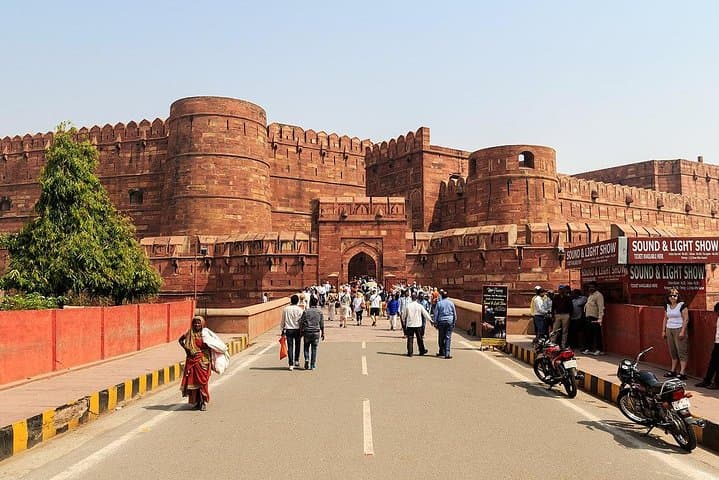
This route traces Mughal ambition and Rajput craft. Humayun’s Tomb and Qutub Minar speak to early Mughal experimentation in stone; Agra Fort and the Taj are later, lavish expressions of empire. Jaipur’s planned streets and the Amber Fort’s ramparts reflect Rajput court culture, while Pushkar’s Brahma Temple and the lake carry layers of pilgrimage and trade. Geologically the region is broad alluvial plain—rivers like the Yamuna shaped settlement patterns and views across low horizons.
Expect a travel rhythm of early starts, museum and monument checkpoints, and several drives of 3–4 hours between cities. The tour includes private AC transport, English-speaking guides in Jaipur and Agra, and breakfast on most mornings; many sites require modest dress and steady footing on steps and uneven courtyards. Pushkar’s ghats invite softer pacing—bring binoculars for migratory birds.
Practical tips: plan the Taj for sunrise (the itinerary notes a 5:45 a.m. visit), carry photocopies of ID for entry, and keep cash for small market buys. Mobility options are good—transport and several areas are wheelchair accessible—but historic sites often have stairs. Hydrate in summer, layer for winter mornings, and allow extra time for security checks at major monuments.
easy.
6 days (daily touring with 3–5 hour drives).
Suitable for travelers of average fitness; expect walking on uneven stone, stairs and short climbs at forts and palaces.
Yes—this itinerary schedules a sunrise visit to the Taj Mahal (noted at 5:45 a.m.). Exact entry time depends on seasonal sunrise and ticket availability.
The tour notes wheelchair-accessible transport and many public surfaces, but historic monuments often have steps—check ahead for site-specific access and assistance.
Breakfast is included on most mornings (five breakfasts listed); other meals are not routinely provided so plan accordingly.
Typical drives are approximately 3–4 hours (Delhi to Agra ~3–4 hrs; Agra to Jaipur via Fatehpur Sikri ~4–5 hrs; Jaipur to Pushkar ~2–3 hrs), depending on traffic.
The route follows major Mughal centers—Humayun’s Tomb and Agra Fort predate the Taj and show the evolution of Mughal architecture; Pushkar hosts one of the few Brahma temples, making it a rare pilgrimage stop.
These sites face wear from heavy visitation—stick to marked paths, avoid touching inlaid stone, and minimize single-use plastics in markets and ghats.
TOURS ON DEMANDS operates guided outdoor trips and adventures with an emphasis on safety, stewardship, and memorable experiences.



You step out of the car into a dawn that softens marble into buttery pink—Taj Mahal at sunrise lives up to the quiet promise. The road that connects Delhi, Agra, Jaipur and Pushkar keeps changing pace: from the clamour of Chandni Chowk to the fortress-lined highways, to the quieter ghats of Pushkar where evening lamps bob on the lake.
You step out of the car into a dawn that softens marble into buttery pink—Taj Mahal at sunrise lives up to the quiet promise. The road that connects Delhi, Agra, Jaipur and Pushkar keeps changing pace: from the clamour of Chandni Chowk to the fortress-lined highways, to the quieter ghats of Pushkar where evening lamps bob on the lake.
This route traces Mughal ambition and Rajput craft. Humayun’s Tomb and Qutub Minar speak to early Mughal experimentation in stone; Agra Fort and the Taj are later, lavish expressions of empire. Jaipur’s planned streets and the Amber Fort’s ramparts reflect Rajput court culture, while Pushkar’s Brahma Temple and the lake carry layers of pilgrimage and trade. Geologically the region is broad alluvial plain—rivers like the Yamuna shaped settlement patterns and views across low horizons.
Expect a travel rhythm of early starts, museum and monument checkpoints, and several drives of 3–4 hours between cities. The tour includes private AC transport, English-speaking guides in Jaipur and Agra, and breakfast on most mornings; many sites require modest dress and steady footing on steps and uneven courtyards. Pushkar’s ghats invite softer pacing—bring binoculars for migratory birds.
Practical tips: plan the Taj for sunrise (the itinerary notes a 5:45 a.m. visit), carry photocopies of ID for entry, and keep cash for small market buys. Mobility options are good—transport and several areas are wheelchair accessible—but historic sites often have stairs. Hydrate in summer, layer for winter mornings, and allow extra time for security checks at major monuments.