THE ADVENTURE COLLECTIVE® · Independent discovery and booking for outdoor travel

A compact six-day circuit from Delhi that pairs the Golden Triangle’s Mughal and Rajput highlights with Udaipur’s lake-palaces. Expect early starts, long drives and concentrated cultural sightseeing balanced by quiet evenings in Udaipur.
A compact six-day circuit from Delhi that pairs the Golden Triangle’s Mughal and Rajput highlights with Udaipur’s lake-palaces. Expect early starts, long drives and concentrated cultural sightseeing balanced by quiet evenings in Udaipur.
You step out before dawn, the air in Delhi still cool as the car eases away from the city lights toward Agra. By the time the first sun-sliver hits the Taj’s marble, the monument shifts from shadow to luminous; the crowd hushes and a day of layered histories begins.
Verified experiences and guided adventures in the surrounding area.
Operated by Limra Holiday · New Delhi, Delhi
You step out before dawn, the air in Delhi still cool as the car eases away from the city lights toward Agra. By the time the first sun-sliver hits the Taj’s marble, the monument shifts from shadow to luminous; the crowd hushes and a day of layered histories begins.
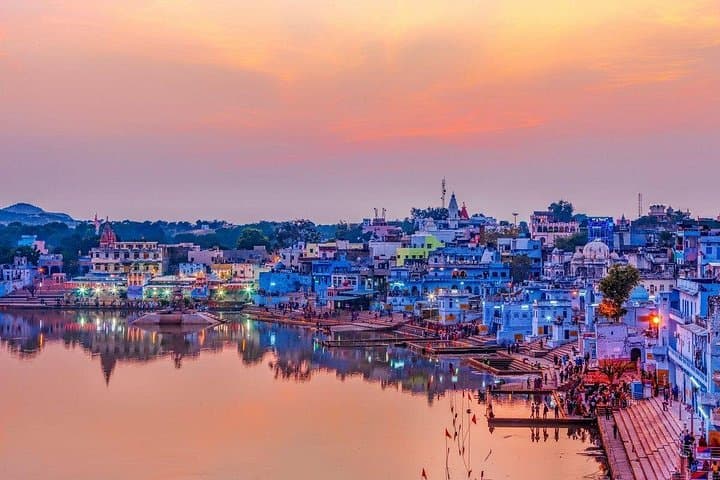
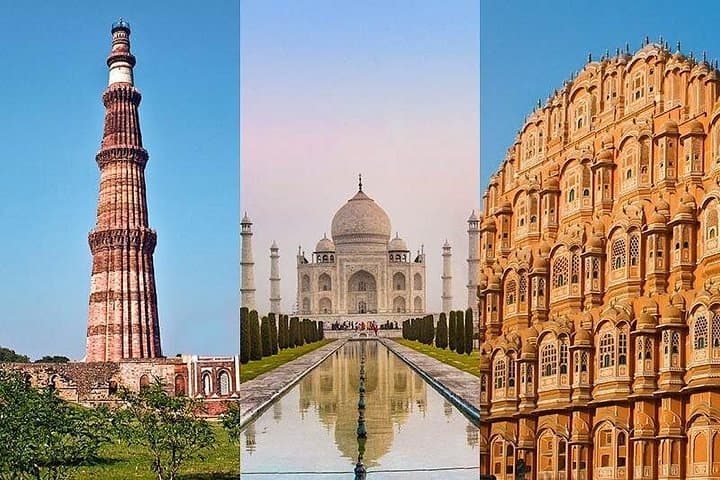
This six-day loop traces three imperial chapters of northern India and adds Udaipur’s lakeside calm. Delhi’s Mughal and colonial markers — Jama Masjid, Qutub Minar, Humayun’s Tomb — give way to Agra’s Taj Mahal and Agra Fort, monuments built from grief and empire. Fatehpur Sikri shows Akbar’s short-lived capital, its sandstone plazas still holding the desert’s heat. Jaipur’s city planning and observatory recall Rajput courtcraft and early modern astronomy; Udaipur closes the trip with palace façades dropping to Lake Pichola and the Aravalli ridgeline watching over the valley.
Expect long daytime drives (Delhi–Agra ≈3–4 hrs, Agra–Jaipur ≈4–5 hrs, Jaipur–Udaipur ≈8–9 hrs) and concentrated walking on uneven, paved surfaces. Cultural rhythms matter: modest dress at temples, quieter voices inside mausoleums, and bargaining in bazaars like Chandni Chowk.
Practical edge: sunrise at the Taj avoids heat and crowds; carry a refillable water bottle, a sun hat, and shoes that handle both polished marble and dusty lanes. Schedule slower afternoons in Udaipur for lake views and to recover between transit days. With basic mobility and patience for traffic, the route delivers architecture, courtly stories, and a clear sense of how landscape and power shaped Rajasthan and northern India.
moderate.
6 days (approx. 48–60 hours of touring).
Light to moderate fitness for walking and steps; ability to handle multi-hour drives and short hikes to viewpoints.
Yes — this package lists all entrance and monument tickets as included for sites on the itinerary.
Yes — a luxury air-conditioned car and scheduled drives between Delhi, Agra, Jaipur and Udaipur are provided as part of the tour.
Expect moderate walking at heritage sites: paved courtyards, steps and some uneven paths; comfortable shoes and a steady pace make days manageable.
The operator notes it is not recommended for travelers with serious spinal, cardiovascular conditions or pregnancy; consult them before booking for accessibility specifics.
The route threads Mughal-era constructions (16th–17th centuries) with Rajput palaces and planned cities — Jaipur itself was one of the subcontinent’s earliest planned capitals, founded in 1727.
High visitor numbers strain monuments and water resources; stick to marked paths, avoid littering and support local conservation fees or heritage guides when offered.
Limra Holiday operates guided outdoor trips and adventures with an emphasis on safety, stewardship, and memorable experiences.
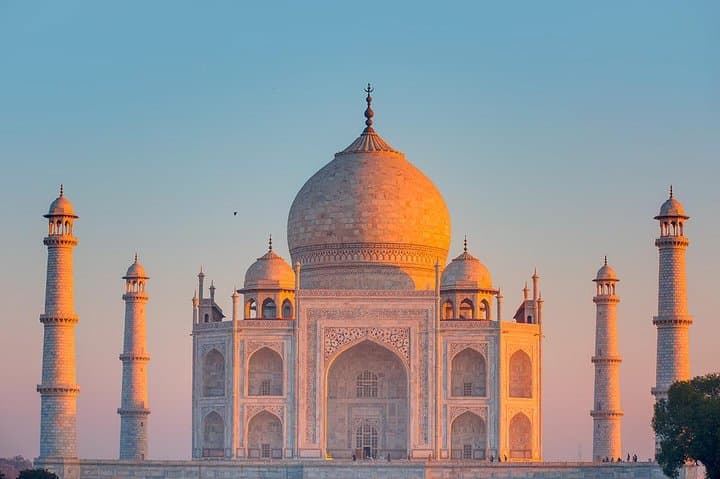
You step out before dawn, the air in Delhi still cool as the car eases away from the city lights toward Agra. By the time the first sun-sliver hits the Taj’s marble, the monument shifts from shadow to luminous; the crowd hushes and a day of layered histories begins.
You step out before dawn, the air in Delhi still cool as the car eases away from the city lights toward Agra. By the time the first sun-sliver hits the Taj’s marble, the monument shifts from shadow to luminous; the crowd hushes and a day of layered histories begins.
This six-day loop traces three imperial chapters of northern India and adds Udaipur’s lakeside calm. Delhi’s Mughal and colonial markers — Jama Masjid, Qutub Minar, Humayun’s Tomb — give way to Agra’s Taj Mahal and Agra Fort, monuments built from grief and empire. Fatehpur Sikri shows Akbar’s short-lived capital, its sandstone plazas still holding the desert’s heat. Jaipur’s city planning and observatory recall Rajput courtcraft and early modern astronomy; Udaipur closes the trip with palace façades dropping to Lake Pichola and the Aravalli ridgeline watching over the valley.
Expect long daytime drives (Delhi–Agra ≈3–4 hrs, Agra–Jaipur ≈4–5 hrs, Jaipur–Udaipur ≈8–9 hrs) and concentrated walking on uneven, paved surfaces. Cultural rhythms matter: modest dress at temples, quieter voices inside mausoleums, and bargaining in bazaars like Chandni Chowk.
Practical edge: sunrise at the Taj avoids heat and crowds; carry a refillable water bottle, a sun hat, and shoes that handle both polished marble and dusty lanes. Schedule slower afternoons in Udaipur for lake views and to recover between transit days. With basic mobility and patience for traffic, the route delivers architecture, courtly stories, and a clear sense of how landscape and power shaped Rajasthan and northern India.