THE ADVENTURE COLLECTIVE® · Independent discovery and booking for outdoor travel

A six-day private circuit from Delhi to Agra and Jaipur with a dry-forest safari at Ranthambore. This itinerary pairs world-class Mughal and Rajput monuments with early-morning wildlife drives — ideal for travelers who want culture and big-cat sightings in one trip.
A six-day private circuit from Delhi to Agra and Jaipur with a dry-forest safari at Ranthambore. This itinerary pairs world-class Mughal and Rajput monuments with early-morning wildlife drives — ideal for travelers who want culture and big-cat sightings in one trip.
You step out of the air-conditioned car into Delhi’s morning light: honking rickshaws, the fragrance of chai, and the red stone of Mughal gates rising above traffic. Over six days the route opens like a map turned real — imperial Delhi, the pink city of Jaipur, the scrub forest of Ranthambore where tiger territory still holds, and finally Agra’s marble dusk at the Taj.
Verified experiences and guided adventures in the surrounding area.
Operated by Unseen Tours and Travels · New Delhi, Delhi
You step out of the air-conditioned car into Delhi’s morning light: honking rickshaws, the fragrance of chai, and the red stone of Mughal gates rising above traffic. Over six days the route opens like a map turned real — imperial Delhi, the pink city of Jaipur, the scrub forest of Ranthambore where tiger territory still holds, and finally Agra’s marble dusk at the Taj.
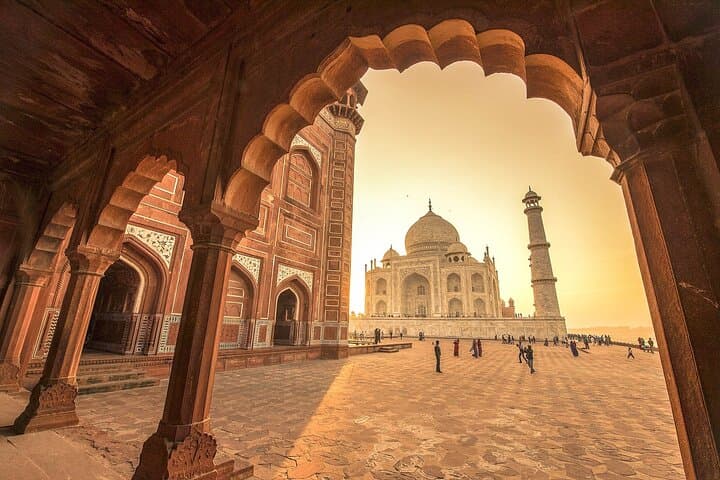
This loop stitches together Mughal and Rajput histories: Shah Jahan’s Red Fort and Jama Masjid in Delhi, Sawai Jai Singh’s planned streets in Jaipur, the 16th-century camp town of Fatehpur Sikri, and Shah Jahan’s mausoleum at Agra. Geologically the terrain shifts from the alluvial plains of the Yamuna to the rocky outcrops around Ranthambore Fort; those hills once formed the hunting grounds of Rajput rulers and now shelter dry deciduous forest and seasonal lakes.
Culturally the trip balances monuments with living traditions — a homestyle dinner in Jaipur, bustling bazaars, and local guides who read architecture like script. In Ranthambore, mornings are about patience: vehicles thread dusty tracks while langurs and peafowl become sentinels, and the landscape seems to be listening for a tiger’s movement.
Practical guidance: expect several early starts for safaris and sunrise views at monuments to avoid heat and crowds. Wear sturdy walking shoes for uneven palace steps and park trails, carry water and layered clothing for cool mornings and hot afternoons, and keep binoculars handy. Book monument tickets and safari slots in advance; travel time between cities ranges from 3–5 hours per transfer. This is a culturally rich, wildlife-forward itinerary that rewards curiosity and steady pacing.
moderate.
6 days.
Suitable for travelers comfortable with several short walks, stairs at monuments, and multiple 3–5 hour road transfers; not strenuous.
Monument entry is included only with specific 5-star options; check booking details and carry ID for entry.
Sightings are possible but not guaranteed; mornings offer the best chance and experienced guides improve odds.
Pickup and drop-off are provided as part of the private tour; you’ll be asked for flight details during booking.
Yes — the itinerary is described as physically easy and vehicles provide comfort, but safaris involve bumpy roads and early starts that may be challenging for some.
The route traces Mughal and Rajput power centers from the 16th–18th centuries; Ranthambore began as a hill fort and royal hunting ground before becoming a national park.
Ranthambore is part of India’s Project Tiger network; visitors should follow park rules to minimize disturbance and support licensed guides and local communities.
Unseen Tours and Travels operates guided outdoor trips and adventures with an emphasis on safety, stewardship, and memorable experiences.

You step out of the air-conditioned car into Delhi’s morning light: honking rickshaws, the fragrance of chai, and the red stone of Mughal gates rising above traffic. Over six days the route opens like a map turned real — imperial Delhi, the pink city of Jaipur, the scrub forest of Ranthambore where tiger territory still holds, and finally Agra’s marble dusk at the Taj.
You step out of the air-conditioned car into Delhi’s morning light: honking rickshaws, the fragrance of chai, and the red stone of Mughal gates rising above traffic. Over six days the route opens like a map turned real — imperial Delhi, the pink city of Jaipur, the scrub forest of Ranthambore where tiger territory still holds, and finally Agra’s marble dusk at the Taj.
This loop stitches together Mughal and Rajput histories: Shah Jahan’s Red Fort and Jama Masjid in Delhi, Sawai Jai Singh’s planned streets in Jaipur, the 16th-century camp town of Fatehpur Sikri, and Shah Jahan’s mausoleum at Agra. Geologically the terrain shifts from the alluvial plains of the Yamuna to the rocky outcrops around Ranthambore Fort; those hills once formed the hunting grounds of Rajput rulers and now shelter dry deciduous forest and seasonal lakes.
Culturally the trip balances monuments with living traditions — a homestyle dinner in Jaipur, bustling bazaars, and local guides who read architecture like script. In Ranthambore, mornings are about patience: vehicles thread dusty tracks while langurs and peafowl become sentinels, and the landscape seems to be listening for a tiger’s movement.
Practical guidance: expect several early starts for safaris and sunrise views at monuments to avoid heat and crowds. Wear sturdy walking shoes for uneven palace steps and park trails, carry water and layered clothing for cool mornings and hot afternoons, and keep binoculars handy. Book monument tickets and safari slots in advance; travel time between cities ranges from 3–5 hours per transfer. This is a culturally rich, wildlife-forward itinerary that rewards curiosity and steady pacing.