THE ADVENTURE COLLECTIVE® · Independent discovery and booking for outdoor travel

A compact 4‑day circuit from Delhi that pairs sunrise views of the Taj and Jaipur’s forts with shared Jeep safaris in Ranthambore Tiger Reserve. Expect early starts, long transfers, and prime morning game drives for tiger sightings.
A compact 4‑day circuit from Delhi that pairs sunrise views of the Taj and Jaipur’s forts with shared Jeep safaris in Ranthambore Tiger Reserve. Expect early starts, long transfers, and prime morning game drives for tiger sightings.
You step out of an air‑conditioned car into a dawn that smells of dust and spice, the Himalaya far off and the scrubby silhouette of Ranthambore rising ahead. The tour threads through India’s architectural highs — the Taj at first light, the Mughal red‑sandstone of Agra Fort, Jaipur’s hilltop Amber Fort — before handing you to the jungle where elephants and tigers still set the pace.
Verified experiences and guided adventures in the surrounding area.
Operated by Agra Trip · Sawai Madhopur, Rajasthan
You step out of an air‑conditioned car into a dawn that smells of dust and spice, the Himalaya far off and the scrubby silhouette of Ranthambore rising ahead. The tour threads through India’s architectural highs — the Taj at first light, the Mughal red‑sandstone of Agra Fort, Jaipur’s hilltop Amber Fort — before handing you to the jungle where elephants and tigers still set the pace.
The route is classic: New Delhi to Agra to Ranthambore (Sawai Madhopur) and Jaipur, folding Mughal history into Rajput forts and tiger country. Geology shifts quickly — alluvial plains around Agra give way to the Vindhya outcrops and rocky ridges that form Ranthambore’s dry deciduous forests. Culturally, the circuit showcases imperial Mughal patronage and Rajasthan’s Maharaja legacy; marketplaces in each city buzz with lacquer, block print and spice stalls.
Practically, expect early starts (sunrise Taj and pre‑dawn safaris), long transfers by private AC vehicle, and shared Jeep/canter safaris inside the tiger reserve with a naturalist. Ranthambore’s best sightings happen in the cooler morning or late afternoon; mid‑day is for rest and hotel meals. Bring binoculars, a telephoto-ready camera, sun protection and lightweight layers for variable mornings. Respect park rules: no feeding, stay with your vehicle, and keep noise low — sightings often hinge on patience and silent observation.
By day four you return to Delhi with a compact view of northern India — monuments, markets and, if luck runs your way, a tiger framed against a termite mound.
moderate.
4 days.
Suitable for travelers in average fitness—most walking is short at monuments and on easy forest tracks; be ready for several hours in vehicles.
Sightings are not guaranteed but Ranthambore has a high success rate; early morning and late afternoon safaris with an experienced naturalist improve odds.
This tour includes scheduled shared Jeep/canter safaris as listed; confirm local park entry or guide fees with the operator before travel.
Options include 3/4/5‑star hotels depending on booking; rooms are typically twin‑share and breakfast is provided on most days.
The operator flags it as not recommended for pregnant travelers and those with serious cardiovascular or spinal issues; check age and medical restrictions before booking.
The circuit traces Mughal monumentality in Agra and Delhi and Rajput hill forts in Jaipur, reflecting centuries of imperial patronage and regional power.
Ranthambore is part of India’s Project Tiger network; follow park rules, avoid single‑use plastics in reserve areas and support licensed guides to reduce impact.
Agra Trip operates guided outdoor trips and adventures with an emphasis on safety, stewardship, and memorable experiences.


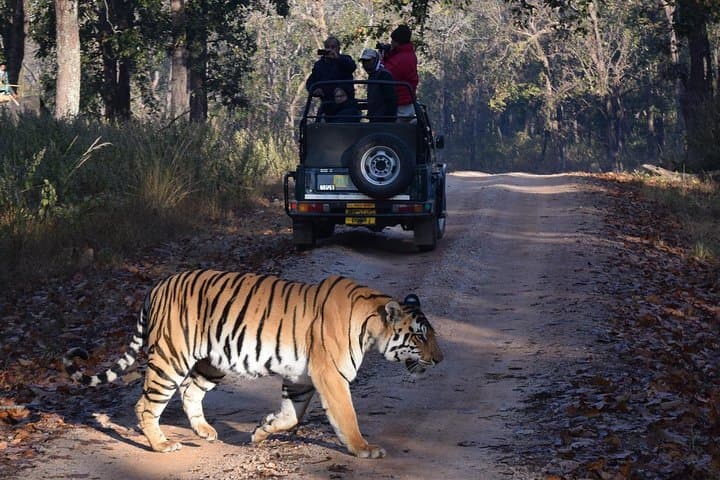

You step out of an air‑conditioned car into a dawn that smells of dust and spice, the Himalaya far off and the scrubby silhouette of Ranthambore rising ahead. The tour threads through India’s architectural highs — the Taj at first light, the Mughal red‑sandstone of Agra Fort, Jaipur’s hilltop Amber Fort — before handing you to the jungle where elephants and tigers still set the pace.
You step out of an air‑conditioned car into a dawn that smells of dust and spice, the Himalaya far off and the scrubby silhouette of Ranthambore rising ahead. The tour threads through India’s architectural highs — the Taj at first light, the Mughal red‑sandstone of Agra Fort, Jaipur’s hilltop Amber Fort — before handing you to the jungle where elephants and tigers still set the pace.
The route is classic: New Delhi to Agra to Ranthambore (Sawai Madhopur) and Jaipur, folding Mughal history into Rajput forts and tiger country. Geology shifts quickly — alluvial plains around Agra give way to the Vindhya outcrops and rocky ridges that form Ranthambore’s dry deciduous forests. Culturally, the circuit showcases imperial Mughal patronage and Rajasthan’s Maharaja legacy; marketplaces in each city buzz with lacquer, block print and spice stalls.
Practically, expect early starts (sunrise Taj and pre‑dawn safaris), long transfers by private AC vehicle, and shared Jeep/canter safaris inside the tiger reserve with a naturalist. Ranthambore’s best sightings happen in the cooler morning or late afternoon; mid‑day is for rest and hotel meals. Bring binoculars, a telephoto-ready camera, sun protection and lightweight layers for variable mornings. Respect park rules: no feeding, stay with your vehicle, and keep noise low — sightings often hinge on patience and silent observation.
By day four you return to Delhi with a compact view of northern India — monuments, markets and, if luck runs your way, a tiger framed against a termite mound.