THE ADVENTURE COLLECTIVE® · Independent discovery and booking for outdoor travel

Compress two millennia of Mughal architecture into a packed overnight: sunrise at the Taj, a walk through Agra Fort, a visit to Fatehpur Sikri, then Delhi’s signature monuments. This private tour pairs early starts with guided context to maximize time at each site.
Compress two millennia of Mughal architecture into a packed overnight: sunrise at the Taj, a walk through Agra Fort, a visit to Fatehpur Sikri, then Delhi’s signature monuments. This private tour pairs early starts with guided context to maximize time at each site.
You arrive before dawn as the road lightens under a faint, cool sky and the Yamuna threads past Agra, catching marble reflections at the Taj. The tour moves like a steady tide: an early pickup from Delhi, a three-to-four-hour drive across the Yamuna Expressway, then up-close time with monuments that shaped an empire.
Verified experiences and guided adventures in the surrounding area.
Operated by Padma Holidays · Agra, Uttar Pradesh
You arrive before dawn as the road lightens under a faint, cool sky and the Yamuna threads past Agra, catching marble reflections at the Taj. The tour moves like a steady tide: an early pickup from Delhi, a three-to-four-hour drive across the Yamuna Expressway, then up-close time with monuments that shaped an empire.
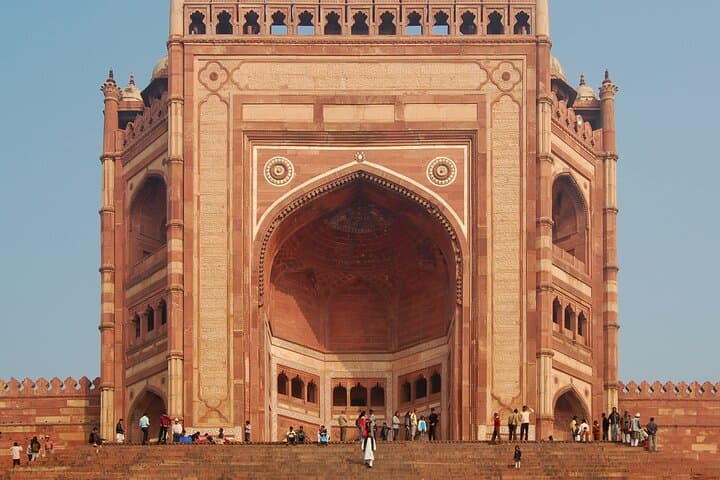
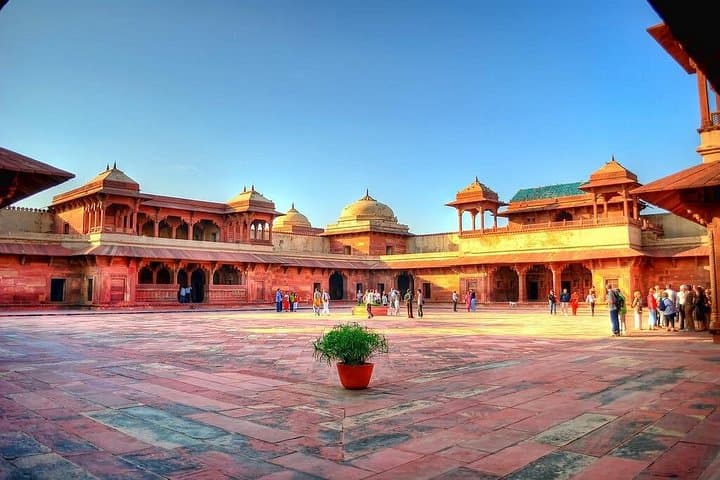
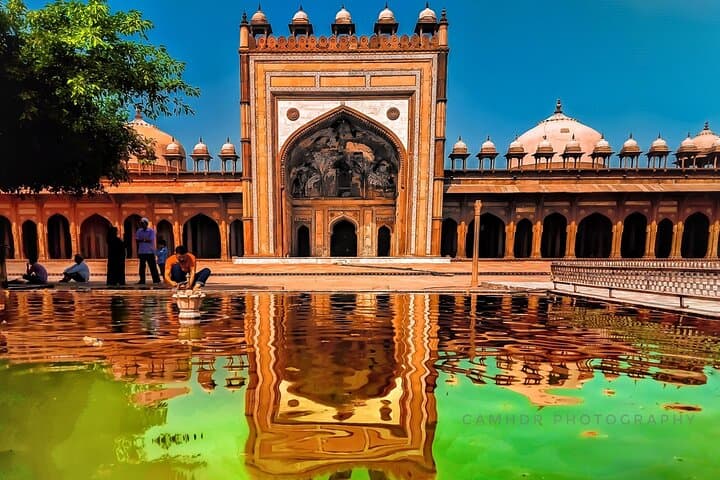
The Taj Mahal (construction 1632–1653) and the red sandstone Agra Fort (16th–17th centuries) are Mughal-era bookends—one a mausoleum of inlaid marble, the other a fortified court of gates and ramparts. A short drive northwest brings you to Fatehpur Sikri, Akbar’s abandoned capital founded in the late 16th century, its courtyards and carved screens revealing imperial planning and Indo-Islamic stonecraft.
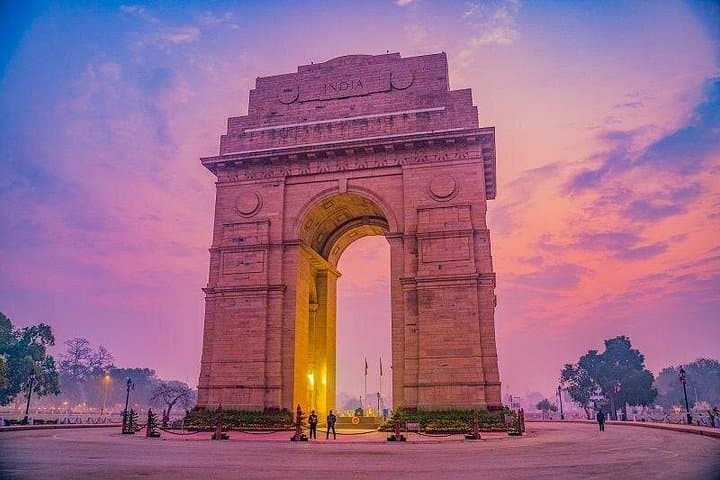
Back in Delhi on day two, Qutub Minar (73 m tall) and Humayun’s Tomb (mid-1500s) demonstrate the architectural experiments that led to the Taj’s form; the Lotus Temple and India Gate round out modern civic and spiritual layers.
Practical guidance: start early to beat crowds and midday heat, and limit large bags—security is strict at major sites. Expect several hours of walking on paved and uneven stone surfaces; comfortable, breathable clothing and sturdy shoes are essential. Bring a refillable water bottle, sunscreen, and a compact daypack. Note health advisories—this itinerary involves long vehicle transfers and is not advised for travelers with serious spinal, cardiovascular, or pregnancy-related restrictions.
With knowledgeable guides and included entrance fees (tour option), the itinerary compresses the Golden Triangle into a two-day cultural sprint—rich in history, practical in pace, and designed to maximize daylight at the region’s most iconic sites.
easy.
2 days.
Suitable for travelers who can walk 2–4 miles over a day on paved and uneven stone surfaces and tolerate several hours in a vehicle.
Entrance fees to the listed monuments are included if you select the tour option specified in the booking; otherwise confirm with the provider before arrival.
The drive typically takes 3–4 hours via the Yamuna Expressway (about 230–240 km), depending on traffic and stops.
The tour is family-friendly but involves early starts and walking; check mobility needs and health advisories for older travelers before booking.
Photography is generally allowed at external areas; restrictions apply inside some mausoleums and certain galleries—follow onsite rules and guide instructions.
These sites are milestones of Mughal rule: Fatehpur Sikri was Akbar’s capital in the late 1500s; the Taj and Agra Fort embody 17th-century imperial design and craftsmanship.
Visitor pressure and river pollution (Yamuna) are ongoing concerns—use marked paths, avoid littering, and prefer refillable water to reduce plastic waste.
Padma Holidays operates guided outdoor trips and adventures with an emphasis on safety, stewardship, and memorable experiences.
You arrive before dawn as the road lightens under a faint, cool sky and the Yamuna threads past Agra, catching marble reflections at the Taj. The tour moves like a steady tide: an early pickup from Delhi, a three-to-four-hour drive across the Yamuna Expressway, then up-close time with monuments that shaped an empire.
You arrive before dawn as the road lightens under a faint, cool sky and the Yamuna threads past Agra, catching marble reflections at the Taj. The tour moves like a steady tide: an early pickup from Delhi, a three-to-four-hour drive across the Yamuna Expressway, then up-close time with monuments that shaped an empire.
The Taj Mahal (construction 1632–1653) and the red sandstone Agra Fort (16th–17th centuries) are Mughal-era bookends—one a mausoleum of inlaid marble, the other a fortified court of gates and ramparts. A short drive northwest brings you to Fatehpur Sikri, Akbar’s abandoned capital founded in the late 16th century, its courtyards and carved screens revealing imperial planning and Indo-Islamic stonecraft.
Back in Delhi on day two, Qutub Minar (73 m tall) and Humayun’s Tomb (mid-1500s) demonstrate the architectural experiments that led to the Taj’s form; the Lotus Temple and India Gate round out modern civic and spiritual layers.
Practical guidance: start early to beat crowds and midday heat, and limit large bags—security is strict at major sites. Expect several hours of walking on paved and uneven stone surfaces; comfortable, breathable clothing and sturdy shoes are essential. Bring a refillable water bottle, sunscreen, and a compact daypack. Note health advisories—this itinerary involves long vehicle transfers and is not advised for travelers with serious spinal, cardiovascular, or pregnancy-related restrictions.
With knowledgeable guides and included entrance fees (tour option), the itinerary compresses the Golden Triangle into a two-day cultural sprint—rich in history, practical in pace, and designed to maximize daylight at the region’s most iconic sites.