THE ADVENTURE COLLECTIVE® · Independent discovery and booking for outdoor travel

A compact four-day loop from Aqaba to Petra and Wadi Rum that pairs Nabatean rock-cut architecture with vast desert panoramas and Bedouin camp nights. Perfect for travelers who want a concentrated, accessible introduction to southern Jordan.
A compact four-day loop from Aqaba to Petra and Wadi Rum that pairs Nabatean rock-cut architecture with vast desert panoramas and Bedouin camp nights. Perfect for travelers who want a concentrated, accessible introduction to southern Jordan.
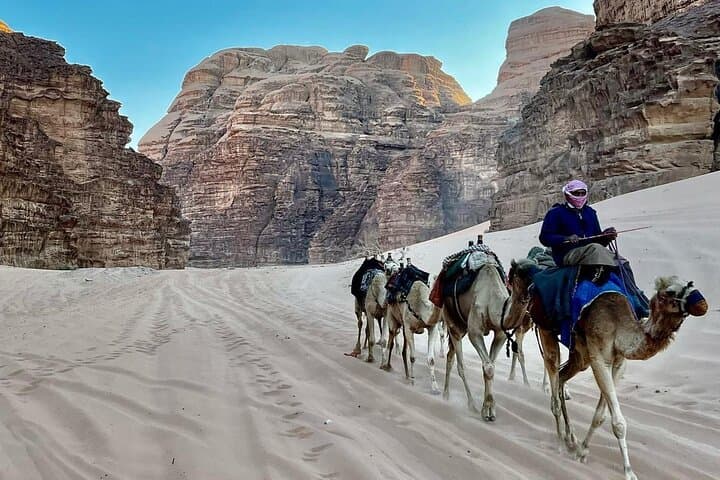
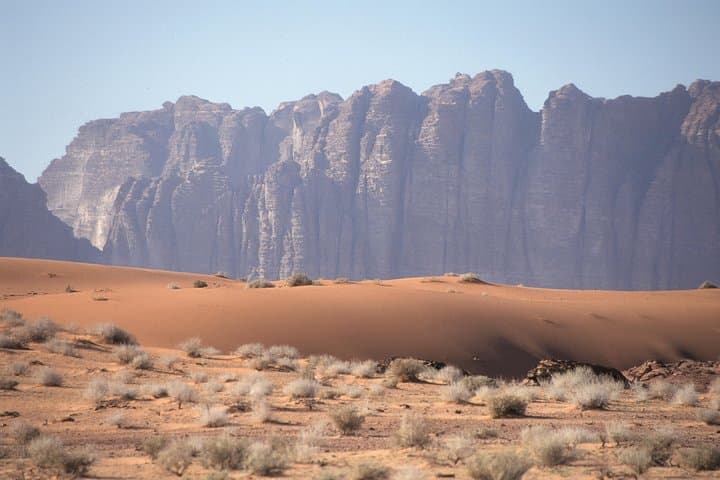
The first light over the Gulf of Aqaba turns the water a hard, clear blue; drivers in the small port city move with the practiced economy of a place that knows heat and distance. On Day One the group arrives, squeezes into an air-conditioned minivan and sets out—Aqaba’s flatness gives way to a sloping red-brown plain, and then to the enormous silhouettes of Wadi Rum's sandstone domes. The landscape here pushes you forward: wind-carved cliffs that read like pages of geological time, dunes that hold the day's heat, and a horizon where human history looks comparatively recent.
Verified experiences and guided adventures in the surrounding area.
Operated by Bridge Travel · Aqaba, Aqaba Governorate
The first light over the Gulf of Aqaba turns the water a hard, clear blue; drivers in the small port city move with the practiced economy of a place that knows heat and distance. On Day One the group arrives, squeezes into an air-conditioned minivan and sets out—Aqaba’s flatness gives way to a sloping red-brown plain, and then to the enormous silhouettes of Wadi Rum's sandstone domes. The landscape here pushes you forward: wind-carved cliffs that read like pages of geological time, dunes that hold the day's heat, and a horizon where human history looks comparatively recent.
This itinerary stitches three very different faces of southern Jordan. Petra, the ancient Nabatean capital, is a carved city—rock facades that swallowed light and kept secrets for centuries. Wadi Rum’s geology is older in feel: exfoliated sandstone and volcanic intrusions shaped by millennia of wind, now hosting Bedouin camps where camelhair tents and tea are part of daily ritual. Aqaba is the logistical anchor and a quiet coastal counterpoint, where modern Jordan opens to the Red Sea and trade routes that once linked continents.
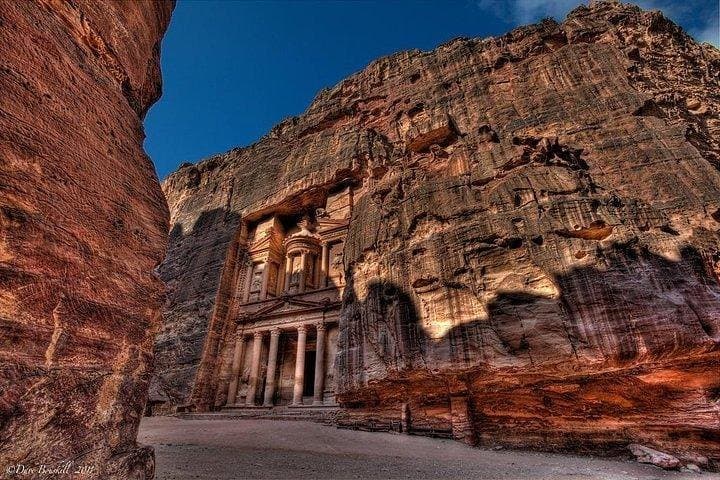
Culturally, the trip is a study in contrasts. In Petra you follow the narrow Siq and arrive at the Treasury—a moment engineered over millennia by human hands. In Wadi Rum, Bedouin guides read the sky and dune like a map: they offer stories, routes and, if you like, a chance to sleep under stars that feel close enough to touch. The region’s long history—from Nabatean engineering to Ottoman caravan networks—gives these places texture beyond postcard views.
Practicalities make or break a short, intense route like this. The tour runs four days with two full-day highlights: a 2-hour guided walk through Petra (expect several kilometers of uneven stone and stairs) and a 2-hour jeep safari in Wadi Rum across sandy tracks and rock plates. Moderate fitness is required; travel between sites is by air-conditioned vehicle and includes pickup from Aqaba hotels. Seasonal timing matters: spring and autumn offer comfortable daytime temps; summer can be extreme midday.
Pack layers for desert nights, sturdy shoes for Petra's cobbled paths, sun protection and a refillable water bottle. Buy a Jordan Pass in advance if you plan longer stays—some entrance fees are covered and lines move faster. Book pickup times carefully: mornings are cooler and more comfortable for both Petra and the Wadi Rum jeep run.
By the time the trip loops back to Aqaba, you’ve traded a reef-side town for cliff-carved façades and a desert that changes its shape with the wind. It’s a compact, immersive slice of Jordan that asks little of your schedule and a fair amount of curiosity—ideal for travelers who want geological spectacle, living Bedouin hospitality, and a concentrated deep-dive into a landscape that still feels, on a clear night, boundless.
moderate.
3–4 days.
Moderate fitness: able to walk 3–6 km on uneven ground and tolerate desert heat.
Yes if you purchase the Jordan Pass it can cover Petra entry—buy it before arrival if you plan to stay longer in Jordan.
The jeep portion is low-impact but can be bumpy; choose a seat near the center of the vehicle if you’re sensitive to motion.
Camps vary from basic tents with mattresses to upgraded options with private facilities; the tour typically uses traditional Bedouin-style camps.
Children can join but infants must sit on laps; the operator flags restrictions for pregnant travelers and those with spinal or heart conditions.
Visa rules depend on nationality—many visitors can obtain a visa on arrival, but check requirements and permit types before travel.
Entrance fees may be included depending on the option booked; the operator can arrange tickets at Petra if not covered in your package.
Petra was the capital of the Nabateans from the 4th century BCE and controlled trade routes for frankincense and spices; Wadi Rum has been inhabited for millennia and features prehistoric petroglyphs.
Tourism in Petra and Wadi Rum is managed to protect fragile rock-cut facades and desert flora; stick to marked paths and minimize plastic use to reduce impact.
Bridge Travel operates guided outdoor trips and adventures with an emphasis on safety, stewardship, and memorable experiences.

The first light over the Gulf of Aqaba turns the water a hard, clear blue; drivers in the small port city move with the practiced economy of a place that knows heat and distance. On Day One the group arrives, squeezes into an air-conditioned minivan and sets out—Aqaba’s flatness gives way to a sloping red-brown plain, and then to the enormous silhouettes of Wadi Rum's sandstone domes. The landscape here pushes you forward: wind-carved cliffs that read like pages of geological time, dunes that hold the day's heat, and a horizon where human history looks comparatively recent.
The first light over the Gulf of Aqaba turns the water a hard, clear blue; drivers in the small port city move with the practiced economy of a place that knows heat and distance. On Day One the group arrives, squeezes into an air-conditioned minivan and sets out—Aqaba’s flatness gives way to a sloping red-brown plain, and then to the enormous silhouettes of Wadi Rum's sandstone domes. The landscape here pushes you forward: wind-carved cliffs that read like pages of geological time, dunes that hold the day's heat, and a horizon where human history looks comparatively recent.
This itinerary stitches three very different faces of southern Jordan. Petra, the ancient Nabatean capital, is a carved city—rock facades that swallowed light and kept secrets for centuries. Wadi Rum’s geology is older in feel: exfoliated sandstone and volcanic intrusions shaped by millennia of wind, now hosting Bedouin camps where camelhair tents and tea are part of daily ritual. Aqaba is the logistical anchor and a quiet coastal counterpoint, where modern Jordan opens to the Red Sea and trade routes that once linked continents.
Culturally, the trip is a study in contrasts. In Petra you follow the narrow Siq and arrive at the Treasury—a moment engineered over millennia by human hands. In Wadi Rum, Bedouin guides read the sky and dune like a map: they offer stories, routes and, if you like, a chance to sleep under stars that feel close enough to touch. The region’s long history—from Nabatean engineering to Ottoman caravan networks—gives these places texture beyond postcard views.
Practicalities make or break a short, intense route like this. The tour runs four days with two full-day highlights: a 2-hour guided walk through Petra (expect several kilometers of uneven stone and stairs) and a 2-hour jeep safari in Wadi Rum across sandy tracks and rock plates. Moderate fitness is required; travel between sites is by air-conditioned vehicle and includes pickup from Aqaba hotels. Seasonal timing matters: spring and autumn offer comfortable daytime temps; summer can be extreme midday.
Pack layers for desert nights, sturdy shoes for Petra's cobbled paths, sun protection and a refillable water bottle. Buy a Jordan Pass in advance if you plan longer stays—some entrance fees are covered and lines move faster. Book pickup times carefully: mornings are cooler and more comfortable for both Petra and the Wadi Rum jeep run.
By the time the trip loops back to Aqaba, you’ve traded a reef-side town for cliff-carved façades and a desert that changes its shape with the wind. It’s a compact, immersive slice of Jordan that asks little of your schedule and a fair amount of curiosity—ideal for travelers who want geological spectacle, living Bedouin hospitality, and a concentrated deep-dive into a landscape that still feels, on a clear night, boundless.