THE ADVENTURE COLLECTIVE® · Independent discovery and booking for outdoor travel

A seven-day loop from Delhi that pairs the Golden Triangle’s Mughal and Rajput landmarks with a Ranthambore tiger safari. Expect early-morning wildlife drives, long highway transfers, and a mix of 3–5 star accommodations with guided city tours.
A seven-day loop from Delhi that pairs the Golden Triangle’s Mughal and Rajput landmarks with a Ranthambore tiger safari. Expect early-morning wildlife drives, long highway transfers, and a mix of 3–5 star accommodations with guided city tours.
You step out of a Delhi morning into a different India—traffic thinning as highways open to fields, red forts and a forest that dares you to look closer.
Verified experiences and guided adventures in the surrounding area.
Operated by Trek India Tours · New Delhi, Delhi
You step out of a Delhi morning into a different India—traffic thinning as highways open to fields, red forts and a forest that dares you to look closer.
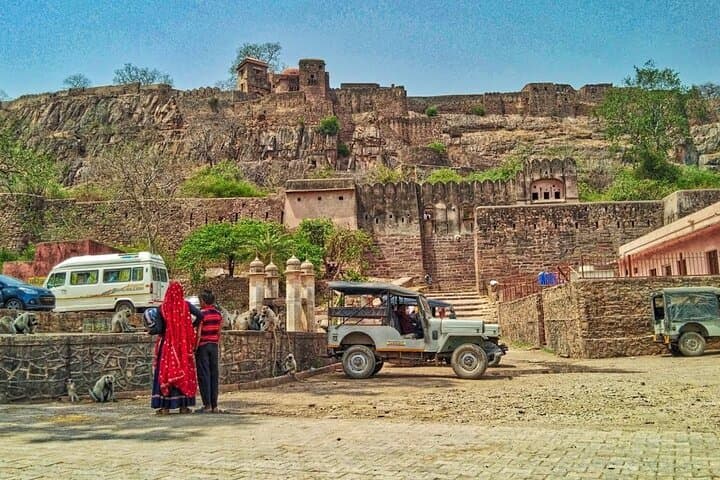
The seven-day loop threads Mughal monuments and Rajput palaces with dry-deciduous forest and granite outcrops at Ranthambore. In Delhi and Agra the skyline is defined by Mughal marble and sandstone: Humayun’s Tomb, the Red Fort and the Taj Mahal reflect 16th–17th century empire-building. On the road to Ranthambore you pass Fatehpur Sikri, a compact Mughal city of carved arches and raised terraces; at Ranthambore the hilltop fort dates back a millennium and watches over lakes that attract wildlife.
Geology here is plain but rugged—seasonal lakes, scrub forest and bouldery ridge-lines that concentrate wildlife around water in dry months. Culture shifts with each stop: city bazaars in Jaipur sell block-printed textiles and blue pottery, while rural Rajasthan offers straightforward hospitality and strong curries.
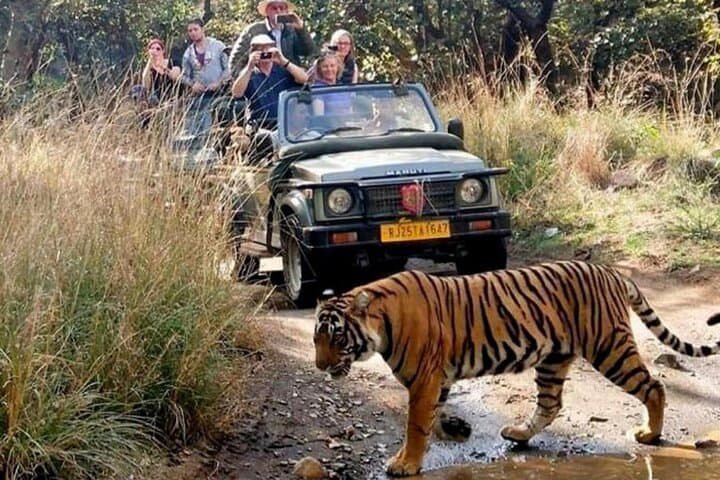
Practically: expect multiple long drives (3–6 hours between cities), early-morning safaris through park zones and basic to comfortable hotel options depending on selection. One shared canter safari is included; jeep upgrades can be arranged for an extra fee. Bring binoculars, sun protection and a passport copy (required for safari permits). Plan for early starts—tigers are most active at dawn and dusk—and book safaris well in advance during peak season (Oct–Mar). Respect park rules, keep noise low on drives, and carry water for transfers. This itinerary balances cultural sightseeing with focused wildlife time, delivering high odds for memorable tiger sightings alongside UNESCO monuments.
easy.
7 days.
Suitable for travelers in average fitness; requires ability to handle multiple hours of walking on site and several long vehicle transfers.
Yes—passport details are required at booking to secure park permits and must be carried as a copy during safaris.
The itinerary includes one shared canter safari; jeep safaris (with fewer passengers and more flexibility) can be upgraded for an additional fee if requested at booking.
Dry months from October through March offer higher visibility and reliable water-hole congregation, improving tiger sighting chances; monsoon months reduce access and visibility.
Yes—accommodation for six nights and private vehicle transfers between cities are included; check your chosen option for 3- or 5-star selections and airport pickup details.
The route links Mughal-era masterpieces—Taj Mahal and Fatehpur Sikri—with Rajput strongholds; Ranthambore itself was a royal hunting ground before becoming a protected reserve.
Ranthambore participates in Project Tiger and enforces strict zone rules; follow guide instructions, avoid litter and use refillable water bottles to reduce plastic waste.
Trek India Tours operates guided outdoor trips and adventures with an emphasis on safety, stewardship, and memorable experiences.

You step out of a Delhi morning into a different India—traffic thinning as highways open to fields, red forts and a forest that dares you to look closer.
You step out of a Delhi morning into a different India—traffic thinning as highways open to fields, red forts and a forest that dares you to look closer.
The seven-day loop threads Mughal monuments and Rajput palaces with dry-deciduous forest and granite outcrops at Ranthambore. In Delhi and Agra the skyline is defined by Mughal marble and sandstone: Humayun’s Tomb, the Red Fort and the Taj Mahal reflect 16th–17th century empire-building. On the road to Ranthambore you pass Fatehpur Sikri, a compact Mughal city of carved arches and raised terraces; at Ranthambore the hilltop fort dates back a millennium and watches over lakes that attract wildlife.
Geology here is plain but rugged—seasonal lakes, scrub forest and bouldery ridge-lines that concentrate wildlife around water in dry months. Culture shifts with each stop: city bazaars in Jaipur sell block-printed textiles and blue pottery, while rural Rajasthan offers straightforward hospitality and strong curries.
Practically: expect multiple long drives (3–6 hours between cities), early-morning safaris through park zones and basic to comfortable hotel options depending on selection. One shared canter safari is included; jeep upgrades can be arranged for an extra fee. Bring binoculars, sun protection and a passport copy (required for safari permits). Plan for early starts—tigers are most active at dawn and dusk—and book safaris well in advance during peak season (Oct–Mar). Respect park rules, keep noise low on drives, and carry water for transfers. This itinerary balances cultural sightseeing with focused wildlife time, delivering high odds for memorable tiger sightings alongside UNESCO monuments.