THE ADVENTURE COLLECTIVE® · Independent discovery and booking for outdoor travel

A compact seven-day loop through Delhi, Agra and Jaipur that pairs sunrise visits to the Taj with Jaipur’s hilltop forts and Delhi’s layered monuments. Practical tips on timing, transport, and local customs make this a manageable cultural circuit for first-time visitors.
A compact seven-day loop through Delhi, Agra and Jaipur that pairs sunrise visits to the Taj with Jaipur’s hilltop forts and Delhi’s layered monuments. Practical tips on timing, transport, and local customs make this a manageable cultural circuit for first-time visitors.
You step out into a dusty dawn on the edge of New Delhi, rickshaws threading past colonial boulevards and saris flashing color against sandstone. The city breathes history; by the time you reach Agra the Yamuna has carried mud and legend for centuries, and in Jaipur the arid hills push a pink-honed skyline into the sun.
Verified experiences and guided adventures in the surrounding area.
Operated by AEROELITE TOUR AND TRAVEL · New Delhi, Delhi
You step out into a dusty dawn on the edge of New Delhi, rickshaws threading past colonial boulevards and saris flashing color against sandstone. The city breathes history; by the time you reach Agra the Yamuna has carried mud and legend for centuries, and in Jaipur the arid hills push a pink-honed skyline into the sun.
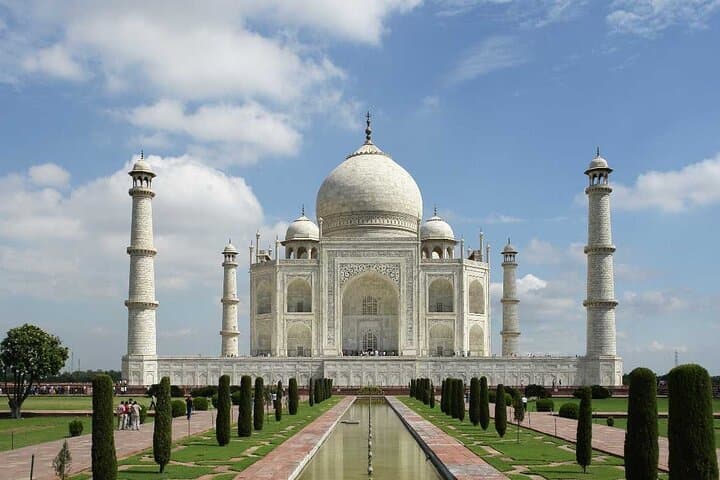
The route links three distinct historical chapters: Delhi’s layered empires and colonial grid, Agra’s Mughal monuments crowned by the Taj Mahal, and Jaipur’s 18th-century Rajput planning and hill forts. Geologically this is the flat Indo‑Gangetic plain giving way to the Aravalli foothills—short climbs and wide vistas in Jaipur contrast with the lowland riverfronts of Agra and Delhi’s terraces.
Culturally, expect living markets, mosque and temple courtyards, and guide-led storytelling that explains imperial patronage, craft guilds, and astronomy at sites like Jantar Mantar. Local food scenes move fast: breakfast thalis in Delhi, sweet shops in Agra, spice-forward Rajasthani dishes in Jaipur. Guides and private transport are standard on organized itineraries, which makes logistics simple while leaving time for sunrise at the Taj or an off-peak visit to Amber Fort.
Practical guidance: pack light breathable clothing that respects local dress norms, carry reusable water and a small first-aid kit, and plan early starts to avoid midday heat and crowds. Book entrances for major monuments in advance when possible, and leave buffer time for traffic between cities—roads are direct but can be slow. With steady pacing this seven-day loop delivers concentrated history, architecture, and market life without strenuous hiking—an accessible cultural circuit for curious travelers.
easy.
7 days.
Suitable for travelers in average fitness—mostly urban walking, short climbs at forts; not physically demanding.
Yes — the itinerary uses private transport and guided visits, which simplifies navigation and introductions to local culture for newcomers.
Visitors generally need an Indian visa; vaccination requirements vary—check current public health guidance and consult a travel clinic before departure.
Many operators offer flexible itineraries and optional activities like food tours or additional museum time—confirm customization options at booking.
Expect several hours of moderate walking each day at monument complexes and markets, with short climbs at forts—no technical hiking required.
The triangle traces Mughal imperial power (Taj Mahal, Agra Fort) and Jaipur’s planned 18th‑century Rajput city, with Delhi layering earlier Sultanate, Mughal, and colonial periods.
Major sites manage visitor numbers to protect stonework and gardens; favoring off‑peak visits and local community guides helps spread tourism benefits and reduce pressure.
AEROELITE TOUR AND TRAVEL operates guided outdoor trips and adventures with an emphasis on safety, stewardship, and memorable experiences.
You step out into a dusty dawn on the edge of New Delhi, rickshaws threading past colonial boulevards and saris flashing color against sandstone. The city breathes history; by the time you reach Agra the Yamuna has carried mud and legend for centuries, and in Jaipur the arid hills push a pink-honed skyline into the sun.
You step out into a dusty dawn on the edge of New Delhi, rickshaws threading past colonial boulevards and saris flashing color against sandstone. The city breathes history; by the time you reach Agra the Yamuna has carried mud and legend for centuries, and in Jaipur the arid hills push a pink-honed skyline into the sun.
The route links three distinct historical chapters: Delhi’s layered empires and colonial grid, Agra’s Mughal monuments crowned by the Taj Mahal, and Jaipur’s 18th-century Rajput planning and hill forts. Geologically this is the flat Indo‑Gangetic plain giving way to the Aravalli foothills—short climbs and wide vistas in Jaipur contrast with the lowland riverfronts of Agra and Delhi’s terraces.
Culturally, expect living markets, mosque and temple courtyards, and guide-led storytelling that explains imperial patronage, craft guilds, and astronomy at sites like Jantar Mantar. Local food scenes move fast: breakfast thalis in Delhi, sweet shops in Agra, spice-forward Rajasthani dishes in Jaipur. Guides and private transport are standard on organized itineraries, which makes logistics simple while leaving time for sunrise at the Taj or an off-peak visit to Amber Fort.
Practical guidance: pack light breathable clothing that respects local dress norms, carry reusable water and a small first-aid kit, and plan early starts to avoid midday heat and crowds. Book entrances for major monuments in advance when possible, and leave buffer time for traffic between cities—roads are direct but can be slow. With steady pacing this seven-day loop delivers concentrated history, architecture, and market life without strenuous hiking—an accessible cultural circuit for curious travelers.