THE ADVENTURE COLLECTIVE® · Independent discovery and booking for outdoor travel

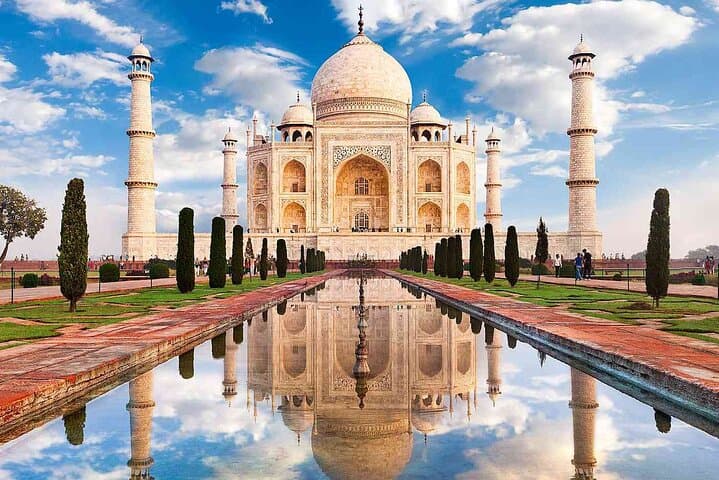
Experience the Golden Triangle over five days: Delhi’s bustling bazaars, Agra’s Taj Mahal at dawn, and Jaipur’s hilltop forts. This practical guide outlines what to expect, how to prepare, and where to save time on a compact cultural route.
Experience the Golden Triangle over five days: Delhi’s bustling bazaars, Agra’s Taj Mahal at dawn, and Jaipur’s hilltop forts. This practical guide outlines what to expect, how to prepare, and where to save time on a compact cultural route.
You step out into Old Delhi and the city breathes around you — rickshaw horns puncture the air, spice sacks spill color, and the stone facades of Mughal-era gateways hold the heat of the day.
Verified experiences and guided adventures in the surrounding area.
Operated by Taj india viajes · New Delhi, Delhi
You step out into Old Delhi and the city breathes around you — rickshaw horns puncture the air, spice sacks spill color, and the stone facades of Mughal-era gateways hold the heat of the day.
This five-day Golden Triangle route threads three distinct chapters of northern India’s history: Delhi’s layered colonial and Mughal monuments, Agra’s marble poetry in the Taj Mahal and Agra Fort, and Jaipur’s Rajput palaces and astronomical ingenuity at Jantar Mantar. Geologically, the region sits on the Indo-Gangetic plains where the Yamuna has shaped fertile floodplains; deserts and low Aravalli ridges sculpt views outside Jaipur.
Cultural rhythms are immediate — morning prayers at a gurdwara, a raucous market bargaining match in Chandni Chowk, and evening Rajasthani dance over a traditional dinner in Jaipur. Local guides translate not only language but social nuance: appropriate temple dress, where to try safed (white) marble inlay crafts, and how air quality can affect outdoor plans.
Practical guidance: plan for several multi-hour drives (Delhi–Agra ≈230 km/3–4 hrs; Jaipur–Agra ≈240 km/4–5 hrs). Carry reusable water, sun protection, and comfortable shoes for long temple walks and palace staircases. Book Taj Mahal sunrise entry in advance to avoid crowds and heavy midday pollution; allow extra time for security lines at major monuments. Accessibility varies — many historic sites have stairs and uneven surfaces, though some offer alternative entrances. Travel early in the day to dodge heat and traffic and keep a flexible mindset — India’s pace will push and reward you in equal measure.
easy.
5 days.
Suitable for most travelers with basic mobility; expect extended walking, stairs, and some long drives.
Taj Mahal tickets are typically not included by default; book timed-entry separately or confirm with your operator before travel.
Most multi-day Golden Triangle packages include accommodation and some meals; confirm which nights and any special dinners are covered.
Accessibility varies—many historic sites have uneven steps; some locations offer alternative access but check specifics if mobility is a concern.
Carry Indian rupees (INR) for small purchases; tipping guides and drivers 5–10% or a few hundred rupees per day is customary depending on service.
The Golden Triangle links Mughal-era Agra and imperial Delhi with the Rajput courts of Jaipur; monuments reflect centuries of overlapping empires and local craftsmanship.
Air pollution and visitor pressure affect Agra and Delhi; support local conservation by using reusable bottles, following site rules, and choosing licensed guides.
Taj india viajes operates guided outdoor trips and adventures with an emphasis on safety, stewardship, and memorable experiences.
You step out into Old Delhi and the city breathes around you — rickshaw horns puncture the air, spice sacks spill color, and the stone facades of Mughal-era gateways hold the heat of the day.
You step out into Old Delhi and the city breathes around you — rickshaw horns puncture the air, spice sacks spill color, and the stone facades of Mughal-era gateways hold the heat of the day.
This five-day Golden Triangle route threads three distinct chapters of northern India’s history: Delhi’s layered colonial and Mughal monuments, Agra’s marble poetry in the Taj Mahal and Agra Fort, and Jaipur’s Rajput palaces and astronomical ingenuity at Jantar Mantar. Geologically, the region sits on the Indo-Gangetic plains where the Yamuna has shaped fertile floodplains; deserts and low Aravalli ridges sculpt views outside Jaipur.
Cultural rhythms are immediate — morning prayers at a gurdwara, a raucous market bargaining match in Chandni Chowk, and evening Rajasthani dance over a traditional dinner in Jaipur. Local guides translate not only language but social nuance: appropriate temple dress, where to try safed (white) marble inlay crafts, and how air quality can affect outdoor plans.
Practical guidance: plan for several multi-hour drives (Delhi–Agra ≈230 km/3–4 hrs; Jaipur–Agra ≈240 km/4–5 hrs). Carry reusable water, sun protection, and comfortable shoes for long temple walks and palace staircases. Book Taj Mahal sunrise entry in advance to avoid crowds and heavy midday pollution; allow extra time for security lines at major monuments. Accessibility varies — many historic sites have stairs and uneven surfaces, though some offer alternative entrances. Travel early in the day to dodge heat and traffic and keep a flexible mindset — India’s pace will push and reward you in equal measure.