THE ADVENTURE COLLECTIVE® · Independent discovery and booking for outdoor travel

A long day from Chiang Mai that stitches together Chiang Rai’s most dramatic sites—the White, Black and Blue temples and the Golden Triangle—paired with hot-spring relief and local markets. Ideal for travelers who want a packed cultural and scenic overview in one organized day.
A long day from Chiang Mai that stitches together Chiang Rai’s most dramatic sites—the White, Black and Blue temples and the Golden Triangle—paired with hot-spring relief and local markets. Ideal for travelers who want a packed cultural and scenic overview in one organized day.
Morning light catches the lacquered spires of Wat Rong Khun before the minivan pulls out of Chiang Mai, the city shrinking into rice paddies and karst ridges.
Verified experiences and guided adventures in the surrounding area.
Operated by Oh-Hoo · Chiang Rai, Chiang Rai Province
Morning light catches the lacquered spires of Wat Rong Khun before the minivan pulls out of Chiang Mai, the city shrinking into rice paddies and karst ridges.
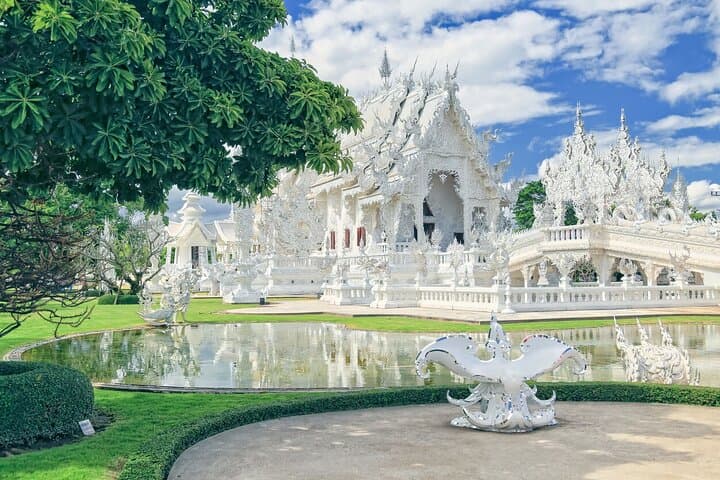
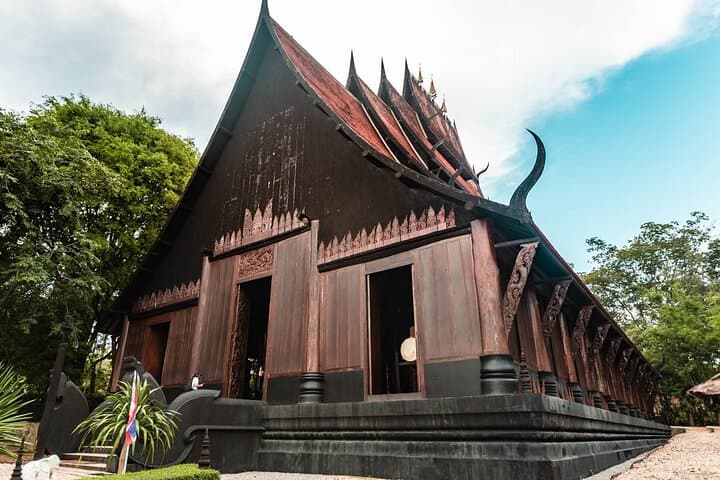
The day unfolds as a circuit through northern Thailand’s collision of art, faith and borderland history: dipping feet in Mae Kachan’s steaming pools, taking in the intricate white carvings of the White Temple, pacing the brooding timber galleries of Baan Dam, and standing on the Mekong where three countries meet at the Golden Triangle. The blue façade of Wat Rong Suea Ten offers a cool counterpoint to the region’s warm light and sharper stories.
Geologically, the route runs across folded sedimentary plains framed by low mountains—rivers here have long shaped trade and conflict. Culturally, the attractions contrast contemporary Thai artistic expression with tribal communities still connected to traditional crafts.
Expect long transfers—this is a full-day, 13–14 hour excursion with most time in a comfortable minivan and several 60–120 minute stops for walking, photos and sheltered markets. Dress respectfully for temples: shoulders and knees covered; comfortable shoes for uneven grounds and markets. Bring sun protection, a refillable water bottle and small cash for optional entry fees or local crafts. Mae Kachan’s pools allow only foot-soaking; avoid full immersion.
Timing matters—start early to beat traffic out of Chiang Mai and use mid-morning light for temple photography. If you prefer a slower pace, consider ending in Chiang Rai to split the journey. The tour is an efficient way to sample northern Thailand’s visual extremes while keeping practical comforts—driver, lunch, and guide—handled for you.
easy.
13–14 hours.
Suitable for average fitness; mostly low-impact walking but long time spent on the road
The tour runs about 13–14 hours (780–840 minutes) with long minivan transfers; most stops are 60–120 minutes each.
Lunch, drinking water and seasonal fruits are included; some optional admissions (like the Karen village) require extra fees paid locally.
Yes—participants can request to end the program in Chiang Rai but luggage fees may apply (500 THB per piece, max 20 inches) and must be arranged in advance.
The tour is listed as physically easy but has walking at temple sites and markets; it’s not recommended for travelers with serious spinal or cardiovascular problems.
The Golden Triangle was once a center of the opium trade; today it’s a cross-border meeting point where art and commercial tourism reinterpret the borderland past.
Support local economies by buying crafts directly and avoid participating in exploitative animal or tribal displays; pack out waste and follow posted rules at natural sites like Mae Kachan.
Oh-Hoo operates guided outdoor trips and adventures with an emphasis on safety, stewardship, and memorable experiences.


Morning light catches the lacquered spires of Wat Rong Khun before the minivan pulls out of Chiang Mai, the city shrinking into rice paddies and karst ridges.
Morning light catches the lacquered spires of Wat Rong Khun before the minivan pulls out of Chiang Mai, the city shrinking into rice paddies and karst ridges.
The day unfolds as a circuit through northern Thailand’s collision of art, faith and borderland history: dipping feet in Mae Kachan’s steaming pools, taking in the intricate white carvings of the White Temple, pacing the brooding timber galleries of Baan Dam, and standing on the Mekong where three countries meet at the Golden Triangle. The blue façade of Wat Rong Suea Ten offers a cool counterpoint to the region’s warm light and sharper stories.
Geologically, the route runs across folded sedimentary plains framed by low mountains—rivers here have long shaped trade and conflict. Culturally, the attractions contrast contemporary Thai artistic expression with tribal communities still connected to traditional crafts.
Expect long transfers—this is a full-day, 13–14 hour excursion with most time in a comfortable minivan and several 60–120 minute stops for walking, photos and sheltered markets. Dress respectfully for temples: shoulders and knees covered; comfortable shoes for uneven grounds and markets. Bring sun protection, a refillable water bottle and small cash for optional entry fees or local crafts. Mae Kachan’s pools allow only foot-soaking; avoid full immersion.
Timing matters—start early to beat traffic out of Chiang Mai and use mid-morning light for temple photography. If you prefer a slower pace, consider ending in Chiang Rai to split the journey. The tour is an efficient way to sample northern Thailand’s visual extremes while keeping practical comforts—driver, lunch, and guide—handled for you.