THE ADVENTURE COLLECTIVE® · Independent discovery and booking for outdoor travel

Travel by India’s Gatimaan Express between Delhi, Agra and Jaipur on a compact five-day circuit that pairs fast rail with curated city tours. Expect early mornings, guided visits to UNESCO sites like the Taj Mahal and Jantar Mantar, and a practical mix of driving and short walks.
Travel by India’s Gatimaan Express between Delhi, Agra and Jaipur on a compact five-day circuit that pairs fast rail with curated city tours. Expect early mornings, guided visits to UNESCO sites like the Taj Mahal and Jantar Mantar, and a practical mix of driving and short walks.
The morning in New Delhi unfurls at the platform—steam and diesel give way to the punctual Gatimaan Express as the city presses itself into motion. You step aboard with the hum of carriage doors and the scent of chai trailing from the concourse; within 100 minutes you’ll be awakened in Agra, where the Yamuna dares you to chase its riverbank light toward the Taj.
Verified experiences and guided adventures in the surrounding area.
Operated by Agra Taj Visit · New Delhi, Delhi
The morning in New Delhi unfurls at the platform—steam and diesel give way to the punctual Gatimaan Express as the city presses itself into motion. You step aboard with the hum of carriage doors and the scent of chai trailing from the concourse; within 100 minutes you’ll be awakened in Agra, where the Yamuna dares you to chase its riverbank light toward the Taj.
This five-day loop stitches together Mughal and Rajput history: Red Fort and Jama Masjid in Old Delhi, Humayun’s Tomb and Qutub Minar’s stone geometry, Agra Fort and the Taj’s white-marbled precision, and Jaipur’s planned avenues and the hilltop Amer Palace. Geology is quiet but present—the alluvial plain around the Yamuna allowed the Mughals’ masonry to stand; the sandstone and marble of Rajasthan speak to different stone-working traditions. Local life is vivid in bazaars, from Chandni Chowk’s rickshaw lanes to Jaipur’s lacquered shopfronts.
Practically, expect early starts and comfortable transfers: Gatimaan Express is ~1h 40m between Nizamuddin and Agra, drives between cities run 3–5 hours depending on stops (Fatehpur Sikri, Abhaneri). Hotels commonly follow a 12:00 check-in/out rhythm in India. Carry light layers for cool mornings, a daypack for camera gear, and reusable water—hydration is constant in northern India’s sun. Guides handle tickets and queues at major monuments, but you’ll do most walking on uneven pavements and palace steps. For a tight cultural route that blends a historic rail ride with focused sightseeing, this tour is straightforward, sensory, and logistics-friendly.
easy.
5 days (approx. 120 hours).
Light activity: suitable for travelers who can walk 2–4 miles a day, handle stairs, and manage luggage steps at stations.
The scheduled journey is about 1 hour 40 minutes from Nizamuddin (Delhi) to Agra Cantt on the Gatimaan Express.
Monument admissions are typically not included in basic land transfers; guides often handle tickets but confirm ahead if you want tickets prepaid.
Yes—this itinerary is rated easy with short walks, but early starts and steps at monuments may be tiring; check specific medical advisories included with the booking.
Professional tour guides on these routes commonly speak English and Hindi; request specific language needs when booking.
The Golden Triangle links Mughal-era Agra and Delhi to the Rajput capital Jaipur, showcasing 16th–18th century imperial architecture and planned urban design.
High visitor numbers stress sites like the Taj; favor reusable bottles, avoid touching carvings, and follow guide directions to minimize impact.
Agra Taj Visit operates guided outdoor trips and adventures with an emphasis on safety, stewardship, and memorable experiences.
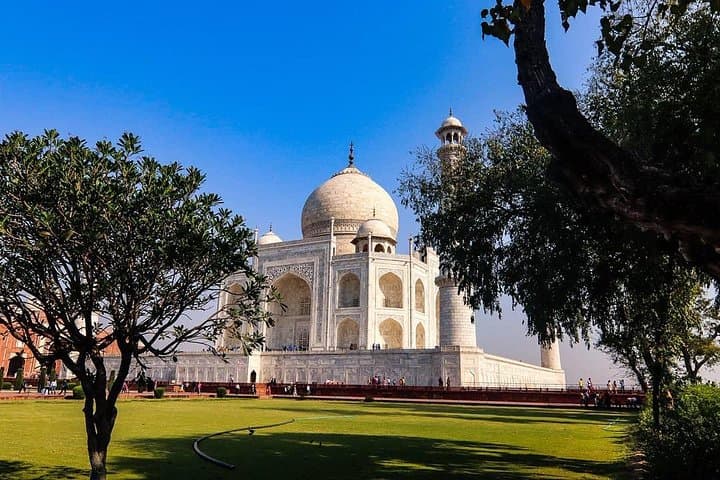
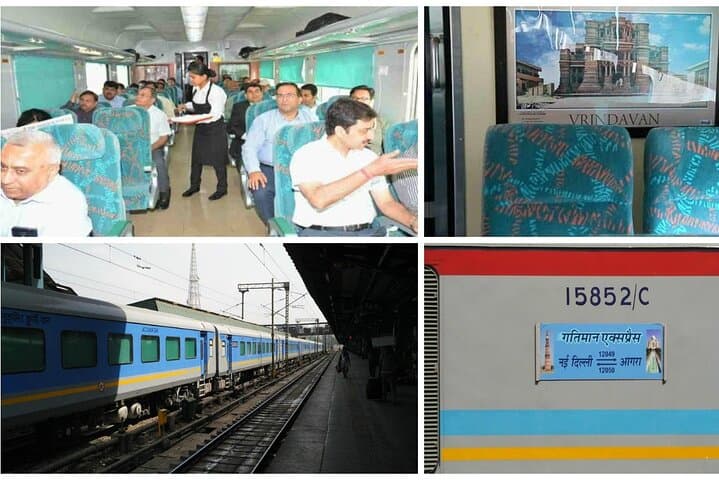
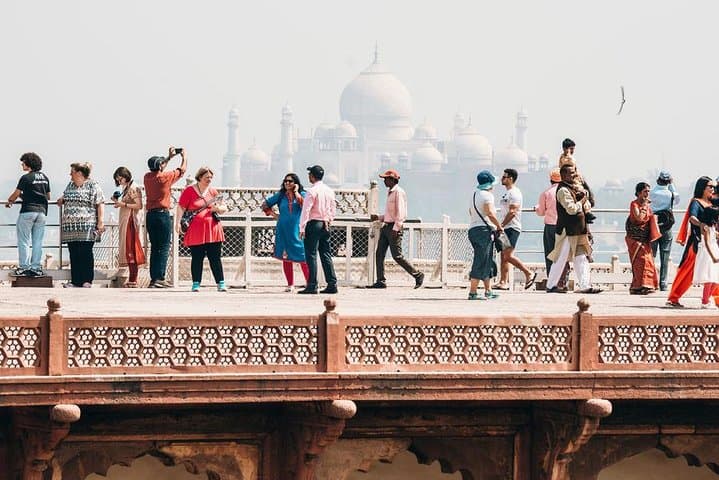
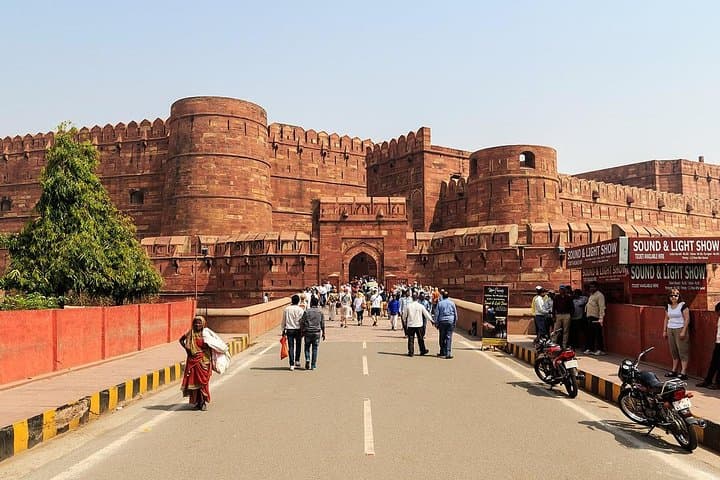
The morning in New Delhi unfurls at the platform—steam and diesel give way to the punctual Gatimaan Express as the city presses itself into motion. You step aboard with the hum of carriage doors and the scent of chai trailing from the concourse; within 100 minutes you’ll be awakened in Agra, where the Yamuna dares you to chase its riverbank light toward the Taj.
The morning in New Delhi unfurls at the platform—steam and diesel give way to the punctual Gatimaan Express as the city presses itself into motion. You step aboard with the hum of carriage doors and the scent of chai trailing from the concourse; within 100 minutes you’ll be awakened in Agra, where the Yamuna dares you to chase its riverbank light toward the Taj.
This five-day loop stitches together Mughal and Rajput history: Red Fort and Jama Masjid in Old Delhi, Humayun’s Tomb and Qutub Minar’s stone geometry, Agra Fort and the Taj’s white-marbled precision, and Jaipur’s planned avenues and the hilltop Amer Palace. Geology is quiet but present—the alluvial plain around the Yamuna allowed the Mughals’ masonry to stand; the sandstone and marble of Rajasthan speak to different stone-working traditions. Local life is vivid in bazaars, from Chandni Chowk’s rickshaw lanes to Jaipur’s lacquered shopfronts.
Practically, expect early starts and comfortable transfers: Gatimaan Express is ~1h 40m between Nizamuddin and Agra, drives between cities run 3–5 hours depending on stops (Fatehpur Sikri, Abhaneri). Hotels commonly follow a 12:00 check-in/out rhythm in India. Carry light layers for cool mornings, a daypack for camera gear, and reusable water—hydration is constant in northern India’s sun. Guides handle tickets and queues at major monuments, but you’ll do most walking on uneven pavements and palace steps. For a tight cultural route that blends a historic rail ride with focused sightseeing, this tour is straightforward, sensory, and logistics-friendly.