THE ADVENTURE COLLECTIVE® · Independent discovery and booking for outdoor travel

A focused four‑day private loop through India’s Golden Triangle—New Delhi, Agra and Jaipur—combining major Mughal and Rajput sites with practical transfer logistics and local insights. Ideal for first‑time visitors who want guided access and streamlined travel.
A focused four‑day private loop through India’s Golden Triangle—New Delhi, Agra and Jaipur—combining major Mughal and Rajput sites with practical transfer logistics and local insights. Ideal for first‑time visitors who want guided access and streamlined travel.
You step out of the airport into Delhi’s humid air and the city immediately takes shape: honking streets, spice stalls, and the deep shadow of Mughal domes. Over the next four days the landscape will open and close—congested capital avenues give way to the broad Yamuna floodplain, then to the pink sandstone walls and hilltop forts of Rajasthan.
Verified experiences and guided adventures in the surrounding area.
Operated by Ajay Day Tours · New Delhi, Delhi
You step out of the airport into Delhi’s humid air and the city immediately takes shape: honking streets, spice stalls, and the deep shadow of Mughal domes. Over the next four days the landscape will open and close—congested capital avenues give way to the broad Yamuna floodplain, then to the pink sandstone walls and hilltop forts of Rajasthan.
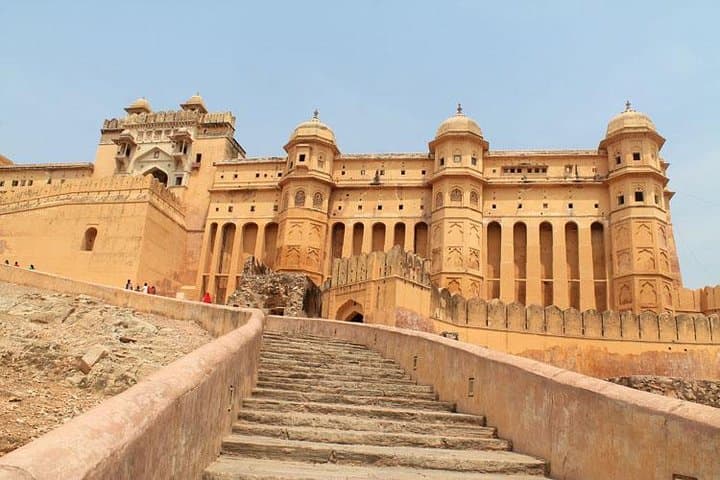
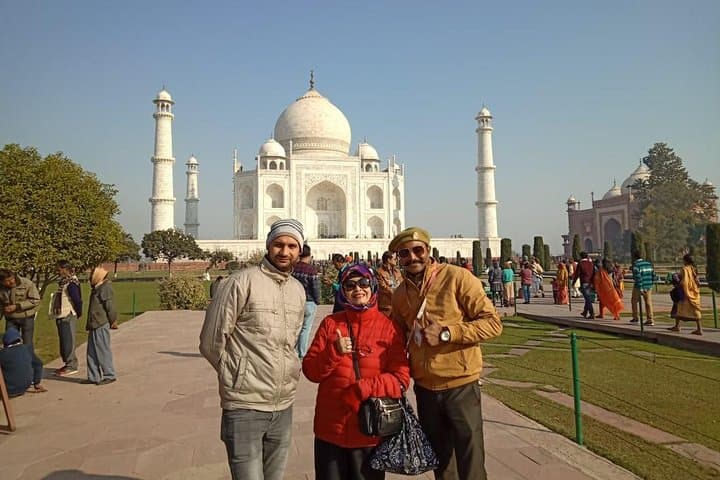
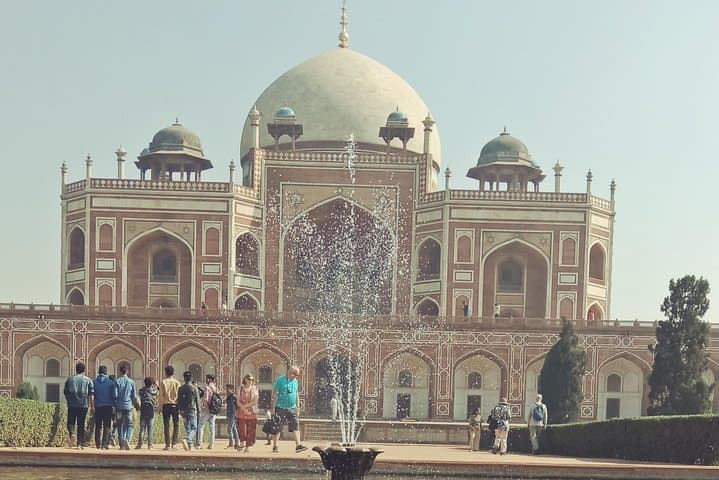
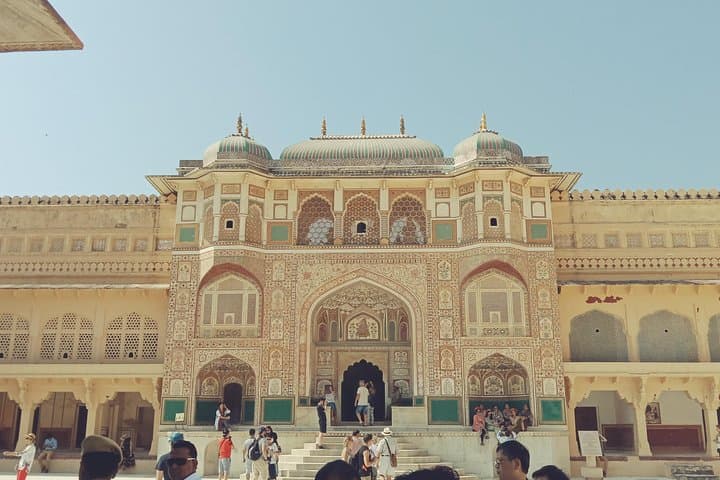
This route stitches three distinct historical chapters. Delhi’s Qutub Minar and Jama Masjid mark the imprint of Delhi Sultanate and Mughal rule; Agra’s Taj Mahal and Agra Fort record Mughal architecture’s high point; Jaipur’s Amer Fort and City Palace illustrate Rajput and 18th‑century urban planning along the Aravalli foothills. Geologically you cross the fertile Indo‑Gangetic plain into older Aravalli outcrops, where forts perch on ancient ridgelines.
Culturally the trip layers guided monuments with markets—local crafts, block‑printed textiles and street snacks—and a guide can explain courtly histories, crafts guilds and conservation pressures on monuments.
Practical guidance: the full loop covers roughly 600–700 km of driving over three travel days (expect 3–5 hour road transfers between cities). Most visits include entry tickets and brief guided tours; start Taj Mahal visits at dawn to avoid crowds and heat. Carry a printed passport copy, lightweight layers for air‑conditioned vehicles, and a daypack with water and sun protection. Footwear should be comfortable for short walks on uneven stone at forts and monuments. Allow extra time for traffic and security screening; book early‑morning slots for major sites when possible to get clearer light and shorter lines.
easy.
4 days.
Suitable for travelers in typical travel fitness; requires ability to walk short distances (15–30 minutes) on uneven surfaces and handle multi‑hour vehicle transfers.
Yes—a current valid passport is required for booking and must be carried during travel for hotel check‑in and some monument checks.
Major monument entry (e.g., Qutub Minar, Taj Mahal, Agra Fort, Amer Fort, City Palace) is included per the itinerary; confirm which sites are covered when booking.
Yes—the itinerary is rated easy, but families should plan for vehicle time, sun exposure, and limited stroller access at some heritage sites.
Local professional guides typically speak English; request other language options at booking, subject to availability.
The Golden Triangle links seats of Mughal power and Rajput rule—Delhi, Agra and Jaipur grew as imperial and princely centers from the 16th to 18th centuries.
High visitor numbers strain monuments and local water supplies; follow site rules, avoid feeding wildlife and use refillable water bottles to reduce impact.
Ajay Day Tours operates guided outdoor trips and adventures with an emphasis on safety, stewardship, and memorable experiences.
You step out of the airport into Delhi’s humid air and the city immediately takes shape: honking streets, spice stalls, and the deep shadow of Mughal domes. Over the next four days the landscape will open and close—congested capital avenues give way to the broad Yamuna floodplain, then to the pink sandstone walls and hilltop forts of Rajasthan.
You step out of the airport into Delhi’s humid air and the city immediately takes shape: honking streets, spice stalls, and the deep shadow of Mughal domes. Over the next four days the landscape will open and close—congested capital avenues give way to the broad Yamuna floodplain, then to the pink sandstone walls and hilltop forts of Rajasthan.
This route stitches three distinct historical chapters. Delhi’s Qutub Minar and Jama Masjid mark the imprint of Delhi Sultanate and Mughal rule; Agra’s Taj Mahal and Agra Fort record Mughal architecture’s high point; Jaipur’s Amer Fort and City Palace illustrate Rajput and 18th‑century urban planning along the Aravalli foothills. Geologically you cross the fertile Indo‑Gangetic plain into older Aravalli outcrops, where forts perch on ancient ridgelines.
Culturally the trip layers guided monuments with markets—local crafts, block‑printed textiles and street snacks—and a guide can explain courtly histories, crafts guilds and conservation pressures on monuments.
Practical guidance: the full loop covers roughly 600–700 km of driving over three travel days (expect 3–5 hour road transfers between cities). Most visits include entry tickets and brief guided tours; start Taj Mahal visits at dawn to avoid crowds and heat. Carry a printed passport copy, lightweight layers for air‑conditioned vehicles, and a daypack with water and sun protection. Footwear should be comfortable for short walks on uneven stone at forts and monuments. Allow extra time for traffic and security screening; book early‑morning slots for major sites when possible to get clearer light and shorter lines.