THE ADVENTURE COLLECTIVE® · Independent discovery and booking for outdoor travel

A compact, private 3-day circuit from Delhi that pairs sunrise at the Taj Mahal with Fatehpur Sikri’s deserted courts and Jaipur’s palaces. Ideal for travelers who want curated cultural access with comfortable transport and local guiding.
A compact, private 3-day circuit from Delhi that pairs sunrise at the Taj Mahal with Fatehpur Sikri’s deserted courts and Jaipur’s palaces. Ideal for travelers who want curated cultural access with comfortable transport and local guiding.
Morning light pours across a three-hour highway as a private car threads from New Delhi toward the flat plains of Uttar Pradesh — the Taj Mahal materializes like an idea becoming real. On day one the group moves with purpose: a guided walk through the Taj’s marble courts, then the layered defenses and courtyards of Agra Fort. The next day the road opens to red-sandstone Fatehpur Sikri, then the dizzy geometry of Chand Baori’s 13-story stepwell in Abhaneri before arrival in the pink city of Jaipur.
Verified experiences and guided adventures in the surrounding area.
Operated by Namaste Jaipur Tours · New Delhi, Delhi
Morning light pours across a three-hour highway as a private car threads from New Delhi toward the flat plains of Uttar Pradesh — the Taj Mahal materializes like an idea becoming real. On day one the group moves with purpose: a guided walk through the Taj’s marble courts, then the layered defenses and courtyards of Agra Fort. The next day the road opens to red-sandstone Fatehpur Sikri, then the dizzy geometry of Chand Baori’s 13-story stepwell in Abhaneri before arrival in the pink city of Jaipur.
These stops trace Mughal and Rajput histories: Shah Jahan’s mausoleum and Mumtaz Mahal’s story at the Taj, Akbar’s short-lived capital at Fatehpur Sikri, and Jaipur’s 18th-century observatory and Hawa Mahal, where royal life met astronomical curiosity. Geologically the route crosses alluvial plains and the low outcrops of the Aravalli range around Jaipur, shaping fort placement and water management — note Chand Baori’s engineering response to seasonal scarcity.
Practical guidance is straightforward. Start early to catch cooler temperatures and softer light at monuments; the Taj is closed on Fridays so the itinerary swaps days accordingly. Dress modestly for religious sites, wear sturdy walking shoes for uneven fort floors and stepwell steps, and carry a refillable water bottle — tap water is not potable for most visitors. Tickets and local guide fees are typically arranged by the operator, but keep local currency for small purchases and tips.
This private, vehicle-based tour balances driving time with concentrated on-site visits — it’s ideal for travelers who want curated cultural access without heavy trekking, offering architectural immersion, photography windows, and a compact introduction to northern India’s imperial heritage.
easy.
3 days (approx. 72 hours).
Light fitness required: comfortable with several hours of walking each day and short stair sections.
Admission is not automatically included in all packages; this private tour usually organizes guided entry — confirm with the operator before booking.
Operators typically swap the itinerary so you visit Jaipur first and the Taj on a different day; confirm the daily plan at booking.
Two breakfasts are commonly included; hotel accommodations are optional depending on the booking choice and vehicle transfers are provided as noted.
Yes—vehicle transport and moderate walking make it accessible, but plan for heat and stair sections; request a gentler pace if needed.
The route sketches Mughal-era statecraft and Rajput court culture: Agra and Fatehpur Sikri were major imperial centers in the 16th–17th centuries while Jaipur reflects planned Maharaja-era urbanism of the 18th century.
High visitor numbers stress these monuments; follow site rules, avoid touching delicate inlay work, use refillable water, and hire licensed local guides to support heritage stewardship.
Namaste Jaipur Tours operates guided outdoor trips and adventures with an emphasis on safety, stewardship, and memorable experiences.
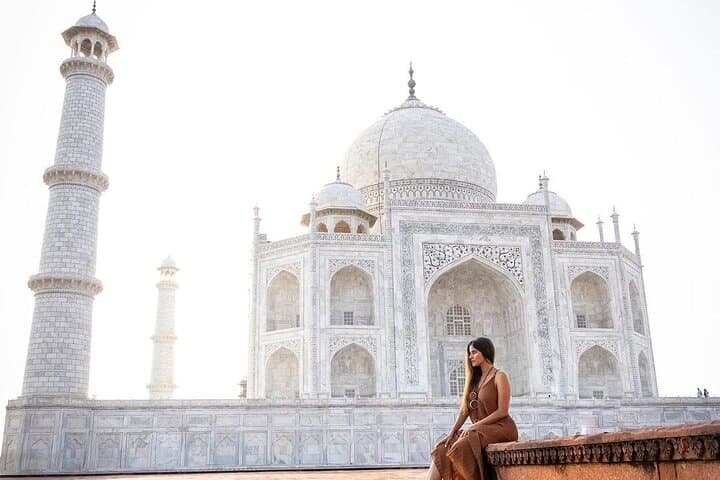
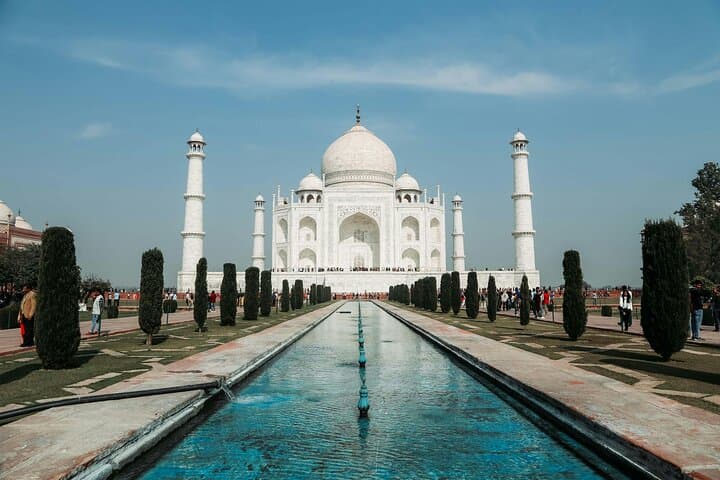
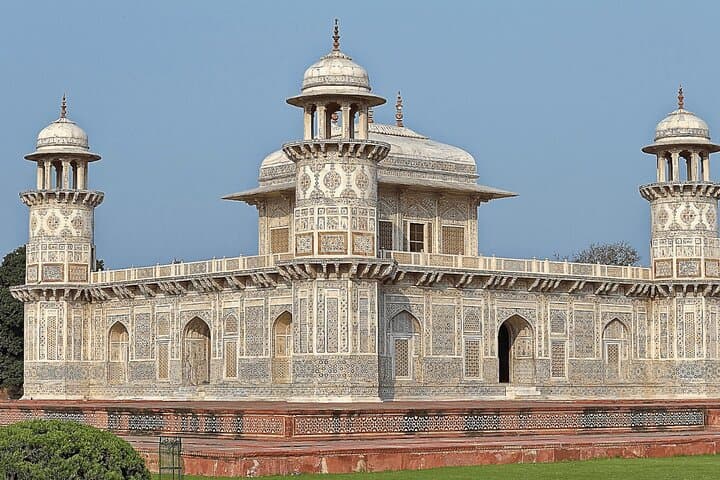
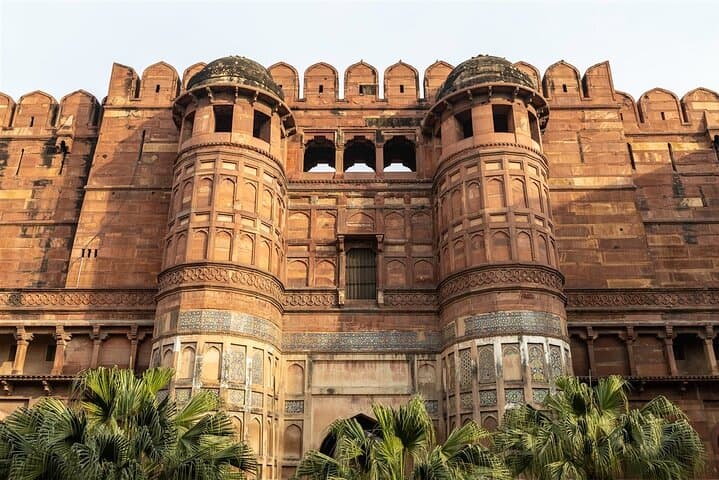
Morning light pours across a three-hour highway as a private car threads from New Delhi toward the flat plains of Uttar Pradesh — the Taj Mahal materializes like an idea becoming real. On day one the group moves with purpose: a guided walk through the Taj’s marble courts, then the layered defenses and courtyards of Agra Fort. The next day the road opens to red-sandstone Fatehpur Sikri, then the dizzy geometry of Chand Baori’s 13-story stepwell in Abhaneri before arrival in the pink city of Jaipur.
Morning light pours across a three-hour highway as a private car threads from New Delhi toward the flat plains of Uttar Pradesh — the Taj Mahal materializes like an idea becoming real. On day one the group moves with purpose: a guided walk through the Taj’s marble courts, then the layered defenses and courtyards of Agra Fort. The next day the road opens to red-sandstone Fatehpur Sikri, then the dizzy geometry of Chand Baori’s 13-story stepwell in Abhaneri before arrival in the pink city of Jaipur.
These stops trace Mughal and Rajput histories: Shah Jahan’s mausoleum and Mumtaz Mahal’s story at the Taj, Akbar’s short-lived capital at Fatehpur Sikri, and Jaipur’s 18th-century observatory and Hawa Mahal, where royal life met astronomical curiosity. Geologically the route crosses alluvial plains and the low outcrops of the Aravalli range around Jaipur, shaping fort placement and water management — note Chand Baori’s engineering response to seasonal scarcity.
Practical guidance is straightforward. Start early to catch cooler temperatures and softer light at monuments; the Taj is closed on Fridays so the itinerary swaps days accordingly. Dress modestly for religious sites, wear sturdy walking shoes for uneven fort floors and stepwell steps, and carry a refillable water bottle — tap water is not potable for most visitors. Tickets and local guide fees are typically arranged by the operator, but keep local currency for small purchases and tips.
This private, vehicle-based tour balances driving time with concentrated on-site visits — it’s ideal for travelers who want curated cultural access without heavy trekking, offering architectural immersion, photography windows, and a compact introduction to northern India’s imperial heritage.