THE ADVENTURE COLLECTIVE® · Independent discovery and booking for outdoor travel

Walk the marble parikrama, hear hymns close to the Guru Granth Sahib, and go behind the scenes of the world’s largest community kitchen. This guided Golden Temple tour pairs cultural depth with practical access advice for first-time visitors.
Walk the marble parikrama, hear hymns close to the Guru Granth Sahib, and go behind the scenes of the world’s largest community kitchen. This guided Golden Temple tour pairs cultural depth with practical access advice for first-time visitors.
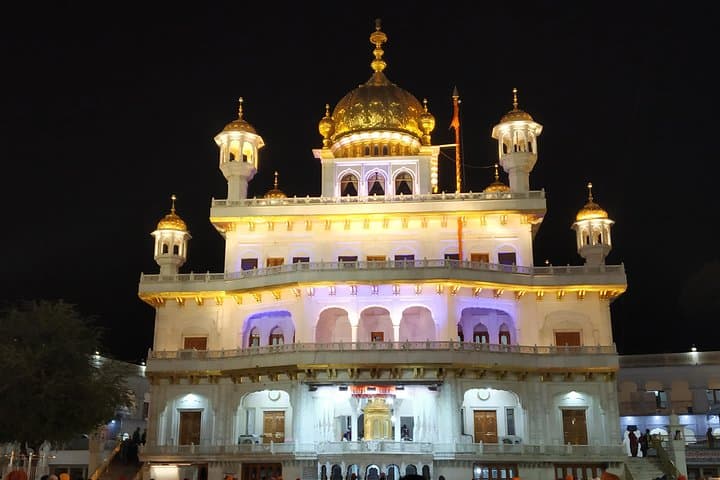
Mist lifts off the marble sarovar as pilgrims complete a quiet circumambulation; the pool reflects the gilded façade and the morning bell calls travelers forward. On this guided walk through Harmandir Sahib, the Golden Temple feels less like a monument and more like a living center—water holding the light, footsteps marking centuries.
Verified experiences and guided adventures in the surrounding area.
Operated by Travel India With Peace · Amritsar, Punjab
Mist lifts off the marble sarovar as pilgrims complete a quiet circumambulation; the pool reflects the gilded façade and the morning bell calls travelers forward. On this guided walk through Harmandir Sahib, the Golden Temple feels less like a monument and more like a living center—water holding the light, footsteps marking centuries.
Constructed under the fifth Sikh Guru, Guru Arjan, in the late 16th century and later rebuilt and embellished under Maharaja Ranjit Singh, the complex blends Mughal and Sikh architectural lines. Visitors encounter Akal Takht’s sober stone, the hulking bronze statue of Maharaja Ranjit Singh, and the Guru Granth Sahib—revered and sung in the central sanctum. The surrounding city’s flat alluvial plain explains the temple’s low, reflective profile rather than soaring spires.
Practical guidance is straightforward: entry requires shoe removal and head covering, and modest dress is expected. The tour includes backstage access to one of the world’s largest community kitchens—langar—where volunteers dish out free meals, a study in organized generosity. Expect moments of standing during prayers and quiet walking around the parikrama (circumambulatory path). The guide will explain liturgy, symbolism, and respectful behavior, and highlight viewpoints for aerial photos taken from permitted spots.
Timing matters: early morning and late afternoon offer softer light and thinner crowds; midday can be noisy and busy. Hydrate before you arrive, carry a light scarf for head covering, and allow two to three hours to move at a deliberate, observant pace. Listen, remove shoes, and leave no trace—this site is both sacred and a functioning public space.
easy.
2–3 hours.
Minimal fitness required—comfortable standing and slow walking for up to a couple of hours.
Booking guarantees a private guide and may include backstage access; walk-ins are possible but can entail longer waits.
Photography is permitted in many areas but not during certain prayer services or inside the inner sanctum—follow your guide’s directions and signage.
Yes—strollers are permitted and the site is stroller and wheelchair accessible, though some areas have steps; infants should sit on laps in transit.
Yes—langar offers free meals to all; outside food is discouraged inside the complex to respect communal provisions.
Harmandir Sahib was completed by Guru Arjan in the late 1500s; Maharaja Ranjit Singh later gilded the central shrine, making it a focal point for Sikh identity.
High visitor volumes require careful crowd control—follow designated paths, avoid single-use plastics in the complex, and respect food-distribution systems to reduce waste.
Travel India With Peace operates guided outdoor trips and adventures with an emphasis on safety, stewardship, and memorable experiences.


Mist lifts off the marble sarovar as pilgrims complete a quiet circumambulation; the pool reflects the gilded façade and the morning bell calls travelers forward. On this guided walk through Harmandir Sahib, the Golden Temple feels less like a monument and more like a living center—water holding the light, footsteps marking centuries.
Mist lifts off the marble sarovar as pilgrims complete a quiet circumambulation; the pool reflects the gilded façade and the morning bell calls travelers forward. On this guided walk through Harmandir Sahib, the Golden Temple feels less like a monument and more like a living center—water holding the light, footsteps marking centuries.
Constructed under the fifth Sikh Guru, Guru Arjan, in the late 16th century and later rebuilt and embellished under Maharaja Ranjit Singh, the complex blends Mughal and Sikh architectural lines. Visitors encounter Akal Takht’s sober stone, the hulking bronze statue of Maharaja Ranjit Singh, and the Guru Granth Sahib—revered and sung in the central sanctum. The surrounding city’s flat alluvial plain explains the temple’s low, reflective profile rather than soaring spires.
Practical guidance is straightforward: entry requires shoe removal and head covering, and modest dress is expected. The tour includes backstage access to one of the world’s largest community kitchens—langar—where volunteers dish out free meals, a study in organized generosity. Expect moments of standing during prayers and quiet walking around the parikrama (circumambulatory path). The guide will explain liturgy, symbolism, and respectful behavior, and highlight viewpoints for aerial photos taken from permitted spots.
Timing matters: early morning and late afternoon offer softer light and thinner crowds; midday can be noisy and busy. Hydrate before you arrive, carry a light scarf for head covering, and allow two to three hours to move at a deliberate, observant pace. Listen, remove shoes, and leave no trace—this site is both sacred and a functioning public space.