THE ADVENTURE COLLECTIVE® · Independent discovery and booking for outdoor travel

Walk the marble steps into the heart of Amritsar and circle the sarovar with a local guide who explains the temple’s rituals, history, and the massive community kitchen. This 2–3 hour tour includes backstage access to langar and a paced introduction to Sikh practice and architecture.
Walk the marble steps into the heart of Amritsar and circle the sarovar with a local guide who explains the temple’s rituals, history, and the massive community kitchen. This 2–3 hour tour includes backstage access to langar and a paced introduction to Sikh practice and architecture.
The marble steps are cool underfoot as you enter the complex and the sarovar—the holy pool—shimmers with morning light, drawing a steady circle of barefoot pilgrims.
Verified experiences and guided adventures in the surrounding area.
Operated by Planet Amritsar Inc. · Amritsar, Punjab
The marble steps are cool underfoot as you enter the complex and the sarovar—the holy pool—shimmers with morning light, drawing a steady circle of barefoot pilgrims.
This guided walk moves deliberately: down the stairs into the main complex, around the parikrama (circumambulatory path), past smaller gurdwaras and the Akal Takht, and finally into the langar where volunteers ladle hot meals. The route puts you at the center of Sikh devotional life, where ritual, music, and service happen in public.
Historically, the Harmandir Sahib was begun in the 16th century under Guru Ram Das and completed under Guru Arjan; its present gilding came later under Maharaja Ranjit Singh. The temple’s architecture combines Mughal and Sikh influences, and the sarovar sits on an artificially excavated basin that stabilizes the complex’s microclimate.
On a cultural level, the site is as much kitchen and community hall as sanctuary—langar feeds tens of thousands daily and is run by volunteers. Expect quiet respect: head coverings, shoe removal, and modest clothing are enforced.
Practical guidance: the shared tour lasts about 2–3 hours, is suitable for most fitness levels, and includes backstage access to the giant kitchen. Arrive early to avoid crowds and the midday heat; bring a reusable water bottle, dress in layers for variable indoor/outdoor temperatures, and plan for some standing and gently paced walking. Photography is allowed in many areas but follow your guide’s cues during ceremonies. The experience is part devotional ritual, part living history—approach it with curiosity and calm.
easy.
2–3 hours.
Minimal fitness required—mostly flat walking and short stair sections; accessible to most abilities with some assistance for mobility devices.
Yes—this tour is bookable with instant confirmation; booking secures your spot for the scheduled 2–3 hour visit.
Admission to the complex itself is free; the guided tour provides interpretation and backstage access to the langar kitchen but not separate paid tickets.
Modest clothing is required; shoulders and knees should be covered and everyone must wear a head covering and remove shoes before entering the inner precincts.
The operator notes wheelchair accessibility, but some steps and crowded pathways may require assistance—check ahead if you need accommodations.
The Harmandir Sahib was founded in the 16th century by Guru Ram Das and completed under Guru Arjan; later renovations, including gold plating, were sponsored by Maharaja Ranjit Singh.
Langar operations emphasize volunteer labor and minimal waste—visitors can support this by using reusable bottles, disposing of waste at designated points, and following staff guidance to reduce impact.
Planet Amritsar Inc. operates guided outdoor trips and adventures with an emphasis on safety, stewardship, and memorable experiences.
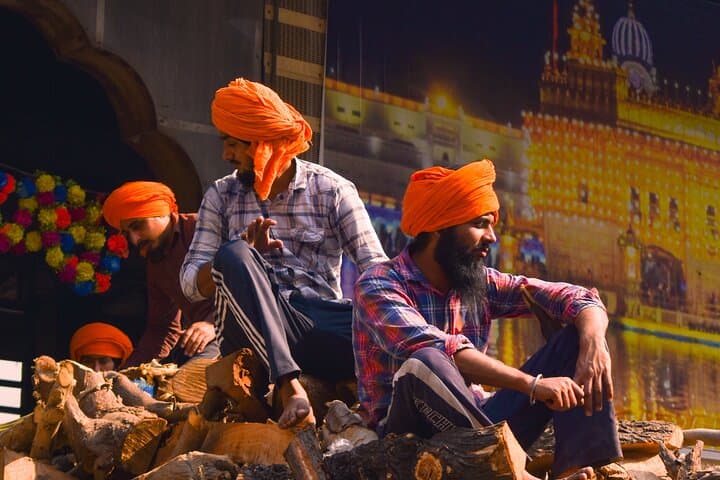



The marble steps are cool underfoot as you enter the complex and the sarovar—the holy pool—shimmers with morning light, drawing a steady circle of barefoot pilgrims.
The marble steps are cool underfoot as you enter the complex and the sarovar—the holy pool—shimmers with morning light, drawing a steady circle of barefoot pilgrims.
This guided walk moves deliberately: down the stairs into the main complex, around the parikrama (circumambulatory path), past smaller gurdwaras and the Akal Takht, and finally into the langar where volunteers ladle hot meals. The route puts you at the center of Sikh devotional life, where ritual, music, and service happen in public.
Historically, the Harmandir Sahib was begun in the 16th century under Guru Ram Das and completed under Guru Arjan; its present gilding came later under Maharaja Ranjit Singh. The temple’s architecture combines Mughal and Sikh influences, and the sarovar sits on an artificially excavated basin that stabilizes the complex’s microclimate.
On a cultural level, the site is as much kitchen and community hall as sanctuary—langar feeds tens of thousands daily and is run by volunteers. Expect quiet respect: head coverings, shoe removal, and modest clothing are enforced.
Practical guidance: the shared tour lasts about 2–3 hours, is suitable for most fitness levels, and includes backstage access to the giant kitchen. Arrive early to avoid crowds and the midday heat; bring a reusable water bottle, dress in layers for variable indoor/outdoor temperatures, and plan for some standing and gently paced walking. Photography is allowed in many areas but follow your guide’s cues during ceremonies. The experience is part devotional ritual, part living history—approach it with curiosity and calm.