THE ADVENTURE COLLECTIVE® · Independent discovery and booking for outdoor travel

Trace Java’s volcanic ridgeline from Bandung to Pangandaran in three active days. Hike crater rims, soak in thermal springs, and body-raft emerald canyons while Sundanese villages reveal local culture.
Trace Java’s volcanic ridgeline from Bandung to Pangandaran in three active days. Hike crater rims, soak in thermal springs, and body-raft emerald canyons while Sundanese villages reveal local culture.
Morning mist lifts off the tea terraces as the van threads a narrow road out of Bandung and the air suddenly smells of wet earth and roasting coffee. By mid-morning you stand at Kawah Putih’s pale, mineral lake, where the crater breathes faint sulfur and the rim frames a moonscape of cracked white shore.
Verified experiences and guided adventures in the surrounding area.
Operated by JavaJivi Backpacker · Bandung, West Java
Morning mist lifts off the tea terraces as the van threads a narrow road out of Bandung and the air suddenly smells of wet earth and roasting coffee. By mid-morning you stand at Kawah Putih’s pale, mineral lake, where the crater breathes faint sulfur and the rim frames a moonscape of cracked white shore.
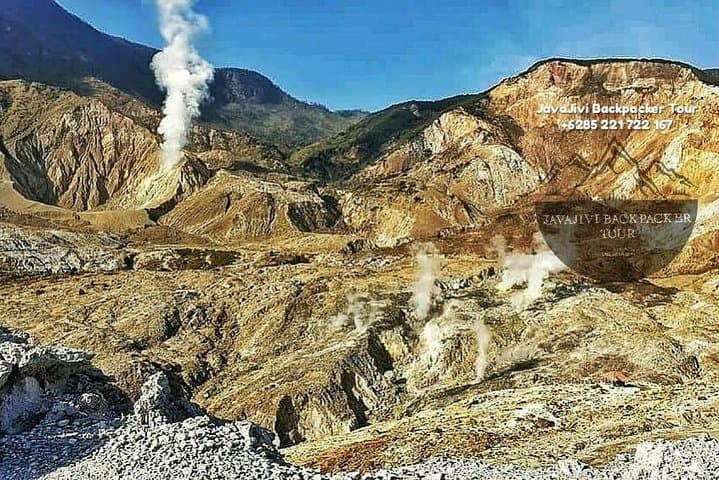
This three-day loop moves through West Java’s volcanic spine: Mount Patuha’s Kawah Putih, the steaming Rengganis springs and mud pools, the otherworldly plateaus and fumaroles of Papandayan, then down to Pangandaran’s green canyons and Citumang river for body-rafting. Java’s geology is active and recent — andesitic stratovolcanoes sculpt the landscape, while Sundanese culture colors small villages with traditional dress, bamboo houses, and customary hospitality.
Expect a mix of short walks on uneven volcanic rock, a gentle trek through tea plantations, thermal spring pools, and river-based activities that put you close to moving water. Local guides explain fumarole sounds once attributed to blacksmiths and point out how rice terraces and tea estates evolved from colonial and indigenous land use.
Practical guidance: pack breathable layers, stout hiking shoes with good grip for volcanic scree, and a quick-dry set for river sections. Start early for Kawah Putih and Papandayan to avoid crowds and the strongest sun; reserve daylight for Citumang body-rafting when water visibility and flow are safest. Hydrate, keep a small first-aid kit, and follow guides’ safety briefings around hot springs and river currents. The trip balances easy sightseeing with short technical moments — rewarding, varied, and distinctly Javanese.
moderate.
3 days (approx. 72 hours).
Moderate fitness; able to manage several hours of walking on uneven ground and short river swims or body-rafting.
Yes; visits are allowed and brief exposure is generally safe—people with respiratory issues should avoid close fumaroles and follow guide advice.
Yes—basic swimming comfort in moving water is recommended for body-rafting; guides provide life jackets and instruction.
Trails range from easy boardwalks to moderate ridgelines with some short steep sections; the Golden Crater route involves uneven ground but not technical climbing.
The tour lists lunches and some breakfasts included; check with the operator for park entrance fees and any optional activity surcharges.
Sundanese villages in this corridor maintain ancestral customs; Papandayan’s name references local folktales of sounds from fumaroles once likened to blacksmithing.
Stick to marked paths, avoid collecting geothermal mud, and use local guides to minimize impact—river-based activities rely on clean water, so minimize plastics.
JavaJivi Backpacker operates guided outdoor trips and adventures with an emphasis on safety, stewardship, and memorable experiences.
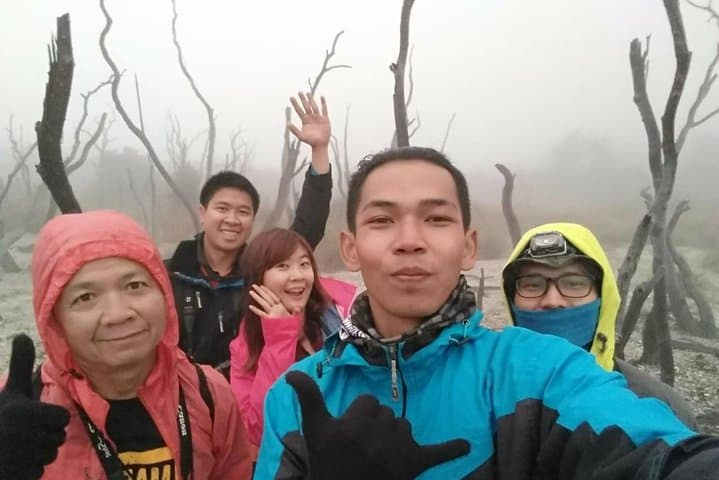
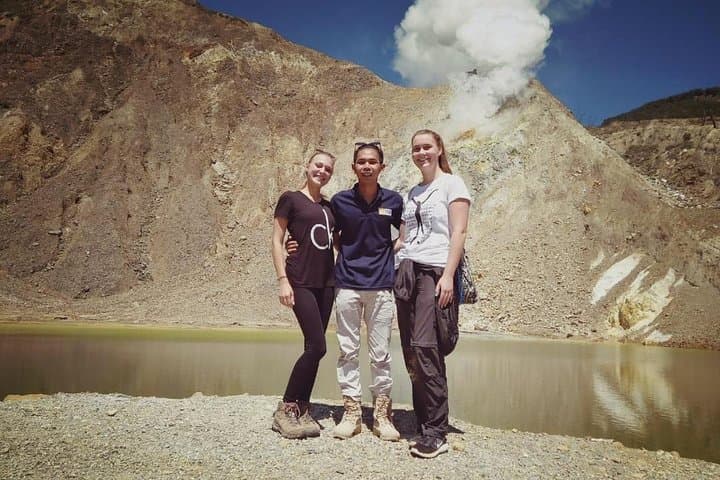
Morning mist lifts off the tea terraces as the van threads a narrow road out of Bandung and the air suddenly smells of wet earth and roasting coffee. By mid-morning you stand at Kawah Putih’s pale, mineral lake, where the crater breathes faint sulfur and the rim frames a moonscape of cracked white shore.
Morning mist lifts off the tea terraces as the van threads a narrow road out of Bandung and the air suddenly smells of wet earth and roasting coffee. By mid-morning you stand at Kawah Putih’s pale, mineral lake, where the crater breathes faint sulfur and the rim frames a moonscape of cracked white shore.
This three-day loop moves through West Java’s volcanic spine: Mount Patuha’s Kawah Putih, the steaming Rengganis springs and mud pools, the otherworldly plateaus and fumaroles of Papandayan, then down to Pangandaran’s green canyons and Citumang river for body-rafting. Java’s geology is active and recent — andesitic stratovolcanoes sculpt the landscape, while Sundanese culture colors small villages with traditional dress, bamboo houses, and customary hospitality.
Expect a mix of short walks on uneven volcanic rock, a gentle trek through tea plantations, thermal spring pools, and river-based activities that put you close to moving water. Local guides explain fumarole sounds once attributed to blacksmiths and point out how rice terraces and tea estates evolved from colonial and indigenous land use.
Practical guidance: pack breathable layers, stout hiking shoes with good grip for volcanic scree, and a quick-dry set for river sections. Start early for Kawah Putih and Papandayan to avoid crowds and the strongest sun; reserve daylight for Citumang body-rafting when water visibility and flow are safest. Hydrate, keep a small first-aid kit, and follow guides’ safety briefings around hot springs and river currents. The trip balances easy sightseeing with short technical moments — rewarding, varied, and distinctly Javanese.