THE ADVENTURE COLLECTIVE® · Independent discovery and booking for outdoor travel

Cross the Golden Gate on foot and experience sweeping bay views, engineering history, and brisk Pacific winds. This self-guided walk pairs practical route advice with timing, safety tips, and what to expect seasonally.
Cross the Golden Gate on foot and experience sweeping bay views, engineering history, and brisk Pacific winds. This self-guided walk pairs practical route advice with timing, safety tips, and what to expect seasonally.
Fog peels back and the bridge emerges—towering cables cutting the morning light as salt spray dares your face and the bay stretches wide beneath. Walking the Golden Gate is a kinetic way to meet San Francisco: each step brings the city skyline, Alcatraz’s silhouette, and the Marin Headlands into shifting frames.
Verified experiences and guided adventures in the surrounding area.
Operated by Pintours · San Francisco, California
Fog peels back and the bridge emerges—towering cables cutting the morning light as salt spray dares your face and the bay stretches wide beneath. Walking the Golden Gate is a kinetic way to meet San Francisco: each step brings the city skyline, Alcatraz’s silhouette, and the Marin Headlands into shifting frames.
Opened in 1937 after years of engineering debate and tenacious construction, the bridge spans 1.7 miles (2.7 km) across the Golden Gate Strait. Its International Orange paint was chosen for visibility against frequent fog; the towers rise from bedrock shaped by the same tectonic forces that created the nearby Marin Headlands and exposed bands of the Franciscan Complex.
Culturally, the bridge is both commuter route and public commons—street musicians, photographers chasing light, and early-morning runners share the promenade. Weather changes fast: the bay’s currents and wind push fog inland in a matter of minutes, turning sun into chill.
Practical guidance: plan 1–2 hours for a round-trip stroll; the walkway is paved with gentle grades but exposed to wind and cyclists. Start at the Golden Gate Bridge Welcome Center to orient yourself and follow pedestrian lanes. Bring a windproof layer, sturdy shoes, and a full water bottle; sunscreen is essential on clear days. Use the app to pause at plaques and viewpoints and time your visit for early morning or late afternoon to avoid the busiest periods. Respect signage, yield to bikes, and be aware that conditions can change quickly—keep an eye on the water and the sky. This walk rewards steady attention: views, history, and the raw edge of a place where land meets ocean.
easy.
1–2 hours.
Suitable for most fitness levels; requires ability to walk paved inclines for up to 2 miles.
Expect 1–2 hours round-trip from the Welcome Center to Vista Point South at a relaxed pace with photo stops.
The main pedestrian walkway is paved and generally accessible, but check for temporary closures or detours that may affect access.
Bicycles use designated lanes—pedestrians should stay in the marked walkway and yield at shared sections to avoid conflicts.
No ticket is required to walk the bridge; this self-guided tour uses an app to provide information and pacing.
Completed in 1937, the bridge was a major engineering feat led by Joseph Strauss with contributions from engineers like Charles Alton Ellis; its construction transformed regional commerce and travel.
The Golden Gate area is managed to balance heavy visitation with habitat protection—stay on paths, pack out waste, and respect wildlife to minimize impact.
Pintours operates guided outdoor trips and adventures with an emphasis on safety, stewardship, and memorable experiences.
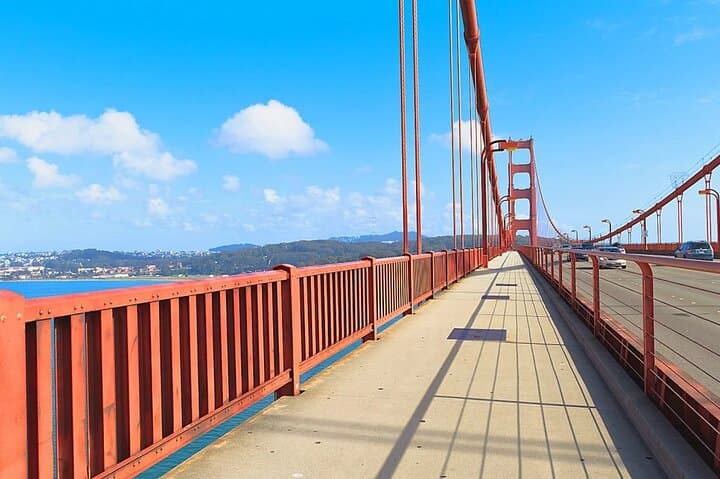
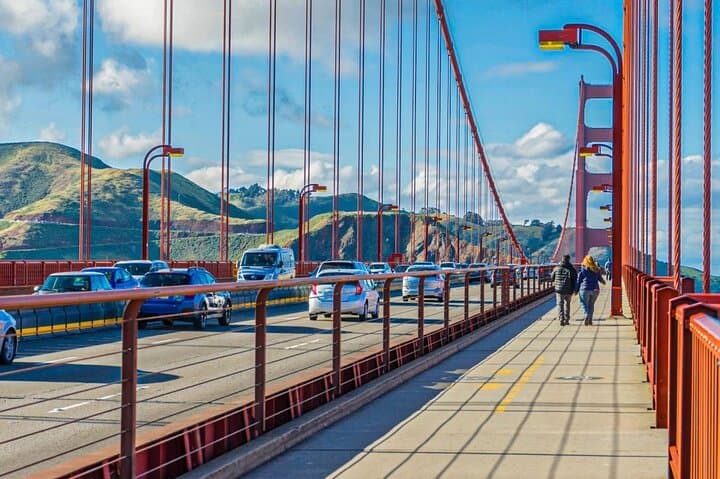
Fog peels back and the bridge emerges—towering cables cutting the morning light as salt spray dares your face and the bay stretches wide beneath. Walking the Golden Gate is a kinetic way to meet San Francisco: each step brings the city skyline, Alcatraz’s silhouette, and the Marin Headlands into shifting frames.
Fog peels back and the bridge emerges—towering cables cutting the morning light as salt spray dares your face and the bay stretches wide beneath. Walking the Golden Gate is a kinetic way to meet San Francisco: each step brings the city skyline, Alcatraz’s silhouette, and the Marin Headlands into shifting frames.
Opened in 1937 after years of engineering debate and tenacious construction, the bridge spans 1.7 miles (2.7 km) across the Golden Gate Strait. Its International Orange paint was chosen for visibility against frequent fog; the towers rise from bedrock shaped by the same tectonic forces that created the nearby Marin Headlands and exposed bands of the Franciscan Complex.
Culturally, the bridge is both commuter route and public commons—street musicians, photographers chasing light, and early-morning runners share the promenade. Weather changes fast: the bay’s currents and wind push fog inland in a matter of minutes, turning sun into chill.
Practical guidance: plan 1–2 hours for a round-trip stroll; the walkway is paved with gentle grades but exposed to wind and cyclists. Start at the Golden Gate Bridge Welcome Center to orient yourself and follow pedestrian lanes. Bring a windproof layer, sturdy shoes, and a full water bottle; sunscreen is essential on clear days. Use the app to pause at plaques and viewpoints and time your visit for early morning or late afternoon to avoid the busiest periods. Respect signage, yield to bikes, and be aware that conditions can change quickly—keep an eye on the water and the sky. This walk rewards steady attention: views, history, and the raw edge of a place where land meets ocean.