THE ADVENTURE COLLECTIVE® · Independent discovery and booking for outdoor travel

Cover Iceland’s biggest hits in a single private day: walk between tectonic plates at Þingvellir, watch Strokkur erupt, feel Gullfoss’s spray, walk behind Seljalandsfoss, climb beside Skógafoss, and stand on Reynisfjara’s black sand. This guide explains what to expect and how to prepare.
Cover Iceland’s biggest hits in a single private day: walk between tectonic plates at Þingvellir, watch Strokkur erupt, feel Gullfoss’s spray, walk behind Seljalandsfoss, climb beside Skógafoss, and stand on Reynisfjara’s black sand. This guide explains what to expect and how to prepare.
The day begins before most cafés open: a hush over Reykjavík, a private minivan slipping eastward into a landscape that seems to rearrange itself every mile. Mossy lava fields roll past like a green sea, steam plumes rise from holes in the ground, and the driver taps the brake as the first low clouds lift to reveal a glint of glacial river.
Verified experiences and guided adventures in the surrounding area.
Operated by IceTransfer · Reykjavík, Capital Region
The day begins before most cafés open: a hush over Reykjavík, a private minivan slipping eastward into a landscape that seems to rearrange itself every mile. Mossy lava fields roll past like a green sea, steam plumes rise from holes in the ground, and the driver taps the brake as the first low clouds lift to reveal a glint of glacial river.
By midmorning the group stands at Þingvellir, where stone and story share the same address. Here, the North American and Eurasian plates pull apart, leaving fissures and cliffs that mark geological time in visible seams. It’s also the birthplace of Icelandic law—the Alþingi met on these plains in the 10th century—so every path feels threaded with history as much as basalt.
Next, Geysir’s mineral-bright grounds smell of sulfur and hissing steam. Strokkur punctuates the pause between breaths, throwing a column of boiling water 10–20 meters into Arctic air at regular intervals, while Gullfoss throws its own drama: two thunderous steps of glacial melt that carve mist into rainbows.
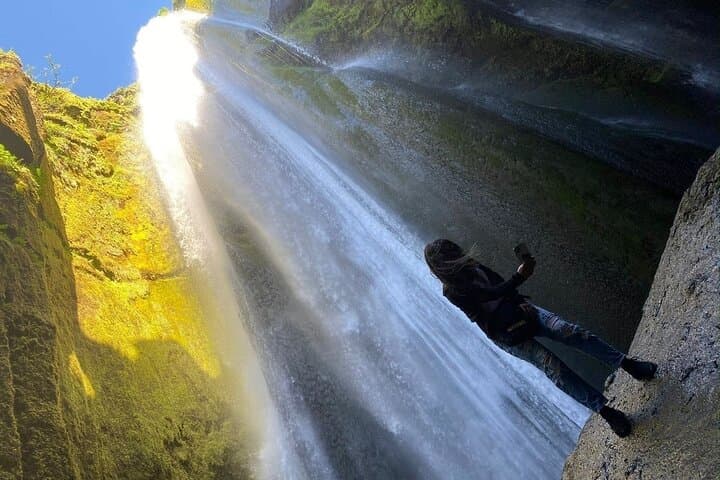
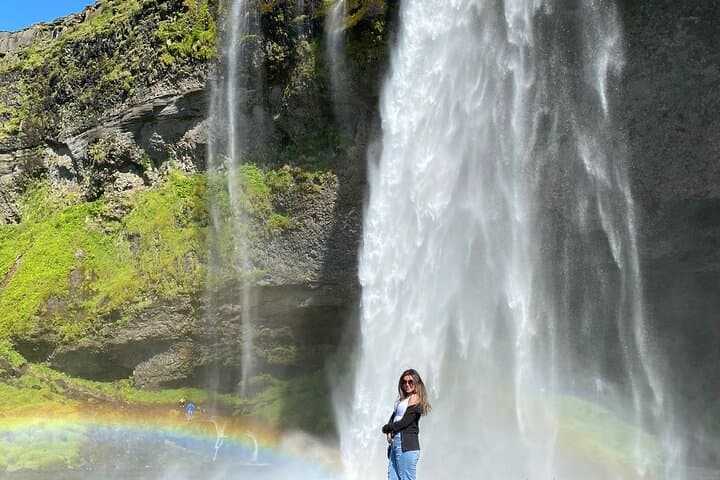
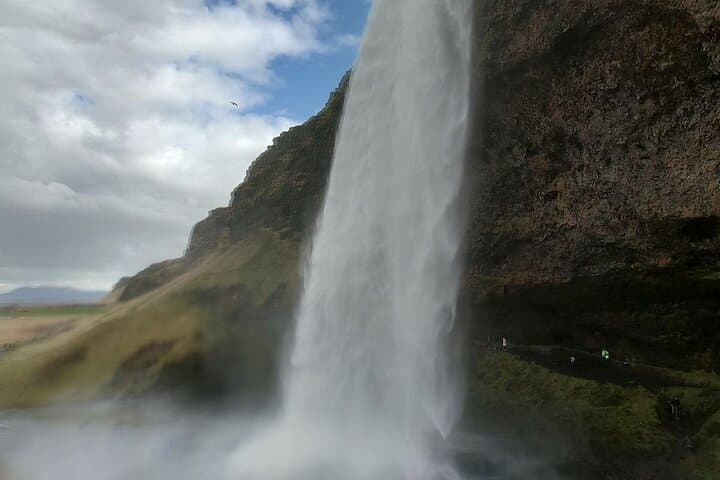
The tour then tracks south, where waterfalls write the coastline’s most dramatic lines. At Seljalandsfoss the route invites a rare perspective—walk the damp trail behind the curtain and feel the falls’ voice from the inside out. Skógafoss, a 60-meter sheet of glacial water, demands a pause; the stairs beside it climb to a lookout that flattens the horizon and lets the river’s path become legible.
Finally, Reynisfjara’s black sand beach offers a different grammar of geology: hexagonal basalt columns, wind-sculpted sea stacks rising from the Atlantic, and waves that refuse to be polite. The guide will warn you about sneaker waves—this beach is beautiful but uncompromising.
Practical notes: this private tour condenses top sights into an 11-hour day with hotel pickup in Reykjavík. Expect several short walks—Thingvellir circuits of 1–3 km, boardwalks at Gullfoss under 1 km, and beach strolls of about 1 km—mostly flat but often wet, muddy, and windy. Timing matters: summer brings long daylight and seabirds; winter offers dramatic low light and possible road delays. Local guides are not just drivers; they optimize photo stops, advise on tides and safety, and can detour to lesser-known spots on request.
What to bring: layered, waterproof clothing, sturdy waterproof boots, a good camera with weather protection, and a sense of flexibility—weather controls the day as much as the itinerary.
This is a tour of contrasts—tectonic movement and human law, boiling earth and icy rivers, black sand that absorbs light and waterfalls that throw it back. For travelers short on time, it’s an intense, manageable primer on why Iceland feels both very young and very old at the same time.
easy.
11 hours.
Suitable for travelers with basic mobility; requires standing and short walks (up to 3 km) and climbing stairs at Skógafoss.
The tour is approximately 11 hours and starts with hotel pickup in Reykjavík; pickup usually begins about 30 minutes before departure.
Standard admissions like national park access are included where specified, but private attractions or optional extras may require separate fees—confirm with the operator.
Yes—this private tour is rated easy and suitable for most fitness levels, but participants should be able to do short walks and navigate stairs at Skógafoss.
Generally yes, but access can be restricted in winter due to ice; guides will advise based on conditions and safety.
Puffins are seasonal—typically seen along the south coast in summer; they are not guaranteed and depend on nesting behavior and time of year.
There are scheduled stops with cafeteria-style options and restrooms at major sites; bring snacks if you have dietary restrictions or long gaps between meals.
Þingvellir hosted the Alþingi, the world’s oldest parliament, from the 10th century—law and landscape are intertwined here.
Stick to marked paths, avoid trampling fragile moss and lichens, and respect bird-nesting closures—heavy foot traffic and off-trail walking damage slow-growing habitats.
IceTransfer operates guided outdoor trips and adventures with an emphasis on safety, stewardship, and memorable experiences.
The day begins before most cafés open: a hush over Reykjavík, a private minivan slipping eastward into a landscape that seems to rearrange itself every mile. Mossy lava fields roll past like a green sea, steam plumes rise from holes in the ground, and the driver taps the brake as the first low clouds lift to reveal a glint of glacial river.
The day begins before most cafés open: a hush over Reykjavík, a private minivan slipping eastward into a landscape that seems to rearrange itself every mile. Mossy lava fields roll past like a green sea, steam plumes rise from holes in the ground, and the driver taps the brake as the first low clouds lift to reveal a glint of glacial river.
By midmorning the group stands at Þingvellir, where stone and story share the same address. Here, the North American and Eurasian plates pull apart, leaving fissures and cliffs that mark geological time in visible seams. It’s also the birthplace of Icelandic law—the Alþingi met on these plains in the 10th century—so every path feels threaded with history as much as basalt.
Next, Geysir’s mineral-bright grounds smell of sulfur and hissing steam. Strokkur punctuates the pause between breaths, throwing a column of boiling water 10–20 meters into Arctic air at regular intervals, while Gullfoss throws its own drama: two thunderous steps of glacial melt that carve mist into rainbows.
The tour then tracks south, where waterfalls write the coastline’s most dramatic lines. At Seljalandsfoss the route invites a rare perspective—walk the damp trail behind the curtain and feel the falls’ voice from the inside out. Skógafoss, a 60-meter sheet of glacial water, demands a pause; the stairs beside it climb to a lookout that flattens the horizon and lets the river’s path become legible.
Finally, Reynisfjara’s black sand beach offers a different grammar of geology: hexagonal basalt columns, wind-sculpted sea stacks rising from the Atlantic, and waves that refuse to be polite. The guide will warn you about sneaker waves—this beach is beautiful but uncompromising.
Practical notes: this private tour condenses top sights into an 11-hour day with hotel pickup in Reykjavík. Expect several short walks—Thingvellir circuits of 1–3 km, boardwalks at Gullfoss under 1 km, and beach strolls of about 1 km—mostly flat but often wet, muddy, and windy. Timing matters: summer brings long daylight and seabirds; winter offers dramatic low light and possible road delays. Local guides are not just drivers; they optimize photo stops, advise on tides and safety, and can detour to lesser-known spots on request.
What to bring: layered, waterproof clothing, sturdy waterproof boots, a good camera with weather protection, and a sense of flexibility—weather controls the day as much as the itinerary.
This is a tour of contrasts—tectonic movement and human law, boiling earth and icy rivers, black sand that absorbs light and waterfalls that throw it back. For travelers short on time, it’s an intense, manageable primer on why Iceland feels both very young and very old at the same time.