THE ADVENTURE COLLECTIVE® · Independent discovery and booking for outdoor travel

A single day to see Iceland’s geological highlights: walk the rift of Þingvellir, watch Strokkur’s plumbing in Haukadalur, and stand above the thundering Gullfoss. This private Golden Circle tour packs history, geology and easy walks into an 8½-hour loop from Reykjavík.
A single day to see Iceland’s geological highlights: walk the rift of Þingvellir, watch Strokkur’s plumbing in Haukadalur, and stand above the thundering Gullfoss. This private Golden Circle tour packs history, geology and easy walks into an 8½-hour loop from Reykjavík.
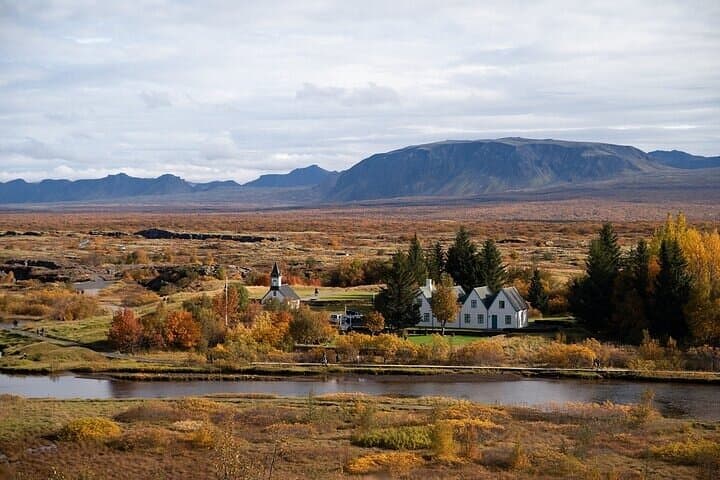
You step out of Reykjavík into low cloud and a wind that seems to be testing your coat. The van hums along an asphalt ribbon, and within an hour the landscape opens—black lava fields threaded with bright green moss, shallow lakes that mirror a shifting sky. At Þingvellir, the ground itself feels impatient: a wide rift where the North American and Eurasian plates pull away, clefts and cliffs that give the valley a slow, tectonic hunger.
Verified experiences and guided adventures in the surrounding area.
Operated by TripZig · Reykjavík, Capital Region
You step out of Reykjavík into low cloud and a wind that seems to be testing your coat. The van hums along an asphalt ribbon, and within an hour the landscape opens—black lava fields threaded with bright green moss, shallow lakes that mirror a shifting sky. At Þingvellir, the ground itself feels impatient: a wide rift where the North American and Eurasian plates pull away, clefts and cliffs that give the valley a slow, tectonic hunger.
Walk the Almannagjá fissure and you can feel geology in motion beneath your boots. It’s a place of history and law—the original Althing, the world’s oldest surviving parliament, met here in 930 AD. Stone meets story here: the flat assembly fields, the chapel ruins, and the fragile boardwalks that keep visitors from trampling fragile lichens.
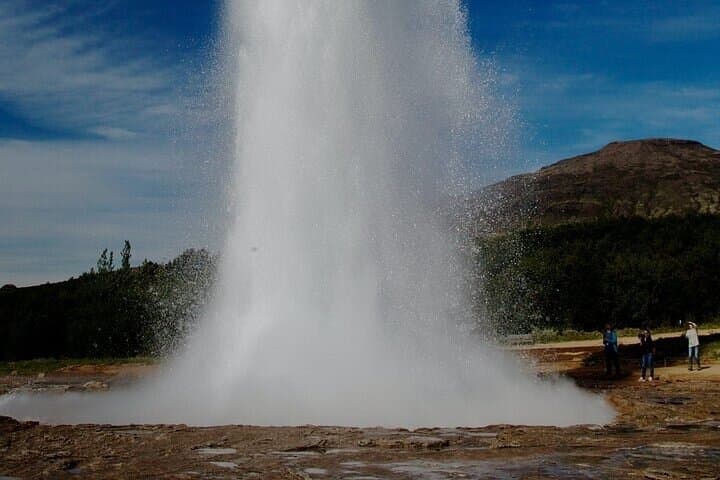
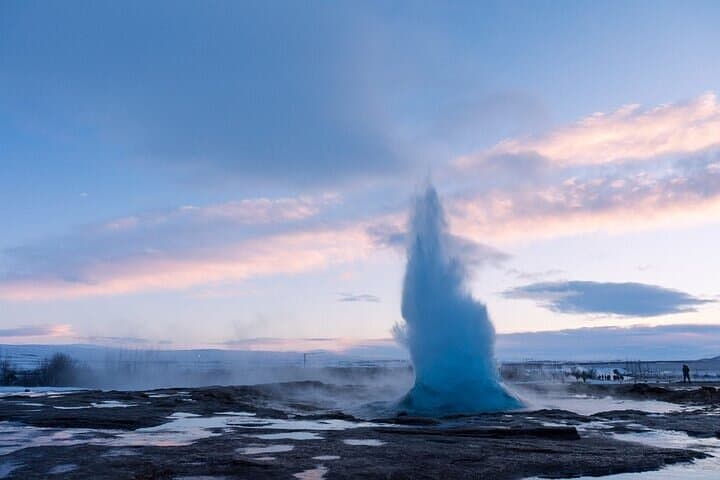
A short drive east drops you into Haukadalur, the geothermal theatre that gave the world the word “geyser.” Strokkur punctuates the air every few minutes, boiling water punching skyward to 20–30 meters. Nearby, Geysir’s older, less predictable eruptions remind you these features answer to subterranean pressure and centuries of earthquake rearrangement.
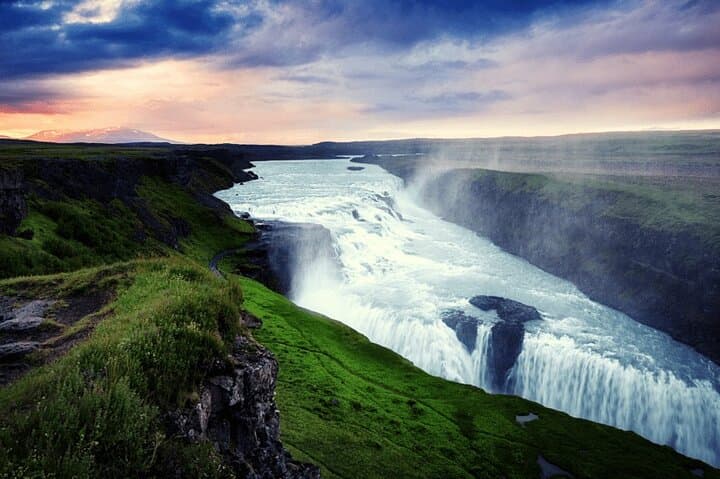
Gullfoss finishes the route with force. The Hvítá river narrows and then collapses in a two-step fall that totals about 32 meters, running into a canyon the river has carved over millennia. From the viewing platforms you can watch mist climb and be aware—this cascade was nearly sold for hydroelectric development in the 20th century before national protection prevailed.
This private, full-day trip—about 8½ hours on the road with short hikes at each stop—balances driving with targeted walks: expect 1–3 km of easy-to-moderate walking at Þingvellir, boardwalk loops at Geysir under a kilometer, and a roughly 1 km loop plus 40–60 m of elevation change at Gullfoss.
Practical edge: dress for wind and sudden rain, layer wool or synthetics, and bring waterproof footwear—the paths are often wet and can be icy in shoulder seasons. Your private guide times stops to avoid the busiest coach crowds and can tailor walking choices for mobility or photography needs.
If you have limited time in Iceland, this loop is a compact primer on the island’s volcanic heart: plate tectonics, geothermal activity, and water that keeps shaping the land. For photographers, the drama is constant—moving clouds, boiling springs, and waterfalls that refuse to be ignored. For planning, aim for morning departures in summer to catch softer light at Gullfoss and consider booking a private vehicle if you want flexibility on where to linger or to add lesser-known falls like Þórufoss to the itinerary.
easy.
8–9 hours.
Suitable for travelers in average fitness who can manage short walks up to 3 km and modest elevation changes.
The itinerary runs about 8.5 hours (510 minutes) including drives and time at each stop.
Pickups are offered from Reykjavík hotels and the cruise port; confirm your pickup point when booking.
Yes—stops include short, accessible paths; guides can adapt walking time for mobility needs.
Strokkur reliably erupts every few minutes; the larger Geysir eruptions are less frequent but the geothermal field is always active.
Meals are not included; there are cafés at major stops but bringing snacks is recommended for timing flexibility.
Yes—being private allows the guide to extend time at Þingvellir, add Þórufoss, or slow the schedule for photography.
Þingvellir was the site of the Althing, Iceland’s national assembly founded in 930 AD and a core of Icelandic identity.
Many sites are protected to prevent erosion and protect fragile moss—stay on marked paths and follow guide instructions to minimize impact.
TripZig operates guided outdoor trips and adventures with an emphasis on safety, stewardship, and memorable experiences.
You step out of Reykjavík into low cloud and a wind that seems to be testing your coat. The van hums along an asphalt ribbon, and within an hour the landscape opens—black lava fields threaded with bright green moss, shallow lakes that mirror a shifting sky. At Þingvellir, the ground itself feels impatient: a wide rift where the North American and Eurasian plates pull away, clefts and cliffs that give the valley a slow, tectonic hunger.
You step out of Reykjavík into low cloud and a wind that seems to be testing your coat. The van hums along an asphalt ribbon, and within an hour the landscape opens—black lava fields threaded with bright green moss, shallow lakes that mirror a shifting sky. At Þingvellir, the ground itself feels impatient: a wide rift where the North American and Eurasian plates pull away, clefts and cliffs that give the valley a slow, tectonic hunger.
Walk the Almannagjá fissure and you can feel geology in motion beneath your boots. It’s a place of history and law—the original Althing, the world’s oldest surviving parliament, met here in 930 AD. Stone meets story here: the flat assembly fields, the chapel ruins, and the fragile boardwalks that keep visitors from trampling fragile lichens.
A short drive east drops you into Haukadalur, the geothermal theatre that gave the world the word “geyser.” Strokkur punctuates the air every few minutes, boiling water punching skyward to 20–30 meters. Nearby, Geysir’s older, less predictable eruptions remind you these features answer to subterranean pressure and centuries of earthquake rearrangement.
Gullfoss finishes the route with force. The Hvítá river narrows and then collapses in a two-step fall that totals about 32 meters, running into a canyon the river has carved over millennia. From the viewing platforms you can watch mist climb and be aware—this cascade was nearly sold for hydroelectric development in the 20th century before national protection prevailed.
This private, full-day trip—about 8½ hours on the road with short hikes at each stop—balances driving with targeted walks: expect 1–3 km of easy-to-moderate walking at Þingvellir, boardwalk loops at Geysir under a kilometer, and a roughly 1 km loop plus 40–60 m of elevation change at Gullfoss.
Practical edge: dress for wind and sudden rain, layer wool or synthetics, and bring waterproof footwear—the paths are often wet and can be icy in shoulder seasons. Your private guide times stops to avoid the busiest coach crowds and can tailor walking choices for mobility or photography needs.
If you have limited time in Iceland, this loop is a compact primer on the island’s volcanic heart: plate tectonics, geothermal activity, and water that keeps shaping the land. For photographers, the drama is constant—moving clouds, boiling springs, and waterfalls that refuse to be ignored. For planning, aim for morning departures in summer to catch softer light at Gullfoss and consider booking a private vehicle if you want flexibility on where to linger or to add lesser-known falls like Þórufoss to the itinerary.