THE ADVENTURE COLLECTIVE® · Independent discovery and booking for outdoor travel

Travel the Golden Circle with a professional geologist in a small group and watch tectonics, geysers and waterfalls move from textbook to living landscape. This nine-hour field trip focuses on hands-on geology, quieter stops, and practical insights for first-time Iceland visitors.
Travel the Golden Circle with a professional geologist in a small group and watch tectonics, geysers and waterfalls move from textbook to living landscape. This nine-hour field trip focuses on hands-on geology, quieter stops, and practical insights for first-time Iceland visitors.
You step onto basalt crunching underfoot, wind combing the low scrub as the guide—an actual field geologist—draws a chalk line between two continents. The ground at Þingvellir opens like a slow seam: one side slipping west, the other east. For nine hours the Golden Circle stops being a checklist and becomes a sequence of active forces—water, fire and steam—each with its own voice.
Verified experiences and guided adventures in the surrounding area.
Operated by Geoadventures Iceland · Reykjavík, Capital Region
You step onto basalt crunching underfoot, wind combing the low scrub as the guide—an actual field geologist—draws a chalk line between two continents. The ground at Þingvellir opens like a slow seam: one side slipping west, the other east. For nine hours the Golden Circle stops being a checklist and becomes a sequence of active forces—water, fire and steam—each with its own voice.
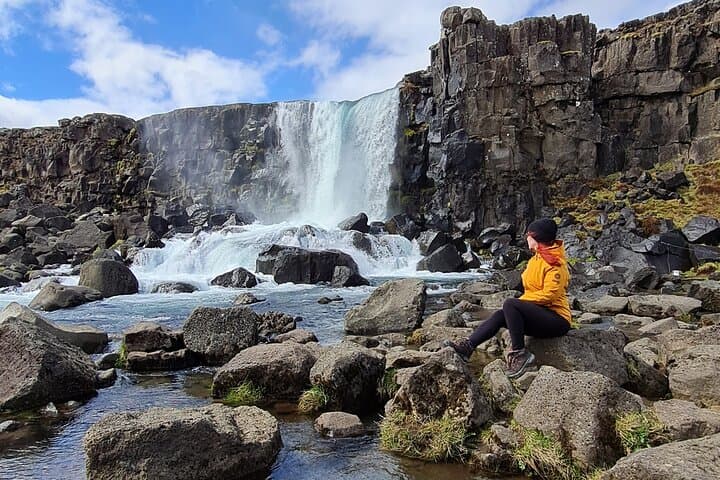
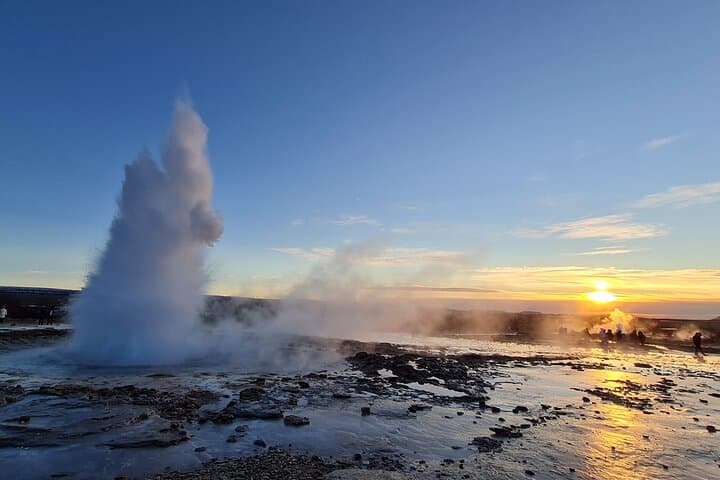
The day begins at Halgrímskirkja in Reykjavík and moves in a loop through Thingvellir, Haukadalur (Geysir), Gullfoss and a volcanic crater that last erupted roughly 6,500 years ago. Thingvellir is where Iceland’s Alþingi met in open air from the 10th century; the rift valley is a living classroom of plate tectonics—rift fissures, columnar basalts and Öxarárfoss, a compact waterfall that looks honest about its work. At Geysir you smell sulfur before you see the steam; Strokkur stages regular eruptions, spitting water 15–30 meters skyward like a punctual colleague.
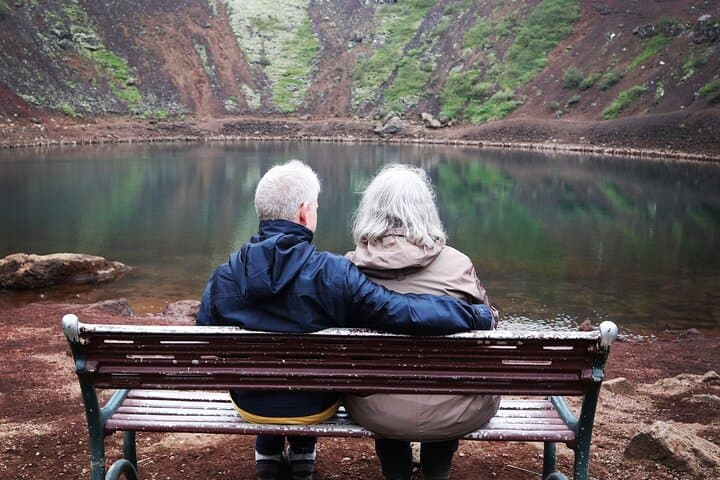
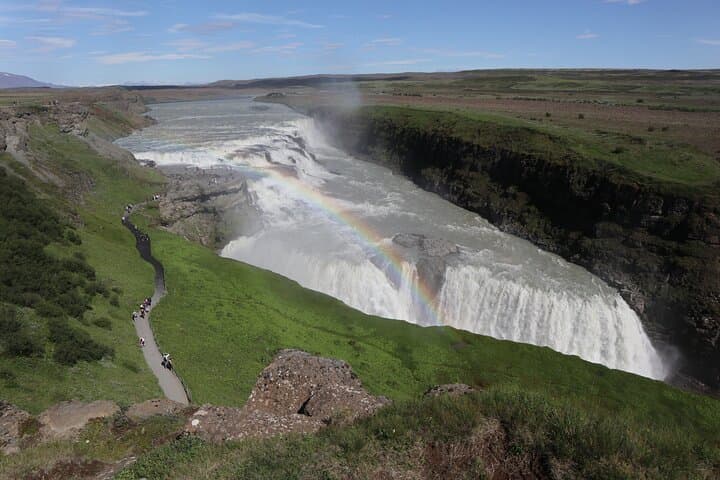
Gullfoss answers in thunder. The two-tiered waterfall drops roughly 32 meters into a canyon that the glacial tongue carved millennia ago; in winter the gorge braces itself in ice, in summer it lets you climb closer and feel the spray push against your face. The final stop, a colorful volcanic crater, offers a short rim walk (around 1 km) and a clear view of tephra layers and scoria cones that mark one of Iceland’s younger eruptions.
This tour is intentionally small—maximum six people—so you get focused geology talk without the herd. Expect easy walking: short hikes of 1–3 km at each stop, uneven terrain, steps at Gullfoss and some muddy patches in shoulder seasons. No advanced technical skills required, but windproof clothing and good tread on footwear matter; weather can flip from bright sun to sleet within an hour.
Practical notes: the tour runs about 9 hours with restroom and lunch breaks (lunch not included). The transport is air-conditioned and the itinerary includes entry at designated sites. Bring a daypack with water, layered clothing, and a camera with a wide-angle lens for the expansive rift and falls.
Local culture threads through the geology—Þingvellir’s parliamentary law-rock made landscape into civic life—and modern conservation is visible in the careful paths and signage. Respect the fragile moss and geothermal features: stay on marked trails and don’t remove rocks or plants.
For travelers who want geology explained rather than recited, this small-group Golden Circle tour delivers context with pace. It’s an accessible day that leaves you with the practical sense of how Iceland keeps rearranging itself—and how small you are in the business of moving continents.
easy.
9 hours.
Suitable for all fitness levels; requires several short walks of 1–3 km on uneven ground and ability to climb stairs.
The tour meets at Bus Stop #8 (parking lot of Halgrímskirkja) in Reykjavík and returns to the same point.
Transport in an air-conditioned vehicle and certain facility/parking fees are included; admission at specific sites is noted in the itinerary.
Yes—this tour is rated easy and suitable for most ages, though participants should be able to walk short distances on uneven ground.
No—there is a planned lunch break at Geysir Restaurant but lunch cost is not included in the tour price.
Tours may be canceled for severe weather; cancel at least 24 hours for a full refund and expect guides to adjust plans for safety.
Absolutely—bring a wide-angle lens for rift vistas and a waterproof cover for cameras near Gullfoss spray.
Þingvellir hosted the Alþingi, one of the world’s oldest parliaments from the 10th century, giving the landscape political as well as geological weight.
The national park and geothermal areas are protected with boardwalks and signage—stay on paths to preserve fragile moss and prevent thermal scalding.
Geoadventures Iceland operates guided outdoor trips and adventures with an emphasis on safety, stewardship, and memorable experiences.
You step onto basalt crunching underfoot, wind combing the low scrub as the guide—an actual field geologist—draws a chalk line between two continents. The ground at Þingvellir opens like a slow seam: one side slipping west, the other east. For nine hours the Golden Circle stops being a checklist and becomes a sequence of active forces—water, fire and steam—each with its own voice.
You step onto basalt crunching underfoot, wind combing the low scrub as the guide—an actual field geologist—draws a chalk line between two continents. The ground at Þingvellir opens like a slow seam: one side slipping west, the other east. For nine hours the Golden Circle stops being a checklist and becomes a sequence of active forces—water, fire and steam—each with its own voice.
The day begins at Halgrímskirkja in Reykjavík and moves in a loop through Thingvellir, Haukadalur (Geysir), Gullfoss and a volcanic crater that last erupted roughly 6,500 years ago. Thingvellir is where Iceland’s Alþingi met in open air from the 10th century; the rift valley is a living classroom of plate tectonics—rift fissures, columnar basalts and Öxarárfoss, a compact waterfall that looks honest about its work. At Geysir you smell sulfur before you see the steam; Strokkur stages regular eruptions, spitting water 15–30 meters skyward like a punctual colleague.
Gullfoss answers in thunder. The two-tiered waterfall drops roughly 32 meters into a canyon that the glacial tongue carved millennia ago; in winter the gorge braces itself in ice, in summer it lets you climb closer and feel the spray push against your face. The final stop, a colorful volcanic crater, offers a short rim walk (around 1 km) and a clear view of tephra layers and scoria cones that mark one of Iceland’s younger eruptions.
This tour is intentionally small—maximum six people—so you get focused geology talk without the herd. Expect easy walking: short hikes of 1–3 km at each stop, uneven terrain, steps at Gullfoss and some muddy patches in shoulder seasons. No advanced technical skills required, but windproof clothing and good tread on footwear matter; weather can flip from bright sun to sleet within an hour.
Practical notes: the tour runs about 9 hours with restroom and lunch breaks (lunch not included). The transport is air-conditioned and the itinerary includes entry at designated sites. Bring a daypack with water, layered clothing, and a camera with a wide-angle lens for the expansive rift and falls.
Local culture threads through the geology—Þingvellir’s parliamentary law-rock made landscape into civic life—and modern conservation is visible in the careful paths and signage. Respect the fragile moss and geothermal features: stay on marked trails and don’t remove rocks or plants.
For travelers who want geology explained rather than recited, this small-group Golden Circle tour delivers context with pace. It’s an accessible day that leaves you with the practical sense of how Iceland keeps rearranging itself—and how small you are in the business of moving continents.