THE ADVENTURE COLLECTIVE® · Independent discovery and booking for outdoor travel

An efficient, dramatic loop from Reykjavík that stitches together Þingvellir, Gullfoss, Strokkur and the Kerið crater. Expect geyser blasts, a thunderous waterfall, visible plate boundaries, and practical tips for timing and gear.
An efficient, dramatic loop from Reykjavík that stitches together Þingvellir, Gullfoss, Strokkur and the Kerið crater. Expect geyser blasts, a thunderous waterfall, visible plate boundaries, and practical tips for timing and gear.
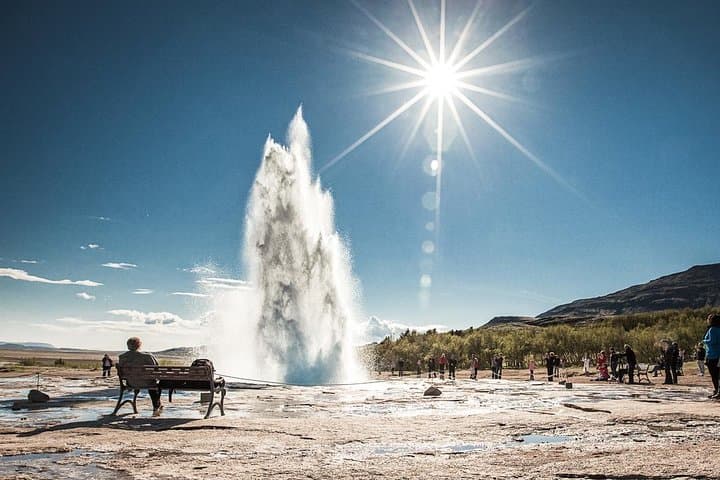
You step off the bus into a mist that tastes faintly of sulfur and cold ocean; steam threads the air like a living map. The guide points toward a rumbling patch of ground where Strokkur collects energy, a geyser that puffs and then thrusts a column of boiling water into the sky every few minutes. It’s an abrupt, theatrical reminder that Iceland is still rearranging itself.
Verified experiences and guided adventures in the surrounding area.
Operated by BusTravel Iceland · Reykjavík, Capital Region
You step off the bus into a mist that tastes faintly of sulfur and cold ocean; steam threads the air like a living map. The guide points toward a rumbling patch of ground where Strokkur collects energy, a geyser that puffs and then thrusts a column of boiling water into the sky every few minutes. It’s an abrupt, theatrical reminder that Iceland is still rearranging itself.
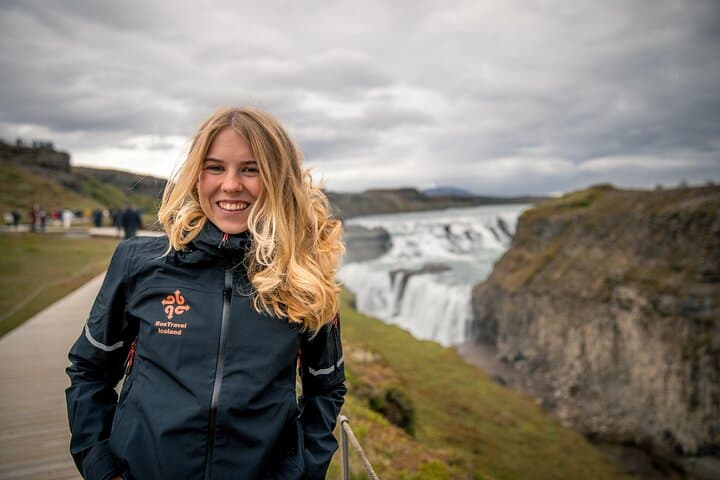
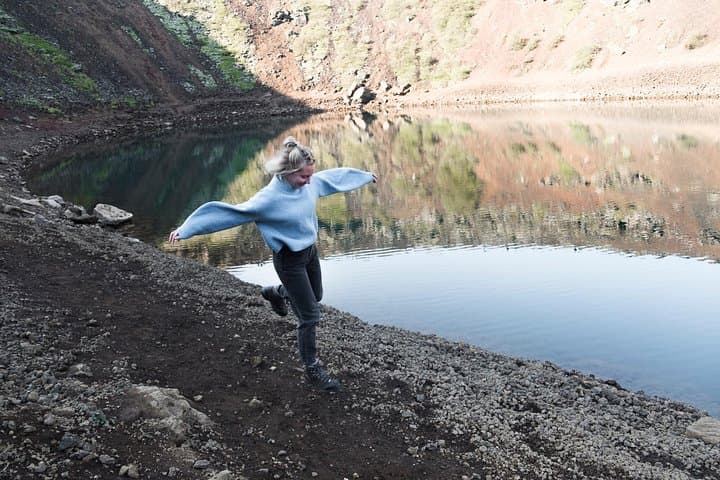
This is the Golden Circle in one day: a practical loop of geological outrage and human history within easy reach of Reykjavík. The route stitches together Þingvellir National Park, where tectonic plates pull apart in slow, visible inches; the raw drop of Gullfoss, where the Hvítá hurls itself into a two-tiered canyon; and the geothermal theater around Geysir and Strokkur. The tour adds Kerið, a deep volcanic crater lake whose red slopes contrast with the island’s usual basaltic gray.
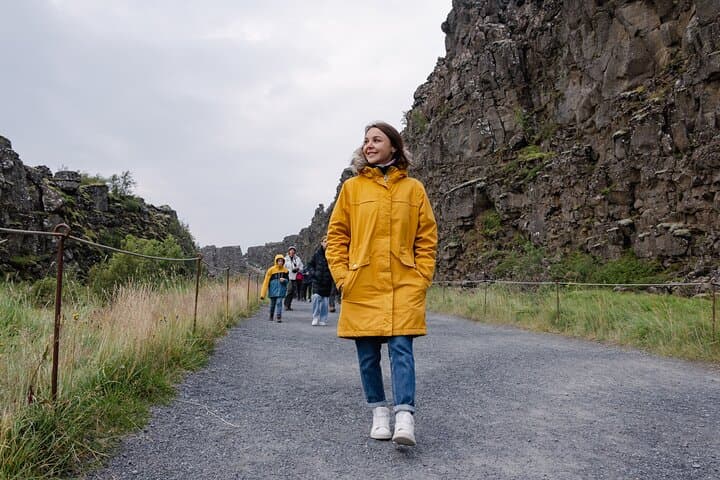
Þingvellir is where a medieval assembly—Alþingi—once met, and where law and lore shaped early Icelandic identity. The rift valley reads like a geology textbook writ large: columns of cracked lava, fissures you can peer into, and a landscape still settling from the last ice age. Gullfoss makes no attempt to be subtle; it demands your attention with the sound of water pushing through a narrow corridor. Geysir’s action is quieter but more frequent—Strokkur’s eruptions become a tempo for the visit, a steady drumbeat of anticipation.
Local culture here is pragmatic: farmsteads, sheep fences, and geometric turf roofs that reflect centuries of adaptation to wind and cold. The tourist infrastructure around the Golden Circle is mature—well-signed trails, viewpoints, and cafés—so the day trip is designed to be accessible, not exploratory. Still, the landscape has agency: wind can cut through layers, steam can obscure a canyon, and rain can turn trails to slick clay in minutes.
Practical side: departures run from central Reykjavík; the full itinerary takes about 8–9 hours with multiple short walks and photo stops. Dress in layers and waterproofs, and expect limited time at each site—Kerið is omitted on later departures. Bring snacks if you prefer to skip the scheduled lunch near Geysir; bathrooms and cafés are available at major stops. For photographers, aim for morning light at Þingvellir or late afternoon at Gullfoss when the low sun slants across the falls.
This tour is ideal if you want a compact, guided overview of Iceland’s defining landscapes with minimal navigation hassle. It trades deep exploration for breadth: you leave with a clear sense of why the island’s geology and history have such a grip on visitors—and a map of where to return for more time on the ground.
easy.
8–9 hours.
Suitable for average fitness; involves multiple short walks (10–30 minutes) on uneven ground.
The tour lasts about 8.5 hours (510 minutes) and includes transportation, a professional guide, entry to sites where required, and scheduled stops—Kerið is included on morning departures but not on later ones.
Yes—there are visitor centers and cafés at major stops like Geysir and Þingvellir; lunch is typically a short scheduled stop near Geysir but you may bring snacks.
Yes—the tour is rated easy and seats most mobility levels; however, some viewing areas have steps and uneven ground, so supervision and care are advised.
The famous Geysir is largely dormant; Strokkur is the reliably active geyser that erupts every 5–10 minutes and is the primary attraction for eruptions.
Cruise passengers can join but must provide ship and docking details at booking; pick-up is offered from multiple official tour bus stops and some hotels—allow up to 30 minutes for collection.
Tours may be canceled or rearranged for severe weather; check cancellation policies (full refund if canceled 24 hours in advance) and dress for changing conditions.
Þingvellir is the site of Alþingi, Iceland’s original parliament founded in the late 900s, where laws were decided on open rock benches.
Popular sites use designated paths and boardwalks to limit erosion—stick to trails and take all litter with you to protect fragile moss and soil.
BusTravel Iceland operates guided outdoor trips and adventures with an emphasis on safety, stewardship, and memorable experiences.
You step off the bus into a mist that tastes faintly of sulfur and cold ocean; steam threads the air like a living map. The guide points toward a rumbling patch of ground where Strokkur collects energy, a geyser that puffs and then thrusts a column of boiling water into the sky every few minutes. It’s an abrupt, theatrical reminder that Iceland is still rearranging itself.
You step off the bus into a mist that tastes faintly of sulfur and cold ocean; steam threads the air like a living map. The guide points toward a rumbling patch of ground where Strokkur collects energy, a geyser that puffs and then thrusts a column of boiling water into the sky every few minutes. It’s an abrupt, theatrical reminder that Iceland is still rearranging itself.
This is the Golden Circle in one day: a practical loop of geological outrage and human history within easy reach of Reykjavík. The route stitches together Þingvellir National Park, where tectonic plates pull apart in slow, visible inches; the raw drop of Gullfoss, where the Hvítá hurls itself into a two-tiered canyon; and the geothermal theater around Geysir and Strokkur. The tour adds Kerið, a deep volcanic crater lake whose red slopes contrast with the island’s usual basaltic gray.
Þingvellir is where a medieval assembly—Alþingi—once met, and where law and lore shaped early Icelandic identity. The rift valley reads like a geology textbook writ large: columns of cracked lava, fissures you can peer into, and a landscape still settling from the last ice age. Gullfoss makes no attempt to be subtle; it demands your attention with the sound of water pushing through a narrow corridor. Geysir’s action is quieter but more frequent—Strokkur’s eruptions become a tempo for the visit, a steady drumbeat of anticipation.
Local culture here is pragmatic: farmsteads, sheep fences, and geometric turf roofs that reflect centuries of adaptation to wind and cold. The tourist infrastructure around the Golden Circle is mature—well-signed trails, viewpoints, and cafés—so the day trip is designed to be accessible, not exploratory. Still, the landscape has agency: wind can cut through layers, steam can obscure a canyon, and rain can turn trails to slick clay in minutes.
Practical side: departures run from central Reykjavík; the full itinerary takes about 8–9 hours with multiple short walks and photo stops. Dress in layers and waterproofs, and expect limited time at each site—Kerið is omitted on later departures. Bring snacks if you prefer to skip the scheduled lunch near Geysir; bathrooms and cafés are available at major stops. For photographers, aim for morning light at Þingvellir or late afternoon at Gullfoss when the low sun slants across the falls.
This tour is ideal if you want a compact, guided overview of Iceland’s defining landscapes with minimal navigation hassle. It trades deep exploration for breadth: you leave with a clear sense of why the island’s geology and history have such a grip on visitors—and a map of where to return for more time on the ground.