THE ADVENTURE COLLECTIVE® · Independent discovery and booking for outdoor travel

See Gullfoss, Seljalandsfoss, Skógafoss, Kerið, Geysir and Þingvellir in one long, scenic day from Reykjavík. This small-group tour pairs dramatic waterfalls with clear geological and cultural context—ideal if you want a compact, expert-led introduction to southern Iceland.
See Gullfoss, Seljalandsfoss, Skógafoss, Kerið, Geysir and Þingvellir in one long, scenic day from Reykjavík. This small-group tour pairs dramatic waterfalls with clear geological and cultural context—ideal if you want a compact, expert-led introduction to southern Iceland.
A faint hiss turns into a roar as the minibus rounds a bend and Gullfoss appears: two tiers of water throwing themselves into a snow-white gorge, spray catching odd shafts of light.
Verified experiences and guided adventures in the surrounding area.
Operated by The Iceland Tour Company · Reykjavík, Capital Region
A faint hiss turns into a roar as the minibus rounds a bend and Gullfoss appears: two tiers of water throwing themselves into a snow-white gorge, spray catching odd shafts of light.
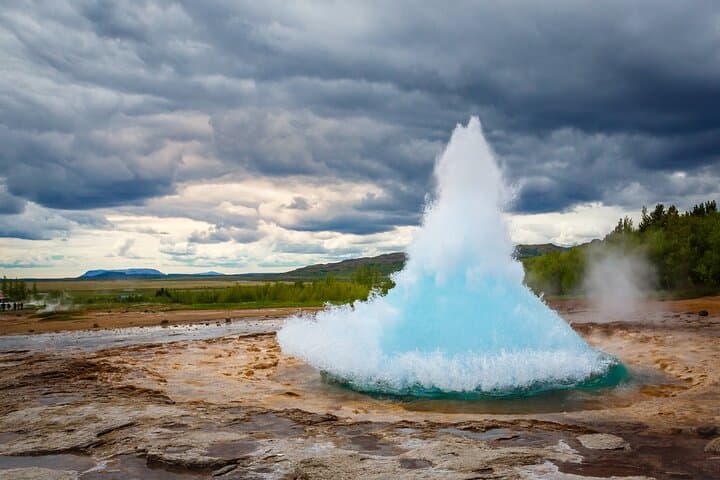
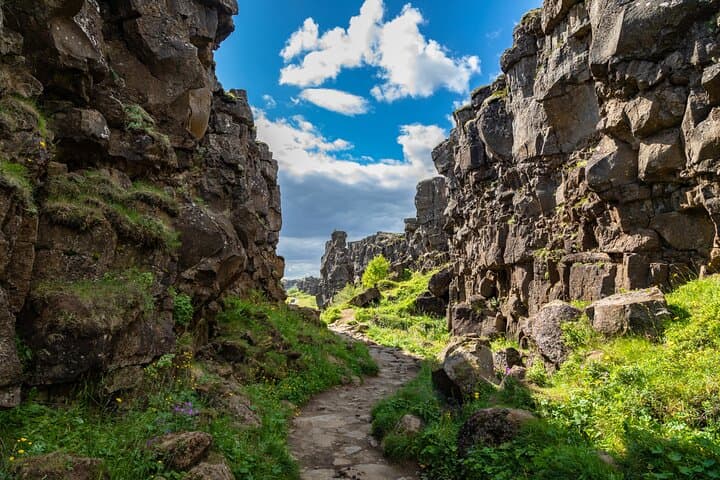
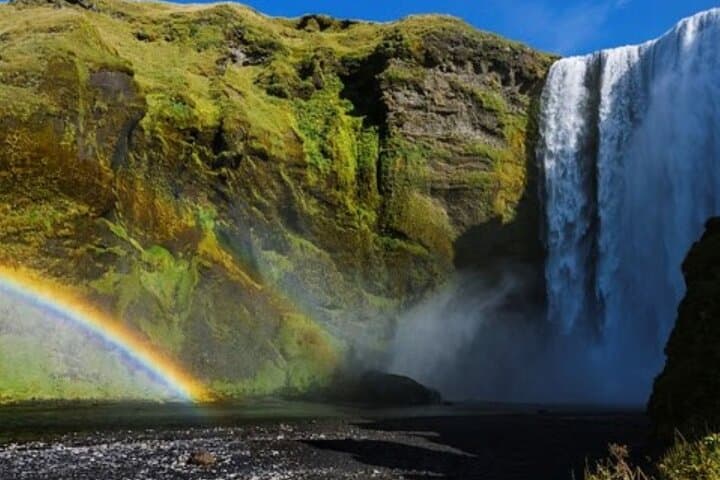
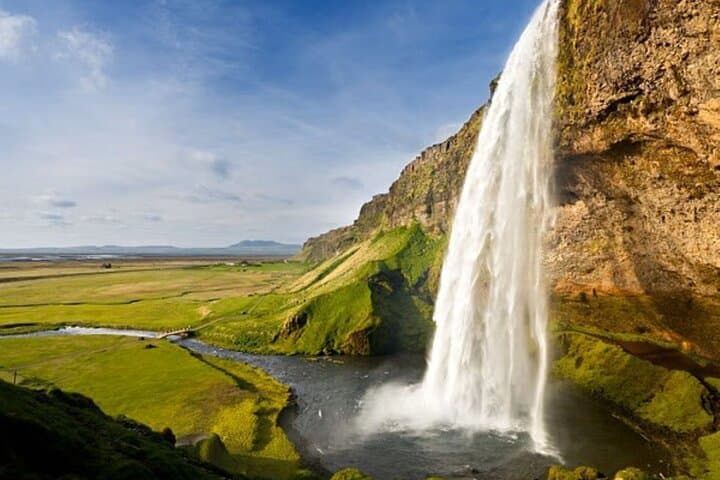
That opening view is the mood of this full-day circuit—scenes that move from theatrical to quietly strange in the space of an hour. The tour stitches together Iceland’s geological highlights: the tectonic rift and Alþingi plain of Þingvellir, the geothermal basin of Geysir where Strokkur punctuates the air on a loop, the cobalt pit of Kerið volcanic crater, and a handful of waterfalls—Gullfoss, the walk-behind Seljalandsfoss, the plunging Skógafoss, and the lesser-known Faxafoss.
This route reads like a primer on Icelandic earthwork. Þingvellir sits in a pull-apart valley where the North American and Eurasian plates are visibly drifting apart—lava escarpments and rift valleys that shaped Viking-era politics as much as the topography. Geysir’s geothermal plumbing is fed by the Haukadalur field: mineral-laced hot springs that have been boiling for millennia. Kerið’s red volcanic slopes and teal lake are the result of a relatively recent maar eruption, their oxidized soils a striking contrast to the country’s basaltic greys.
Culturally, the day skims both sagas and modern tourism: Þingvellir is the site of Iceland’s original parliament, Alþingi, founded in 930 AD; the route also threads small farms and churches that feel summoned from long winters. Guides on this route balance natural history and local lore while making the logistics—parking, admission to Kerið, and timing for Strokkur’s show—feel effortless.
Practicalities matter here. The full loop runs roughly 250–300 km from Reykjavík and takes about 11 hours; expect many short walks—10–45 minutes—on uneven ground, stairs, and gravel paths. Bring a waterproof shell (Seljalandsfoss sprays you liberally), non-slip footwear, and a small daypack with water and snacks. Cameras benefit from a microfibre towel and lens cloth; spray and geothermal mist can fog lenses instantly. The tour provides hotel pickup between 8:00 and 8:30, onboard Wi‑Fi, and an English-speaking guide, and Kerið admission is included.
Timing on the Golden Circle matters: light at dawn and dusk sculpts the falls and rifts differently than harsh midday sun. Weather is the main variable—wind and rain can make paths slippery—so layer, expect the occasional delay, and leave phones in dry pockets when getting close to cascades. For travelers who want an intense, efficient primer on southern Iceland’s geology and waterfalls, this small-group day tour delivers both spectacle and context without the fuss of driving yourself.
easy.
11 hours (full day).
Suitable for most fitness levels; expect short walks up to 45 minutes on uneven terrain and some stairs.
The tour is approximately 11 hours with pickup in Reykjavík between 8:00 and 8:30—confirm your exact pickup location the evening before via the operator’s email.
Yes—there’s a path that leads behind Seljalandsfoss; it’s wet and can be slippery so wear waterproof footwear and a jacket.
Yes, Kerið crater admission is included in the tour price as noted in the inclusions.
Strokkur erupts roughly every 5–10 minutes; timing and wind can affect visibility, but the guide times visits to maximize your chances.
Some portions and vehicles are wheelchair accessible, but terrain at natural sites is uneven—contact the operator ahead to discuss specific mobility needs.
The operator may cancel or reschedule for severe weather; check the 24-hour cancellation policy for refunds and confirm alternatives with the provider.
Þingvellir is where Iceland’s Alþingi (parliament) met from 930 AD—an open-air legislative site where law-speakers recited laws across the plain.
The Golden Circle sees heavy visitor traffic; stick to marked trails, pack out waste, and respect signage to protect fragile moss and geothermal features.
The Iceland Tour Company operates guided outdoor trips and adventures with an emphasis on safety, stewardship, and memorable experiences.
A faint hiss turns into a roar as the minibus rounds a bend and Gullfoss appears: two tiers of water throwing themselves into a snow-white gorge, spray catching odd shafts of light.
A faint hiss turns into a roar as the minibus rounds a bend and Gullfoss appears: two tiers of water throwing themselves into a snow-white gorge, spray catching odd shafts of light.
That opening view is the mood of this full-day circuit—scenes that move from theatrical to quietly strange in the space of an hour. The tour stitches together Iceland’s geological highlights: the tectonic rift and Alþingi plain of Þingvellir, the geothermal basin of Geysir where Strokkur punctuates the air on a loop, the cobalt pit of Kerið volcanic crater, and a handful of waterfalls—Gullfoss, the walk-behind Seljalandsfoss, the plunging Skógafoss, and the lesser-known Faxafoss.
This route reads like a primer on Icelandic earthwork. Þingvellir sits in a pull-apart valley where the North American and Eurasian plates are visibly drifting apart—lava escarpments and rift valleys that shaped Viking-era politics as much as the topography. Geysir’s geothermal plumbing is fed by the Haukadalur field: mineral-laced hot springs that have been boiling for millennia. Kerið’s red volcanic slopes and teal lake are the result of a relatively recent maar eruption, their oxidized soils a striking contrast to the country’s basaltic greys.
Culturally, the day skims both sagas and modern tourism: Þingvellir is the site of Iceland’s original parliament, Alþingi, founded in 930 AD; the route also threads small farms and churches that feel summoned from long winters. Guides on this route balance natural history and local lore while making the logistics—parking, admission to Kerið, and timing for Strokkur’s show—feel effortless.
Practicalities matter here. The full loop runs roughly 250–300 km from Reykjavík and takes about 11 hours; expect many short walks—10–45 minutes—on uneven ground, stairs, and gravel paths. Bring a waterproof shell (Seljalandsfoss sprays you liberally), non-slip footwear, and a small daypack with water and snacks. Cameras benefit from a microfibre towel and lens cloth; spray and geothermal mist can fog lenses instantly. The tour provides hotel pickup between 8:00 and 8:30, onboard Wi‑Fi, and an English-speaking guide, and Kerið admission is included.
Timing on the Golden Circle matters: light at dawn and dusk sculpts the falls and rifts differently than harsh midday sun. Weather is the main variable—wind and rain can make paths slippery—so layer, expect the occasional delay, and leave phones in dry pockets when getting close to cascades. For travelers who want an intense, efficient primer on southern Iceland’s geology and waterfalls, this small-group day tour delivers both spectacle and context without the fuss of driving yourself.