THE ADVENTURE COLLECTIVE® · Independent discovery and booking for outdoor travel

Cover Iceland’s most famous geological sights in a single afternoon—walk the rift at Thingvellir, watch Strokkur erupt, and feel the spray of Gullfoss. This six-hour small-group tour from Reykjavík pairs expert narration with compact logistics for travelers short on time.
Cover Iceland’s most famous geological sights in a single afternoon—walk the rift at Thingvellir, watch Strokkur erupt, and feel the spray of Gullfoss. This six-hour small-group tour from Reykjavík pairs expert narration with compact logistics for travelers short on time.
The minibus hums away from Reykjavík at noon and the city gives way to a wide, wind-swept country where geology writes the itinerary.
Verified experiences and guided adventures in the surrounding area.
Operated by Arctic Adventures · Reykjavik, Capital Region
The minibus hums away from Reykjavík at noon and the city gives way to a wide, wind-swept country where geology writes the itinerary.
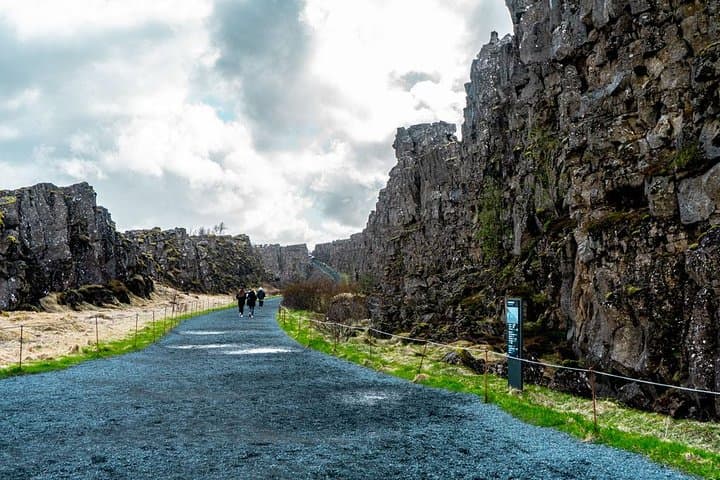
By the time the guide trims the engine, you're standing at Thingvellir National Park where rock argues with rock—the North American and Eurasian plates pulling apart in a slow, visible rupture. The air here is sharp, and the rift valley feels alive: fissures like seams in the earth daring you to peer into them. History tethers the place to human story too; this is where Iceland’s Althing, the world’s oldest surviving parliament, first convened in 930 AD, and the low stone assemblies still echo that civic memory.
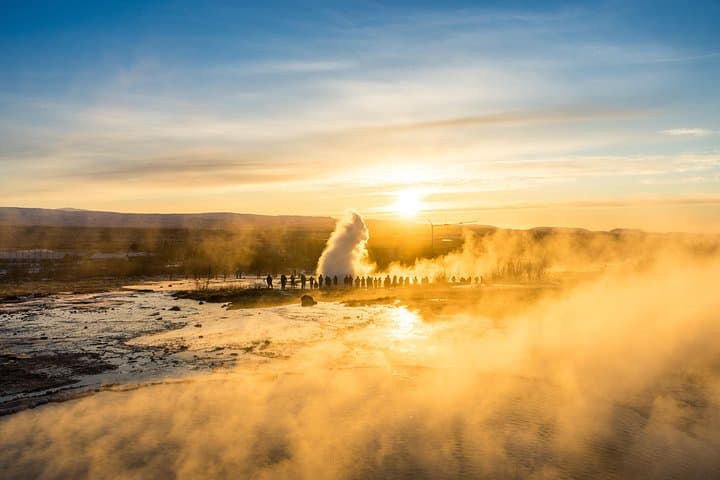
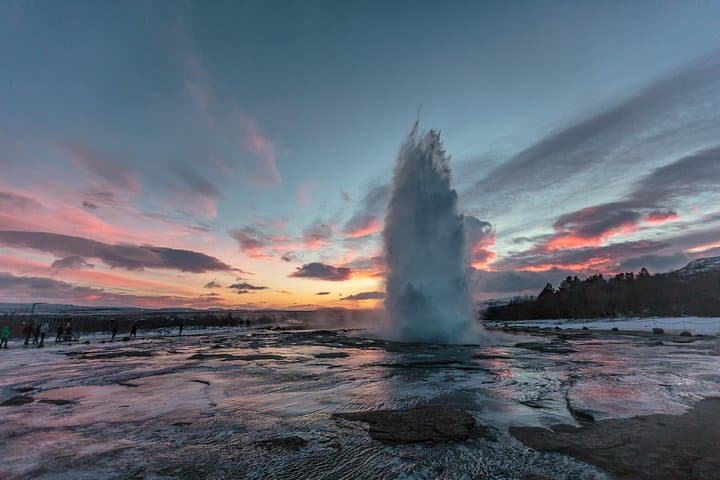
From there the rhythm shifts to steam and spectacle at the Geysir geothermal area. Strokkur punctuates the landscape every 8–10 minutes, a tower of boiling water shot skyward so regularly it almost feels theatrical. The ground smells faintly of sulphur, grasses cling to warm soil, and the boardwalks funnel visitors to safe vantage points for cameras and squeals alike.
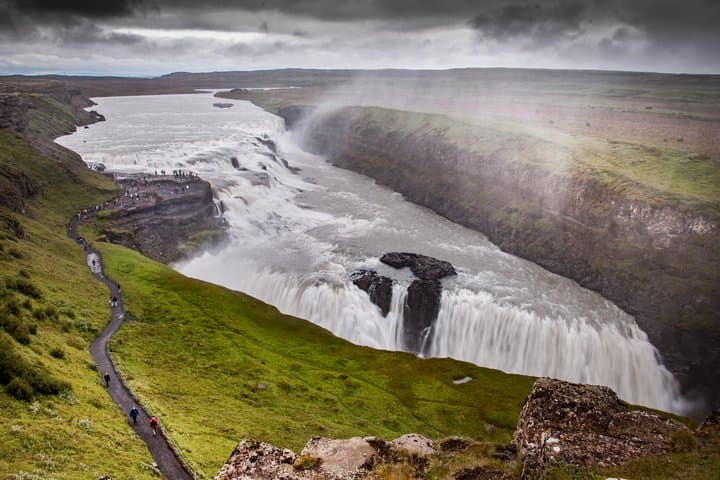
The crescendo is Gullfoss—"Golden Falls"—where the Hvítá river throws itself over two tiers, dropping 32 meters in a raw, loud arc. Rain mists the viewpoint; light slides across the churning water, and on a clear afternoon you can see the river marching toward distant mountains. Kerið crater, included on many itineraries, offers a quieter geometry: a blue crater lake framed by red volcanic rock and a twenty-minute loop that rewards a closer look.
This small-group afternoon loop compresses a lot into six hours: national park geology, live geothermal action, and one of Iceland’s most famous waterfalls, with a guide to explain the science and folklore behind each stop. Practical points: pick-up begins at noon from specified Reykjavik locations and returns around 18:00; groups are capped at roughly 19 people, and the operator provides minibus transport with onboard Wi‑Fi.
Plan for blunt weather and easy walking. Dress in layers and waterproof outerwear, wear sturdy boots for wet boardwalks and crater rims, and bring a small refillable bottle and snacks—the stops have limited food options and short windows. Cameras are a must, but pack a rain cover; spray from Gullfoss is relentless on a gusty day.
For photographers, aim for late afternoon light at Gullfoss and brace for overcast conditions that actually make waterfalls look their best. The guide times the itinerary for steady foot traffic, but if you want a quieter moment at any site, ask—small-group timing sometimes allows a bit of flexibility.
This is not a technical adventure, but it is elemental: rock that moves, water that insists, and heat that bubbles from below. Leave no trace, stay on marked paths, and you'll come away with an easy, rigorous introduction to the geology and stories that shaped Iceland.
easy.
6 hours.
Suitable for most fitness levels; expect light walking at each stop and short, uneven paths at viewpoints.
Pick-up begins at 12:00pm from designated Reykjavik points and the tour typically returns to the original pick-up area around 18:00 (times may vary with traffic and weather).
Yes—minimum age is 6 years; the route involves only short walks and boardwalks but parents should prepare for weather and stairs at viewpoints.
The tour stops at public sites (Thingvellir, Geysir, Gullfoss, Kerið) and admission is typically not required; check your confirmation for specifics about Kerið which may include a small entry fee in some departures.
The operator may cancel in severe weather; you can receive a full refund if you cancel at least 24 hours before departure or if the operator cancels due to conditions.
There are basic facilities and a café near Gullfoss and at some stops, but options are limited—bring snacks and water for the drive between sites.
Pick-up is offered from selected Reykjavik locations and hotels listed by the operator; you must confirm your preferred pick-up point at least 48 hours before departure.
Thingvellir has been a cultural meeting place since the 10th century and was the site of Iceland’s parliamentary assemblies and legal proclamations.
Geothermal areas are fragile; stay on boardwalks and follow guide instructions to protect hot springs and delicate moss-covered lava fields.
Arctic Adventures operates guided outdoor trips and adventures with an emphasis on safety, stewardship, and memorable experiences.
The minibus hums away from Reykjavík at noon and the city gives way to a wide, wind-swept country where geology writes the itinerary.
The minibus hums away from Reykjavík at noon and the city gives way to a wide, wind-swept country where geology writes the itinerary.
By the time the guide trims the engine, you're standing at Thingvellir National Park where rock argues with rock—the North American and Eurasian plates pulling apart in a slow, visible rupture. The air here is sharp, and the rift valley feels alive: fissures like seams in the earth daring you to peer into them. History tethers the place to human story too; this is where Iceland’s Althing, the world’s oldest surviving parliament, first convened in 930 AD, and the low stone assemblies still echo that civic memory.
From there the rhythm shifts to steam and spectacle at the Geysir geothermal area. Strokkur punctuates the landscape every 8–10 minutes, a tower of boiling water shot skyward so regularly it almost feels theatrical. The ground smells faintly of sulphur, grasses cling to warm soil, and the boardwalks funnel visitors to safe vantage points for cameras and squeals alike.
The crescendo is Gullfoss—"Golden Falls"—where the Hvítá river throws itself over two tiers, dropping 32 meters in a raw, loud arc. Rain mists the viewpoint; light slides across the churning water, and on a clear afternoon you can see the river marching toward distant mountains. Kerið crater, included on many itineraries, offers a quieter geometry: a blue crater lake framed by red volcanic rock and a twenty-minute loop that rewards a closer look.
This small-group afternoon loop compresses a lot into six hours: national park geology, live geothermal action, and one of Iceland’s most famous waterfalls, with a guide to explain the science and folklore behind each stop. Practical points: pick-up begins at noon from specified Reykjavik locations and returns around 18:00; groups are capped at roughly 19 people, and the operator provides minibus transport with onboard Wi‑Fi.
Plan for blunt weather and easy walking. Dress in layers and waterproof outerwear, wear sturdy boots for wet boardwalks and crater rims, and bring a small refillable bottle and snacks—the stops have limited food options and short windows. Cameras are a must, but pack a rain cover; spray from Gullfoss is relentless on a gusty day.
For photographers, aim for late afternoon light at Gullfoss and brace for overcast conditions that actually make waterfalls look their best. The guide times the itinerary for steady foot traffic, but if you want a quieter moment at any site, ask—small-group timing sometimes allows a bit of flexibility.
This is not a technical adventure, but it is elemental: rock that moves, water that insists, and heat that bubbles from below. Leave no trace, stay on marked paths, and you'll come away with an easy, rigorous introduction to the geology and stories that shaped Iceland.