THE ADVENTURE COLLECTIVE® · Independent discovery and booking for outdoor travel

Ride the cable car up to the Golden Bridge, stroll French-style squares, then cruise lantern-lit waterways in Hoi An. This full-day loop blends engineered spectacle with living history, ideal for travelers comfortable with a moderate day of walking.
Ride the cable car up to the Golden Bridge, stroll French-style squares, then cruise lantern-lit waterways in Hoi An. This full-day loop blends engineered spectacle with living history, ideal for travelers comfortable with a moderate day of walking.
You step out of the cable car into a cool, cloud-sliced garden and the Golden Bridge appears — a gleaming arc held aloft by two immense stone hands that seem to lift the sky itself. Footsteps on warm bronze, the forest around you breathes; mist and pine flirt with the rail as visitors line up for that single perfect photograph.
Verified experiences and guided adventures in the surrounding area.
Operated by Private Tourguides in Da Nang Hoi An Hue · Da Nang, Da Nang
You step out of the cable car into a cool, cloud-sliced garden and the Golden Bridge appears — a gleaming arc held aloft by two immense stone hands that seem to lift the sky itself. Footsteps on warm bronze, the forest around you breathes; mist and pine flirt with the rail as visitors line up for that single perfect photograph.
Ba Na Hills sits on the Annamite Range’s foothills; it was developed in the early 20th century by French colonists as a hill station, and its European-style village and cellars echo that past. The volcanic geology of the region pushes steep ridgelines into sudden cliffs, giving long views over the South China Sea and the Da Nang plain. Hoi An, later in the day, shifts the scene: a UNESCO-listed trading port where timber-framed houses and the Japanese Covered Bridge recall centuries of maritime exchange.
Expect manicured flower terraces, a pagoda’s incense, and a short sampan ride along a lantern-glazed canal that transforms the riverside into a living market of light. Local vendors sell cao lầu and bánh mì; artisans stitch silk lanterns by hand.
Practical guidance: arrive with comfortable shoes for paved plazas and steps, a light rain layer (tropical weather is fickle), and cash for small purchases in Hoi An’s night market. Cable car rides remove most climbing but plan for standing and moderate walking over roughly a 10‑hour day. Midday can be busy — early pickups and an afternoon wander through lantern-lit alleys give the clearest views and the most atmospheric photos.
moderate.
10 hours.
Moderate fitness—able to stand and walk on paved paths for several hours, navigate short staircases, and handle brief periods of standing in queues.
Yes—Ba Na cable car tickets and entrance to Ba Na attractions are included in this tour.
Yes—the tour offers hotel pickup from Da Nang or Hoi An; confirm your pickup point when booking.
The tour accommodates families, but it is not recommended for those with serious heart conditions; there is moderate walking and some stairs.
A buffet lunch at Ba Na is included and bottled water is provided; evening snacks in Hoi An night market are at your own expense.
Hoi An was a major Southeast Asian trading port from the 15th to 19th centuries; Ba Na was developed as a colonial hill station by the French in the early 20th century.
High visitor numbers make responsible behavior important—stay on paths, avoid single-use plastics when possible, and do not feed wildlife to reduce human-wildlife conflict.
Private Tourguides in Da Nang Hoi An Hue operates guided outdoor trips and adventures with an emphasis on safety, stewardship, and memorable experiences.

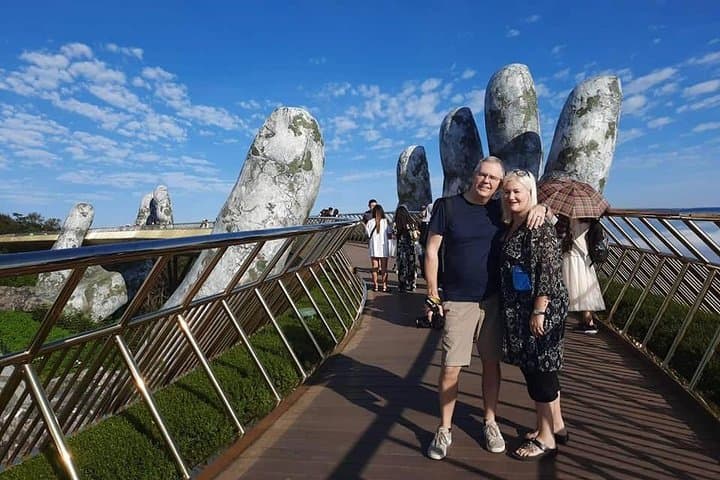


You step out of the cable car into a cool, cloud-sliced garden and the Golden Bridge appears — a gleaming arc held aloft by two immense stone hands that seem to lift the sky itself. Footsteps on warm bronze, the forest around you breathes; mist and pine flirt with the rail as visitors line up for that single perfect photograph.
You step out of the cable car into a cool, cloud-sliced garden and the Golden Bridge appears — a gleaming arc held aloft by two immense stone hands that seem to lift the sky itself. Footsteps on warm bronze, the forest around you breathes; mist and pine flirt with the rail as visitors line up for that single perfect photograph.
Ba Na Hills sits on the Annamite Range’s foothills; it was developed in the early 20th century by French colonists as a hill station, and its European-style village and cellars echo that past. The volcanic geology of the region pushes steep ridgelines into sudden cliffs, giving long views over the South China Sea and the Da Nang plain. Hoi An, later in the day, shifts the scene: a UNESCO-listed trading port where timber-framed houses and the Japanese Covered Bridge recall centuries of maritime exchange.
Expect manicured flower terraces, a pagoda’s incense, and a short sampan ride along a lantern-glazed canal that transforms the riverside into a living market of light. Local vendors sell cao lầu and bánh mì; artisans stitch silk lanterns by hand.
Practical guidance: arrive with comfortable shoes for paved plazas and steps, a light rain layer (tropical weather is fickle), and cash for small purchases in Hoi An’s night market. Cable car rides remove most climbing but plan for standing and moderate walking over roughly a 10‑hour day. Midday can be busy — early pickups and an afternoon wander through lantern-lit alleys give the clearest views and the most atmospheric photos.