THE ADVENTURE COLLECTIVE® · Independent discovery and booking for outdoor travel

Ride a scenic cable car to Ba Na Hills, walk the Golden Bridge at sunset, then return to Da Nang for the Dragon Bridge fire-and-water show. This compact half-day tour packs mountain air, colonial architecture, and night-time city spectacle into one efficient itinerary.
Ride a scenic cable car to Ba Na Hills, walk the Golden Bridge at sunset, then return to Da Nang for the Dragon Bridge fire-and-water show. This compact half-day tour packs mountain air, colonial architecture, and night-time city spectacle into one efficient itinerary.
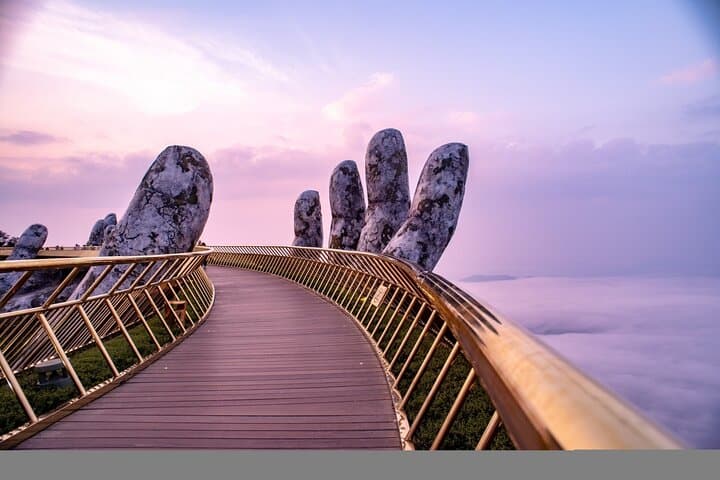
The afternoon begins with a gentle climb: a modern cable car lifts visitors above the humid coastline and into cooler mountain air, the city shrinking into the curve of the Han River. At the ridge, the Golden Bridge appears, a hand-held walkway hovering through mist and late light; walkers pause as the sun slides behind verdant slopes and the bridge frames long views toward the South China Sea.
Verified experiences and guided adventures in the surrounding area.
Operated by Charm Tourist · Da Nang, Da Nang
The afternoon begins with a gentle climb: a modern cable car lifts visitors above the humid coastline and into cooler mountain air, the city shrinking into the curve of the Han River. At the ridge, the Golden Bridge appears, a hand-held walkway hovering through mist and late light; walkers pause as the sun slides behind verdant slopes and the bridge frames long views toward the South China Sea.
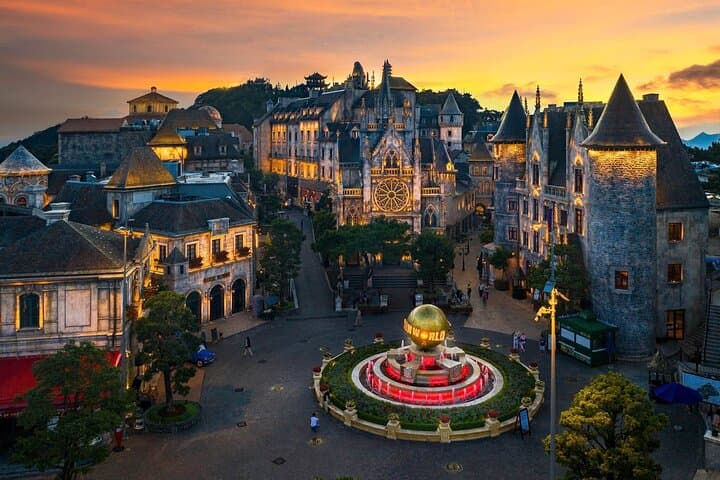
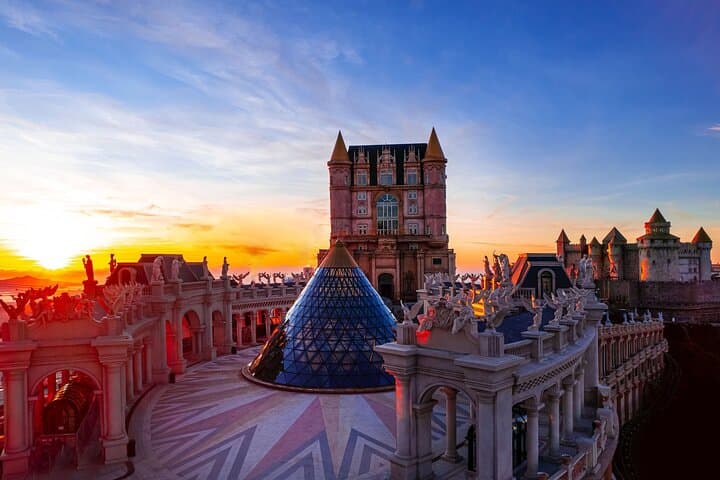
Ba Na Hills carries layered history: a French-era hill station from the early 20th century turned modern resort, complete with a recreated French Village and ornate pagodas. Geologically the area reads as weathered highland—rounded ridges cloaked in thick forest and pockets of weathered volcanic rock—where trails thread through moss and cloud. Cultural markers are close at hand: Linh Ung pagoda’s bells, manicured Le Jardin d’Amour gardens, and cafés that echo European timberwork alongside Vietnamese temple carvings.
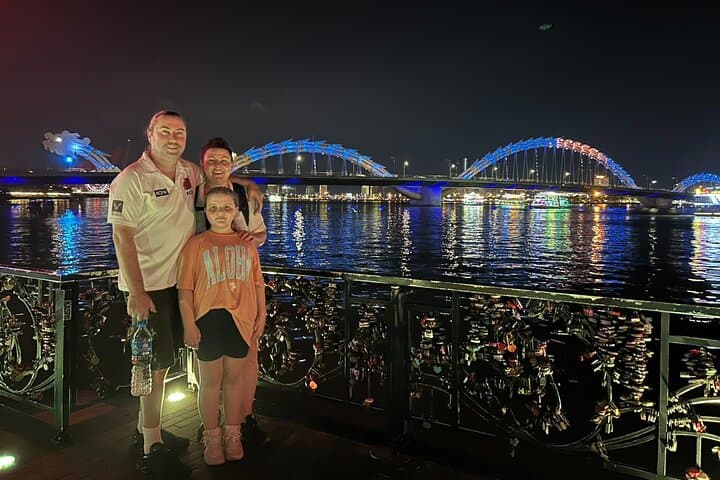
Practical guidance follows naturally. This is a largely accessible half-day route with paved promenades, steps and observation platforms; the cable car system handles most of the vertical gain and return tickets are typically included. Expect 2–4 miles of walking, some stair sections, and sudden temperature shifts—bring a light layer. Evenings in Da Nang end with a short stop to photograph the illuminated Dragon Bridge as it breathes fire and water; timing is tight, so travel with a charged phone and compact camera. Hydrate, wear grippy shoes for wet stone, and plan for crowds at sunset—the payoff is dramatic light and an efficient half-day that combines mountain air, engineered spectacle, and urban nightlife.
easy.
7–8 hours.
Suitable for most fitness levels: mostly short walks on paved paths with occasional stairs; minimal sustained exertion.
Most organized afternoon tours include return cable car tickets for the Ba Na Hills transfer; verify at booking and keep your ticket for re-entry.
Yes—paths are mostly paved and the cable car reduces ascent strain, but be mindful of stairs and crowded viewing areas at sunset.
Tours typically allot time for key highlights—Golden Bridge, gardens, and the French Village—though pacing can be brisk to fit the evening city return.
Bring local currency for souvenirs and optional snacks; many vendors accept cards but small shops and outdoor stalls often prefer cash.
Originally developed as a French colonial mountain retreat in the early 1900s, Ba Na Hills was repurposed into a modern tourist complex blending European-style architecture with local religious sites.
Stay on marked walkways to protect fragile montane plants; the cable car system concentrates access to reduce trail erosion, so follow park rules and avoid littering.
Charm Tourist operates guided outdoor trips and adventures with an emphasis on safety, stewardship, and memorable experiences.
The afternoon begins with a gentle climb: a modern cable car lifts visitors above the humid coastline and into cooler mountain air, the city shrinking into the curve of the Han River. At the ridge, the Golden Bridge appears, a hand-held walkway hovering through mist and late light; walkers pause as the sun slides behind verdant slopes and the bridge frames long views toward the South China Sea.
The afternoon begins with a gentle climb: a modern cable car lifts visitors above the humid coastline and into cooler mountain air, the city shrinking into the curve of the Han River. At the ridge, the Golden Bridge appears, a hand-held walkway hovering through mist and late light; walkers pause as the sun slides behind verdant slopes and the bridge frames long views toward the South China Sea.
Ba Na Hills carries layered history: a French-era hill station from the early 20th century turned modern resort, complete with a recreated French Village and ornate pagodas. Geologically the area reads as weathered highland—rounded ridges cloaked in thick forest and pockets of weathered volcanic rock—where trails thread through moss and cloud. Cultural markers are close at hand: Linh Ung pagoda’s bells, manicured Le Jardin d’Amour gardens, and cafés that echo European timberwork alongside Vietnamese temple carvings.
Practical guidance follows naturally. This is a largely accessible half-day route with paved promenades, steps and observation platforms; the cable car system handles most of the vertical gain and return tickets are typically included. Expect 2–4 miles of walking, some stair sections, and sudden temperature shifts—bring a light layer. Evenings in Da Nang end with a short stop to photograph the illuminated Dragon Bridge as it breathes fire and water; timing is tight, so travel with a charged phone and compact camera. Hydrate, wear grippy shoes for wet stone, and plan for crowds at sunset—the payoff is dramatic light and an efficient half-day that combines mountain air, engineered spectacle, and urban nightlife.