THE ADVENTURE COLLECTIVE® · Independent discovery and booking for outdoor travel

Ascend by cable car to the Golden Bridge, stroll through a recreated French Village, then drift on a sampan through Hoi An’s lantern-lit river. This full-day tour blends high-altitude vistas with UNESCO city history and a lively night market.
Ascend by cable car to the Golden Bridge, stroll through a recreated French Village, then drift on a sampan through Hoi An’s lantern-lit river. This full-day tour blends high-altitude vistas with UNESCO city history and a lively night market.
You rise in a cable car above humid lowlands and watch the coast shrink beneath a ribbon of cloud; the forested slopes of Ba Na Hills push up like an island of cool air, and ahead two giant stone hands cradle a thin, gleaming ribbon—the Golden Bridge—inviting careful steps and crowded photos.
Verified experiences and guided adventures in the surrounding area.
Operated by My Son Tours · Da Nang, Da Nang
You rise in a cable car above humid lowlands and watch the coast shrink beneath a ribbon of cloud; the forested slopes of Ba Na Hills push up like an island of cool air, and ahead two giant stone hands cradle a thin, gleaming ribbon—the Golden Bridge—inviting careful steps and crowded photos.
Ba Na began as an early 20th-century hill station favored by French colonists; its cooler microclimate and winding roads were later replaced by record-breaking cable cars and a recreated French Village. The hills sit above the coastal plain near Da Nang, where evergreen montane scrub gives way to flower terraces and manicured gardens. Downstream, Hoi An’s UNESCO-listed port town preserves timber merchants’ homes, a 400-year-old Japanese Covered Bridge, and Chinese assembly halls that speak to centuries of trade across the South China Sea.
Expect sensory contrasts: mountain air and floral scents at Ba Na, followed by warm river breezes, lantern light, and the clack of sampan poles in Hoi An as you glide past riverside homes.
Practical essentials: the full-day loop is long (about 10–11 hours) and includes steep steps, crowded viewpoints, and narrow streets at the night market. Wear grippy shoes for the bridge and temple approaches, pack a lightweight rain jacket and sunscreen, and keep cash for stalls. Aim for early pick-up to avoid mid-day crowds at the Golden Bridge and plan an early evening boat ride on the Thu Bồn River to see Hoi An’s lanterns at water-level. The route is well-suited to travelers comfortable with a busy, guided day of mixed walking and short transfers.
moderate.
10–11 hours.
Moderate fitness: you'll walk on stairs, gentle trails and through busy markets; be prepared for several short stair climbs and standing time.
This is a full-day private tour (about 10–11 hours) including hotel pickup, Ba Na cable car, Golden Bridge access, lunch, Hoi An city sights, a 20-minute sampan ride, and drop-off.
The cable car provides elevation access but the bridge approaches and some village streets have steps; stroller and wheelchair access is limited—check with the operator for specific assistance options.
Yes, pickup is commonly provided from hotels in both Hoi An and Da Nang—confirm your pickup point when booking.
Lunch at a local restaurant is included; notify the operator of dietary restrictions in advance so they can arrange suitable options.
Ba Na Hills grew as a French-colonial hill station in the early 1900s; Hoi An prospered for centuries as a regional trading port and retains wooden merchant houses and a Japanese Covered Bridge from that era.
High visitor numbers strain fragile mountain gardens and Hoi An’s riverbanks; stick to marked paths, avoid feeding wildlife, and support local businesses that follow low-impact practices.
My Son Tours operates guided outdoor trips and adventures with an emphasis on safety, stewardship, and memorable experiences.
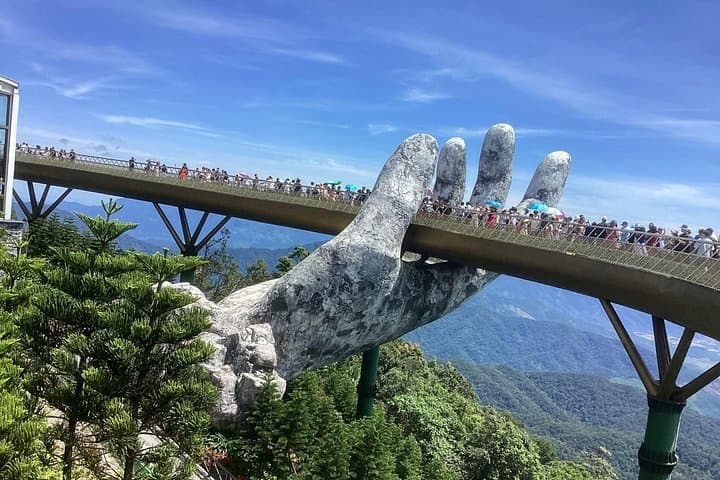
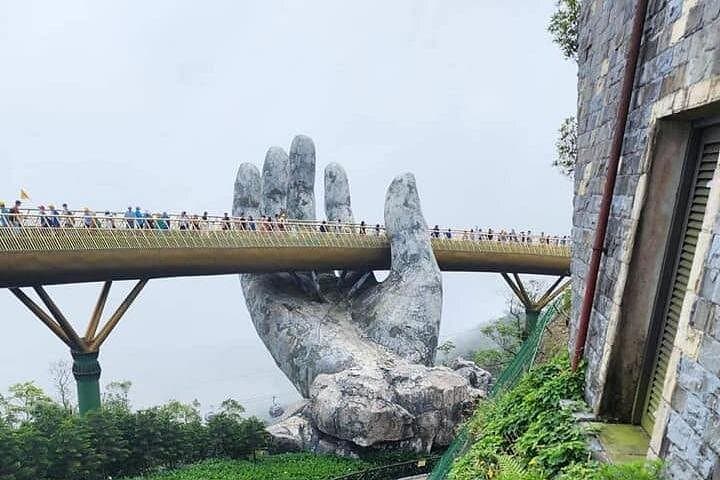
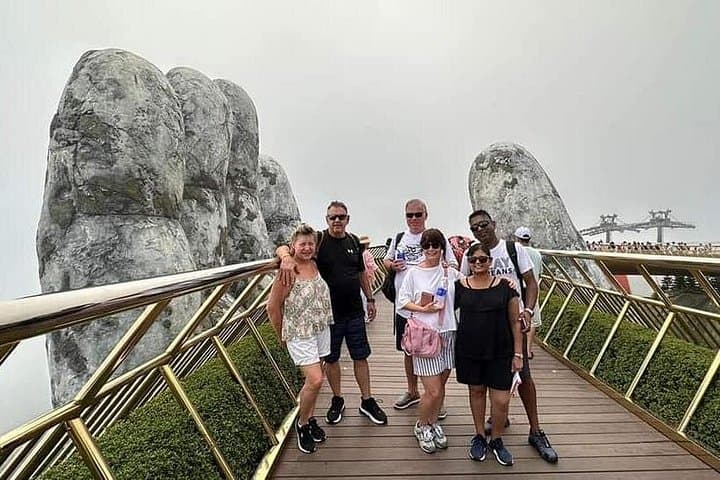
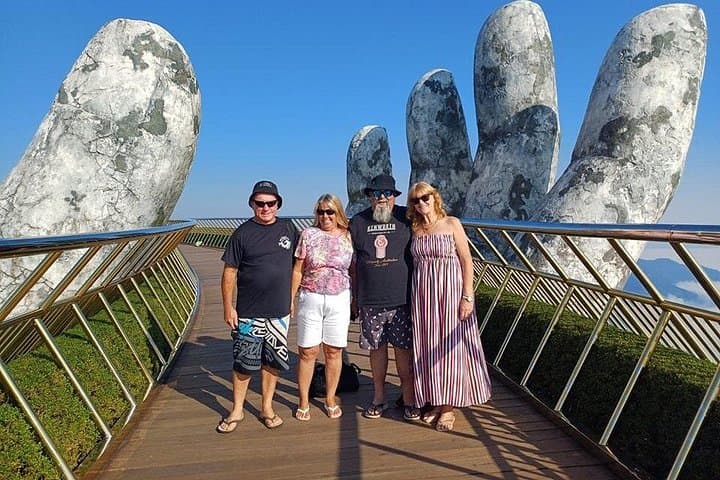
You rise in a cable car above humid lowlands and watch the coast shrink beneath a ribbon of cloud; the forested slopes of Ba Na Hills push up like an island of cool air, and ahead two giant stone hands cradle a thin, gleaming ribbon—the Golden Bridge—inviting careful steps and crowded photos.
You rise in a cable car above humid lowlands and watch the coast shrink beneath a ribbon of cloud; the forested slopes of Ba Na Hills push up like an island of cool air, and ahead two giant stone hands cradle a thin, gleaming ribbon—the Golden Bridge—inviting careful steps and crowded photos.
Ba Na began as an early 20th-century hill station favored by French colonists; its cooler microclimate and winding roads were later replaced by record-breaking cable cars and a recreated French Village. The hills sit above the coastal plain near Da Nang, where evergreen montane scrub gives way to flower terraces and manicured gardens. Downstream, Hoi An’s UNESCO-listed port town preserves timber merchants’ homes, a 400-year-old Japanese Covered Bridge, and Chinese assembly halls that speak to centuries of trade across the South China Sea.
Expect sensory contrasts: mountain air and floral scents at Ba Na, followed by warm river breezes, lantern light, and the clack of sampan poles in Hoi An as you glide past riverside homes.
Practical essentials: the full-day loop is long (about 10–11 hours) and includes steep steps, crowded viewpoints, and narrow streets at the night market. Wear grippy shoes for the bridge and temple approaches, pack a lightweight rain jacket and sunscreen, and keep cash for stalls. Aim for early pick-up to avoid mid-day crowds at the Golden Bridge and plan an early evening boat ride on the Thu Bồn River to see Hoi An’s lanterns at water-level. The route is well-suited to travelers comfortable with a busy, guided day of mixed walking and short transfers.