THE ADVENTURE COLLECTIVE® · Independent discovery and booking for outdoor travel

Ride the cable car to the Golden Bridge, wander Ba Na’s gardens and French Village, then watch Hoi An’s riverside lanterns come alive on an evening sampan cruise. This full-day tour pairs engineered spectacle with preserved port-city charm.
Ride the cable car to the Golden Bridge, wander Ba Na’s gardens and French Village, then watch Hoi An’s riverside lanterns come alive on an evening sampan cruise. This full-day tour pairs engineered spectacle with preserved port-city charm.
Morning lifts you through cloud and fern as the cable car climbs from Da Nang toward Ba Na Hills. When the carriage eases open the Golden Bridge appears — a gilded ribbon held by two enormous stone hands, pedestrians threading across with cameras and quiet awe. Down-valley the Thu Bon River winds toward Hoi An, where narrow streets pulse with lantern light and the scent of wood smoke and frying dough.
Verified experiences and guided adventures in the surrounding area.
Operated by Golden Bridge Tour Da Nang · Da Nang, Da Nang
Morning lifts you through cloud and fern as the cable car climbs from Da Nang toward Ba Na Hills. When the carriage eases open the Golden Bridge appears — a gilded ribbon held by two enormous stone hands, pedestrians threading across with cameras and quiet awe. Down-valley the Thu Bon River winds toward Hoi An, where narrow streets pulse with lantern light and the scent of wood smoke and frying dough.
Ba Na’s manicured gardens and faux-French village sit on eroded volcanic ridges; the area was a colonial resort that now blends engineered spectacle with native subtropical forest. Hoi An, a UNESCO World Heritage port, preserves 17th–19th century timber shop-houses and a covered Japanese bridge, reflecting Chinese, Japanese and European trade influences.
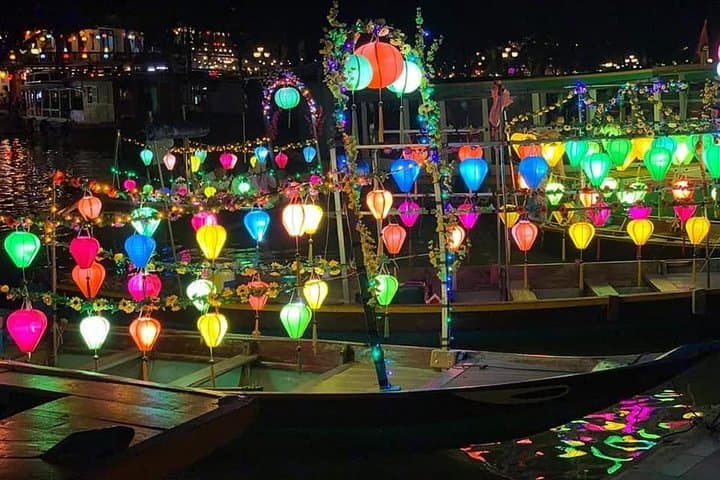
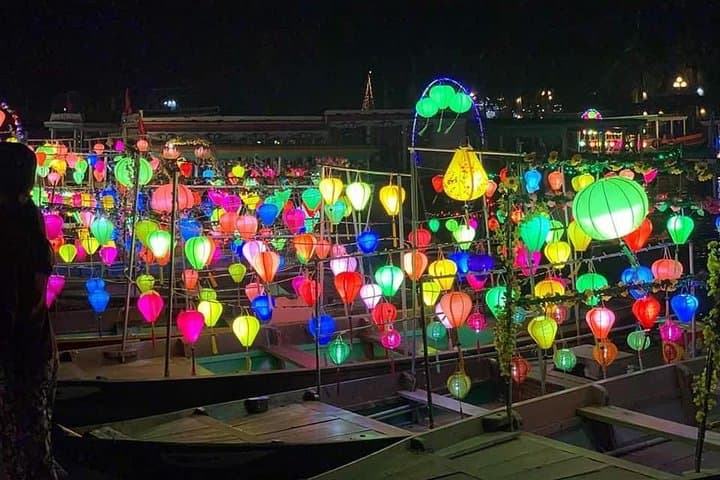
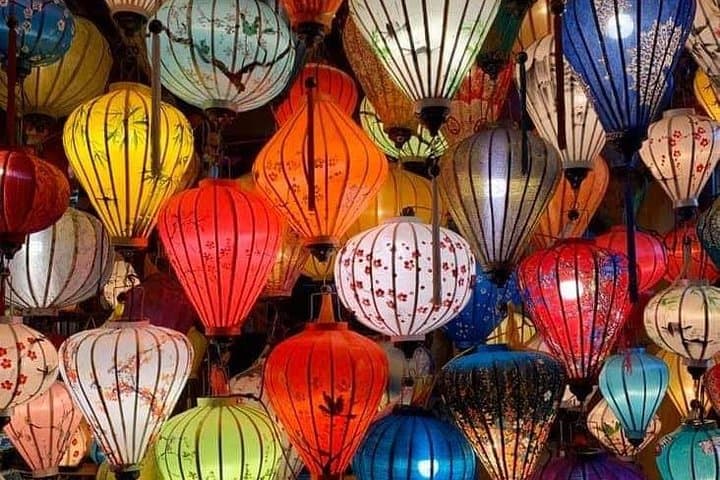
Expect brisk walking on paved paths at Ba Na and cobbled lanes in Hoi An, a 20-minute sampan ride at dusk, and dense crowds at the Golden Bridge mid-day. The cable car reduces steep scrambling but exposes you to weather changes; fog can obscure views while lantern nights transform the riverside into a carpet of color.
Practical: start early from Da Nang to avoid peak crowds, carry a lightweight rain layer and sturdy shoes for slick stone in the gardens, and bring local currency for the night market. Hydrate on the bus between sites and plan for about 10 hours away from your hotel. The tour blends architectural spectacle, cultural history and a riverfront evening that rewards patience — photograph responsibly and leave space for the moment itself.
moderate.
10 hours.
Moderate fitness for extended walking, short stairs and standing; suitable for most active travelers.
Yes — the tour offers pickup in Da Nang and Hoi An; you’ll select your pickup point at booking.
The tour notes wheelchair accessibility and uses cable cars and paved areas, but some cobbled streets and steps in Hoi An may limit access; contact the operator for specifics.
Not always — fog and low clouds are common on the hills and can obscure views; early mornings generally offer the clearest conditions.
A buffet lunch is included; evening dinner in Hoi An is optional and available at night-market stalls or local restaurants.
Hoi An prospered as an international trading port between the 17th and 19th centuries; Ba Na Hills was developed into a hill station during the French colonial era.
High visitor volumes strain Hoi An’s old quarter and Ba Na’s fragile hillside; follow local guidelines, avoid single-use plastics and stick to marked paths to limit impact.
Golden Bridge Tour Da Nang operates guided outdoor trips and adventures with an emphasis on safety, stewardship, and memorable experiences.
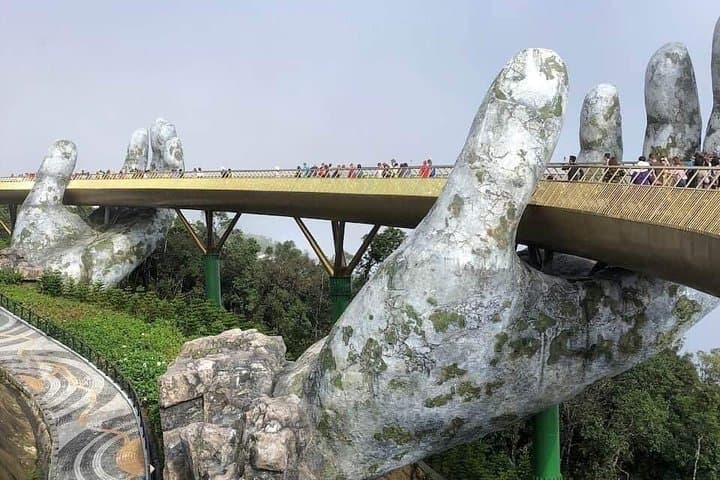
Morning lifts you through cloud and fern as the cable car climbs from Da Nang toward Ba Na Hills. When the carriage eases open the Golden Bridge appears — a gilded ribbon held by two enormous stone hands, pedestrians threading across with cameras and quiet awe. Down-valley the Thu Bon River winds toward Hoi An, where narrow streets pulse with lantern light and the scent of wood smoke and frying dough.
Morning lifts you through cloud and fern as the cable car climbs from Da Nang toward Ba Na Hills. When the carriage eases open the Golden Bridge appears — a gilded ribbon held by two enormous stone hands, pedestrians threading across with cameras and quiet awe. Down-valley the Thu Bon River winds toward Hoi An, where narrow streets pulse with lantern light and the scent of wood smoke and frying dough.
Ba Na’s manicured gardens and faux-French village sit on eroded volcanic ridges; the area was a colonial resort that now blends engineered spectacle with native subtropical forest. Hoi An, a UNESCO World Heritage port, preserves 17th–19th century timber shop-houses and a covered Japanese bridge, reflecting Chinese, Japanese and European trade influences.
Expect brisk walking on paved paths at Ba Na and cobbled lanes in Hoi An, a 20-minute sampan ride at dusk, and dense crowds at the Golden Bridge mid-day. The cable car reduces steep scrambling but exposes you to weather changes; fog can obscure views while lantern nights transform the riverside into a carpet of color.
Practical: start early from Da Nang to avoid peak crowds, carry a lightweight rain layer and sturdy shoes for slick stone in the gardens, and bring local currency for the night market. Hydrate on the bus between sites and plan for about 10 hours away from your hotel. The tour blends architectural spectacle, cultural history and a riverfront evening that rewards patience — photograph responsibly and leave space for the moment itself.