THE ADVENTURE COLLECTIVE® · Independent discovery and booking for outdoor travel

Ride cable cars above pine-clad ridges to the Golden Bridge, walk the marble caves at Marble Mountains, and end with the Lady Buddha’s panoramic view of Da Nang—an efficient full-day loop that mixes dramatic viewpoints with local culture.
Ride cable cars above pine-clad ridges to the Golden Bridge, walk the marble caves at Marble Mountains, and end with the Lady Buddha’s panoramic view of Da Nang—an efficient full-day loop that mixes dramatic viewpoints with local culture.
Morning fog thins as the cable car rises, and the hands of the Golden Bridge appear, cupping a span that seems to float above the pine-clad ridgeline. Visitors step off into a cool, temperate pocket of central Vietnam where mountain air shifts like a slow tide and views open toward the East Sea.
Verified experiences and guided adventures in the surrounding area.
Operated by My Son Tours · Da Nang, Da Nang
Morning fog thins as the cable car rises, and the hands of the Golden Bridge appear, cupping a span that seems to float above the pine-clad ridgeline. Visitors step off into a cool, temperate pocket of central Vietnam where mountain air shifts like a slow tide and views open toward the East Sea.
Ba Na Hills began life as a French hill station in the 1920s; its ruined villas and European-style French Village recall that colonial era while native limestone and volcanic outcrops tell an older geological story. Marble Mountains—five limestone and marble peaks named for the five elements—hold Buddhist grottoes and carved staircases hewn into softer rock, a compact study in human craft against geologic time. Son Tra’s Lady Buddha watches over Da Nang from a basalt promontory, offering a cultural counterpoint: an active place of worship and modern pilgrimage.
Practically, the day moves fast: an early hotel pickup, two cable-car ascents, a river of stairs at Marble Mountains, and a late-afternoon visit to Son Tra. Expect steep steps, short walks between viewpoints, and pockets of slick stone in cave passages. Carry ID for tickets, pace your camera time on the bridge, and allow extra minutes for queueing the cable cars.
Bring layers for shifting temperature, modest clothing for pagodas, and a small daypack for water and sunscreen. Time your visit for morning or late afternoon light to avoid midday crowds and to see the mountain’s shifting microclimates at their most dramatic.
easy.
8–9 hours.
Suitable for travelers with average fitness—requires climbing stairs and short walks; not a technical trek.
Many tour packages do not include the Ba Na Hills cable car; verify with your operator and carry payment or book tickets in advance when possible.
Yes—this tour is family-friendly but involves stairs and short walks; strollers are possible in some areas but not on staircases or cave passages.
This tour lists entrance and elevator tickets at Marble Mountain among inclusions, but always confirm before departure.
Modest clothing that covers shoulders and knees is expected; carry a lightweight shawl or long shirt if needed.
Ba Na Hills was developed as a French hill station in the 1920s; remnants of colonial villas and the recreated French Village reflect that heritage.
Son Tra and Ba Na Hills face development pressure from tourism—stick to marked paths, avoid feeding wildlife, and use local guides who follow protected-area rules.
My Son Tours operates guided outdoor trips and adventures with an emphasis on safety, stewardship, and memorable experiences.
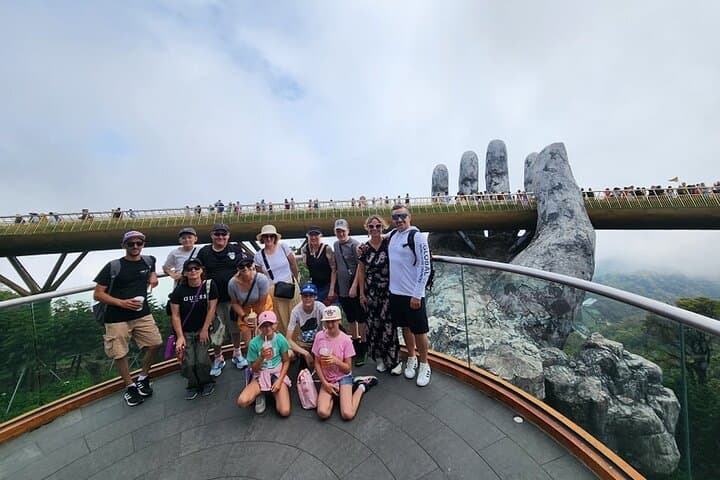
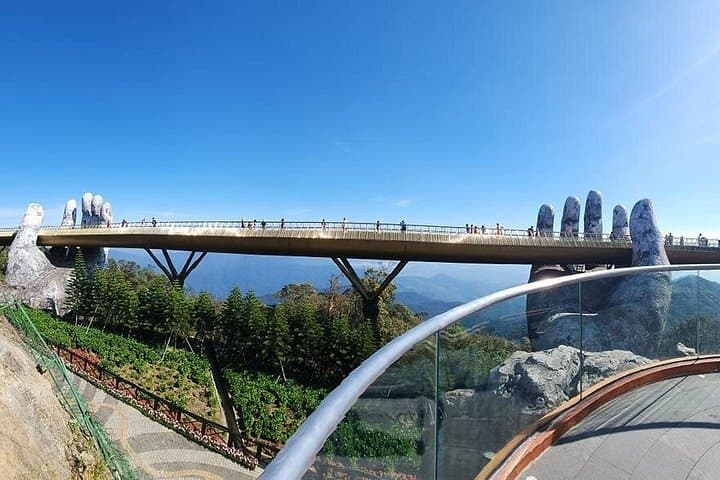
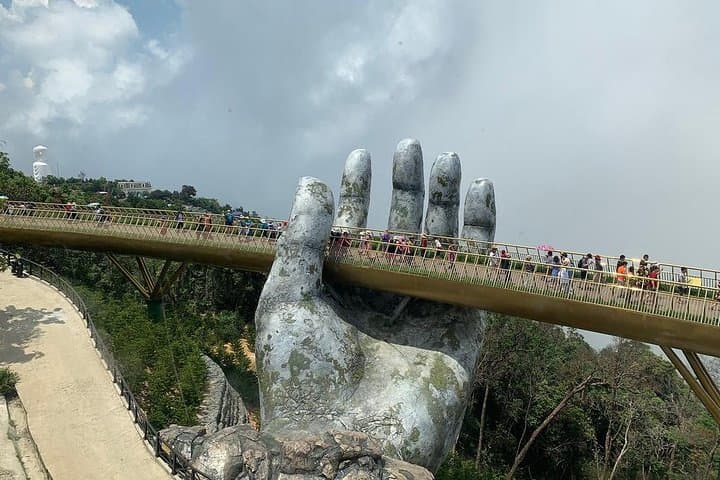
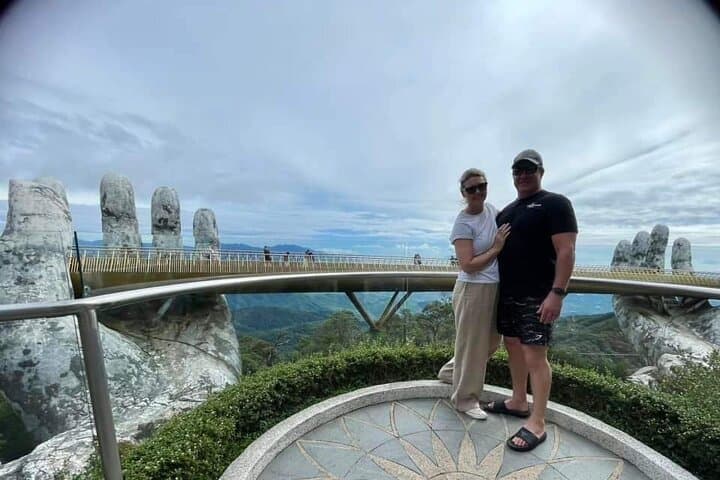
Morning fog thins as the cable car rises, and the hands of the Golden Bridge appear, cupping a span that seems to float above the pine-clad ridgeline. Visitors step off into a cool, temperate pocket of central Vietnam where mountain air shifts like a slow tide and views open toward the East Sea.
Morning fog thins as the cable car rises, and the hands of the Golden Bridge appear, cupping a span that seems to float above the pine-clad ridgeline. Visitors step off into a cool, temperate pocket of central Vietnam where mountain air shifts like a slow tide and views open toward the East Sea.
Ba Na Hills began life as a French hill station in the 1920s; its ruined villas and European-style French Village recall that colonial era while native limestone and volcanic outcrops tell an older geological story. Marble Mountains—five limestone and marble peaks named for the five elements—hold Buddhist grottoes and carved staircases hewn into softer rock, a compact study in human craft against geologic time. Son Tra’s Lady Buddha watches over Da Nang from a basalt promontory, offering a cultural counterpoint: an active place of worship and modern pilgrimage.
Practically, the day moves fast: an early hotel pickup, two cable-car ascents, a river of stairs at Marble Mountains, and a late-afternoon visit to Son Tra. Expect steep steps, short walks between viewpoints, and pockets of slick stone in cave passages. Carry ID for tickets, pace your camera time on the bridge, and allow extra minutes for queueing the cable cars.
Bring layers for shifting temperature, modest clothing for pagodas, and a small daypack for water and sunscreen. Time your visit for morning or late afternoon light to avoid midday crowds and to see the mountain’s shifting microclimates at their most dramatic.