THE ADVENTURE COLLECTIVE® · Independent discovery and booking for outdoor travel

A multi-day Himalayan trek that climbs through Sherpa villages to the moraine-strewn Gokyo Valley and the panoramic summit of Gokyo Ri. Expect lodge-based stages, dramatic glacier views and essential acclimatization stops.
A multi-day Himalayan trek that climbs through Sherpa villages to the moraine-strewn Gokyo Valley and the panoramic summit of Gokyo Ri. Expect lodge-based stages, dramatic glacier views and essential acclimatization stops.
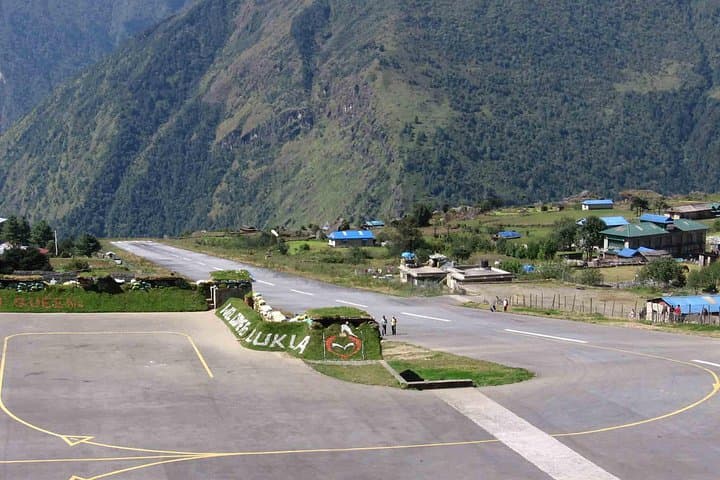
You step out of the tiny Lukla airstrip into thin, crispy air and a corridor of fluttering prayer flags; the trail immediately drops toward the Dudh Kosi and the Himalaya rearrange themselves into a skyline of sheer angles and ice.
Verified experiences and guided adventures in the surrounding area.
Operated by Ace the Himalaya · Gokyo, Solukhumbu District
You step out of the tiny Lukla airstrip into thin, crispy air and a corridor of fluttering prayer flags; the trail immediately drops toward the Dudh Kosi and the Himalaya rearrange themselves into a skyline of sheer angles and ice.
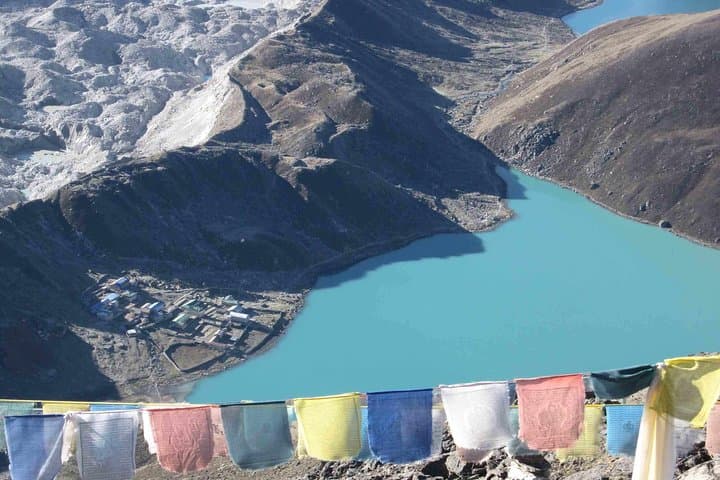
The Gokyo Valley trek threads the western arm of the Khumbu, passing through Sagarmatha National Park and up onto the terminal moraines of the Ngozumpa Glacier—the largest glacier in Nepal. Geologically the route traces glacial plains, moraines and uplifted sedimentary bands that expose the deep tectonic history of the Himalaya. Culturally the trail is Sherpa country: stone mani walls, Buddhist stupas and remote gompas punctuate each village and offer repeated reminders that human life here runs on a rhythm of yak caravans and seasonal festivals.
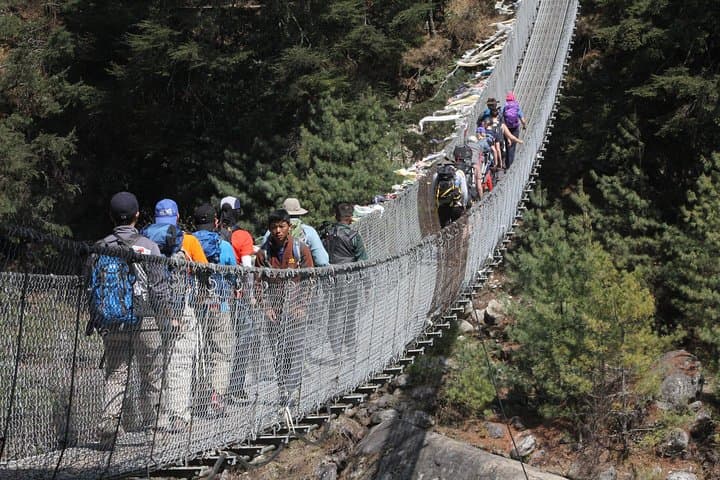
Expect lodge-to-lodge trekking with daily stages averaging 4–6 hours and steady altitude gain to Gokyo (4,790 m) and the summit of Gokyo Ri (5,483 m). Terrain ranges from packed dirt and stone steps to short scree fields and glacier-silt paths; suspension-bridge crossings over the Dudh Kosi are frequent. Acclimatization days at Namche Bazaar and gentle hikes around Gokyo are essential to reduce acute mountain sickness risk.
Plan for large temperature swings, afternoon wind, and sun that will burn at high elevations. Practical prep: solid broken-in boots, layered insulation, a reliable sleeping bag, and time for acclimatization. The payoff is uncompromised panoramic views of Everest, Lhotse, Cho Oyu and the seamed surface of Ngozumpa pushing like an inland sea of ice.
challenging.
13–15 days.
Good aerobic base and the ability to hike 4–6 hours on consecutive days at altitude; prior multi-day trekking experience helpful.
The ascent to Gokyo Ri is a steep, non-technical hike that typically takes 3–5 hours round-trip from Gokyo village; the challenge is altitude rather than technical difficulty.
Yes—trekkers require the Sagarmatha National Park permit and a TIMS card; organized trips usually handle permits before departure.
The Lukla flight is routine but weather-sensitive; flights can be delayed or canceled for safety—allow extra time in your itinerary for changes.
Late September–November and March–May offer the most stable weather and best visibility; monsoon months (June–August) and deep winter are less reliable.
The Khumbu is Sherpa land with a long history of Tibetan-Buddhist culture; trading routes across high passes connected this valley to Tibet for centuries.
Sagarmatha National Park is a UNESCO site with active programs to manage waste, regulate trekking traffic and limit single-use plastics on the trail.
Ace the Himalaya operates guided outdoor trips and adventures with an emphasis on safety, stewardship, and memorable experiences.
You step out of the tiny Lukla airstrip into thin, crispy air and a corridor of fluttering prayer flags; the trail immediately drops toward the Dudh Kosi and the Himalaya rearrange themselves into a skyline of sheer angles and ice.
You step out of the tiny Lukla airstrip into thin, crispy air and a corridor of fluttering prayer flags; the trail immediately drops toward the Dudh Kosi and the Himalaya rearrange themselves into a skyline of sheer angles and ice.
The Gokyo Valley trek threads the western arm of the Khumbu, passing through Sagarmatha National Park and up onto the terminal moraines of the Ngozumpa Glacier—the largest glacier in Nepal. Geologically the route traces glacial plains, moraines and uplifted sedimentary bands that expose the deep tectonic history of the Himalaya. Culturally the trail is Sherpa country: stone mani walls, Buddhist stupas and remote gompas punctuate each village and offer repeated reminders that human life here runs on a rhythm of yak caravans and seasonal festivals.
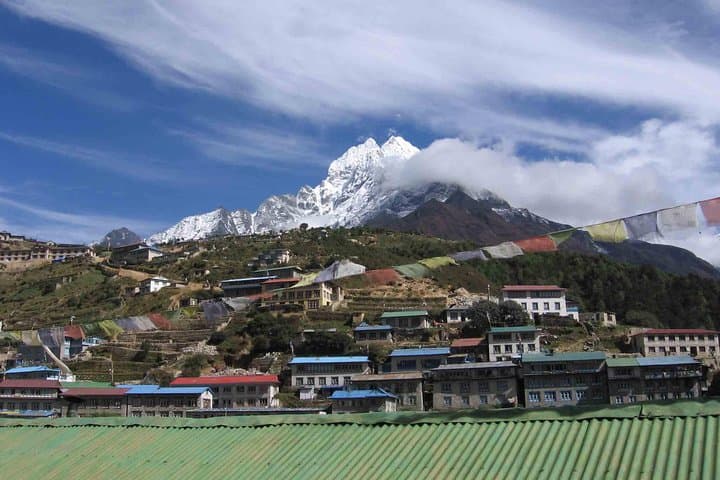
Expect lodge-to-lodge trekking with daily stages averaging 4–6 hours and steady altitude gain to Gokyo (4,790 m) and the summit of Gokyo Ri (5,483 m). Terrain ranges from packed dirt and stone steps to short scree fields and glacier-silt paths; suspension-bridge crossings over the Dudh Kosi are frequent. Acclimatization days at Namche Bazaar and gentle hikes around Gokyo are essential to reduce acute mountain sickness risk.
Plan for large temperature swings, afternoon wind, and sun that will burn at high elevations. Practical prep: solid broken-in boots, layered insulation, a reliable sleeping bag, and time for acclimatization. The payoff is uncompromised panoramic views of Everest, Lhotse, Cho Oyu and the seamed surface of Ngozumpa pushing like an inland sea of ice.