THE ADVENTURE COLLECTIVE® · Independent discovery and booking for outdoor travel

A 15‑day high‑altitude trek through the Khumbu to the Gokyo Lakes and Gokyo Ri, offering rare vistas of Everest and the Ngozumpa Glacier. This guide covers what to expect on trail, cultural context, and practical planning tips.
A 15‑day high‑altitude trek through the Khumbu to the Gokyo Lakes and Gokyo Ri, offering rare vistas of Everest and the Ngozumpa Glacier. This guide covers what to expect on trail, cultural context, and practical planning tips.
You step off the Lukla flight into thin blue air and the trail immediately rearranges your senses: prayer flags flap like small, stubborn sails, a braided river dares you across each bridge, and the path climbs through rhododendron and juniper toward the high lakes.
Verified experiences and guided adventures in the surrounding area.
Operated by Alpine Club of Himalaya · Gokyo, Solukhumbu
You step off the Lukla flight into thin blue air and the trail immediately rearranges your senses: prayer flags flap like small, stubborn sails, a braided river dares you across each bridge, and the path climbs through rhododendron and juniper toward the high lakes.
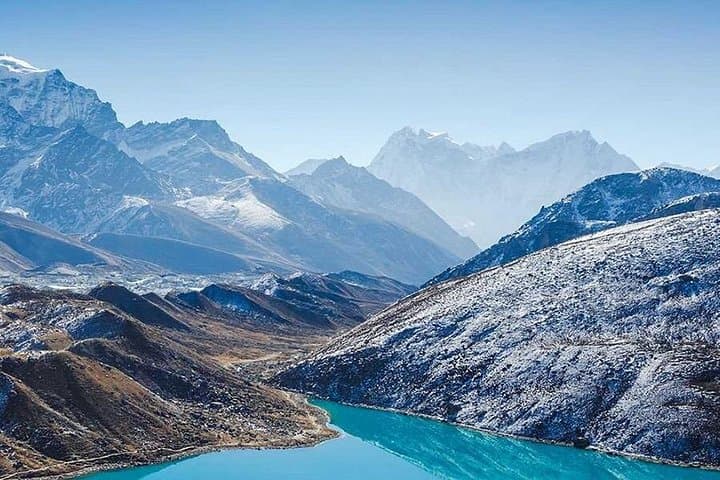
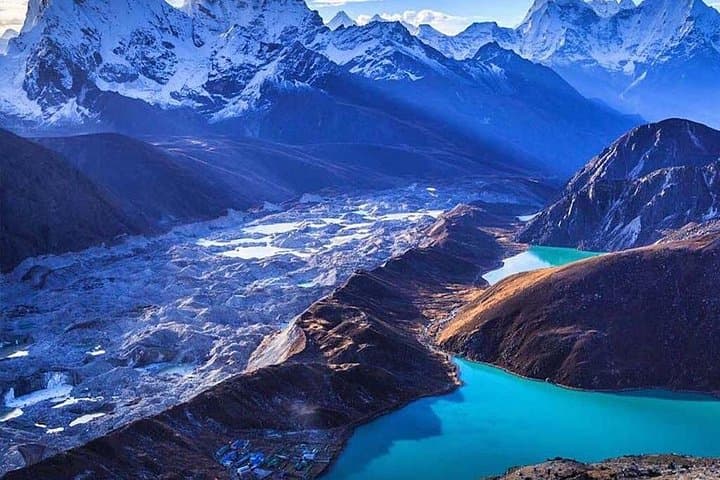
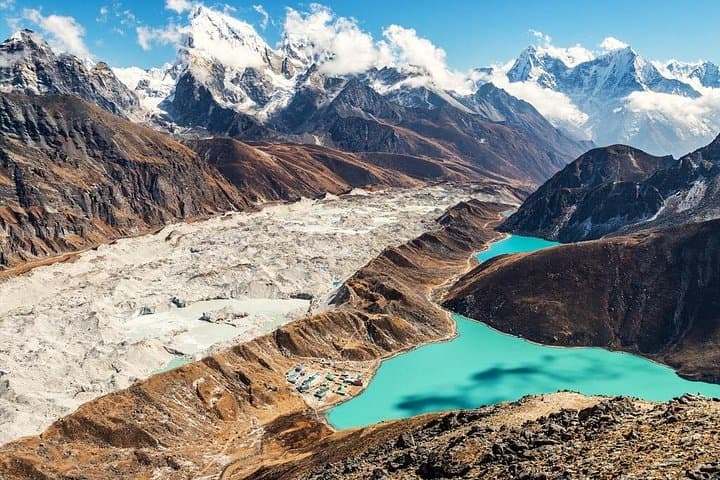
This 15‑day route follows the Dudh Koshi toward the Ngozumpa Glacier and five emerald Gokyo Lakes, threading Sherpa villages, mani walls and high pastures. The landscape is young — moraine ridges and glacier ice speak of recent geological motion — and culturally alive: Namche Bazaar has long been the trade and social hub of Khumbu and the doorway to Sagarmatha National Park, a UNESCO site that protects sacred peaks and Sherpa heritage.
Expect steep stone staircases, exposed ridgelines and braided glacier talus; days range from 4–7 hours with key gains such as Namche (+1,000 m) and the sharp ascent to Gokyo Ri (5,360 m) for panoramic views of Everest, Lhotse, Cho Oyu and Makalu. Tea houses provide basic lodging (shared bathrooms common) and the program builds in acclimatization days—essential for safety at altitude.
Practical edge: travel windows are spring and autumn for stable weather, Lukla flights are weather‑dependent, and water should be treated or boiled. Footwear with aggressive tread, layered insulation for nights above 4,000 m, and trekking poles make steep descents easier. Move deliberately on long days, hydrate often, and give the mountains time to agree to your crossing. The payoff is pure: a summit ridge of prayer flags, a glacier “river” unspooling below, and lakes that hold both reflection and reverence.
challenging.
15 days.
Good aerobic fitness with experience on multi‑day treks; able to hike 4–7 hours per day with altitude exposure
Spring (March–May) and autumn (late September–November) offer the most stable weather, clearer views and warmer daytime temperatures; monsoon summer is wet and winter is very cold and snowy.
Prior multi‑day trekking experience is strongly recommended; acclimatization days are included but participants must recognize altitude symptoms and travel with a guide.
Tea houses (basic guest houses) provide shared rooms and simple meals (dal bhat, soups); some nights in Kathmandu are in 3* hotels as noted.
Sagarmatha National Park permit and TIMS are required; those are normally arranged by the operator and included in the itinerary.
The Khumbu region is home to the Sherpa people and long served as a trans‑Himalayan trade corridor; Namche Bazaar evolved as the central trading hub for mountain communities and expeditions.
Sagarmatha National Park protects fragile alpine ecosystems; minimize impact by packing out trash, avoiding single‑use plastics and using established trails and teahouses.
Alpine Club of Himalaya operates guided outdoor trips and adventures with an emphasis on safety, stewardship, and memorable experiences.
You step off the Lukla flight into thin blue air and the trail immediately rearranges your senses: prayer flags flap like small, stubborn sails, a braided river dares you across each bridge, and the path climbs through rhododendron and juniper toward the high lakes.
You step off the Lukla flight into thin blue air and the trail immediately rearranges your senses: prayer flags flap like small, stubborn sails, a braided river dares you across each bridge, and the path climbs through rhododendron and juniper toward the high lakes.
This 15‑day route follows the Dudh Koshi toward the Ngozumpa Glacier and five emerald Gokyo Lakes, threading Sherpa villages, mani walls and high pastures. The landscape is young — moraine ridges and glacier ice speak of recent geological motion — and culturally alive: Namche Bazaar has long been the trade and social hub of Khumbu and the doorway to Sagarmatha National Park, a UNESCO site that protects sacred peaks and Sherpa heritage.
Expect steep stone staircases, exposed ridgelines and braided glacier talus; days range from 4–7 hours with key gains such as Namche (+1,000 m) and the sharp ascent to Gokyo Ri (5,360 m) for panoramic views of Everest, Lhotse, Cho Oyu and Makalu. Tea houses provide basic lodging (shared bathrooms common) and the program builds in acclimatization days—essential for safety at altitude.
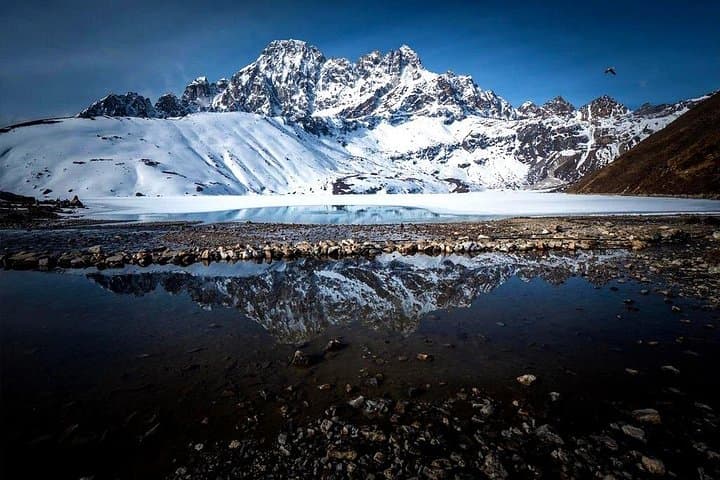
Practical edge: travel windows are spring and autumn for stable weather, Lukla flights are weather‑dependent, and water should be treated or boiled. Footwear with aggressive tread, layered insulation for nights above 4,000 m, and trekking poles make steep descents easier. Move deliberately on long days, hydrate often, and give the mountains time to agree to your crossing. The payoff is pure: a summit ridge of prayer flags, a glacier “river” unspooling below, and lakes that hold both reflection and reverence.