THE ADVENTURE COLLECTIVE® · Independent discovery and booking for outdoor travel

Experience the high-altitude calm of Gokyo’s glacial lakes and a panoramic Gokyo Ri summit. This 12–15 day trek through Sagarmatha National Park combines Sherpa culture, long alpine approaches, and some of the clearest Everest views outside the standard EBC route.
Experience the high-altitude calm of Gokyo’s glacial lakes and a panoramic Gokyo Ri summit. This 12–15 day trek through Sagarmatha National Park combines Sherpa culture, long alpine approaches, and some of the clearest Everest views outside the standard EBC route.
Early-morning clouds lift off the Ngozumpa Glacier and reveal a row of icy-blue lakes that catch the first light — this is Gokyo. Walkers on the Gokyo Lake Trek trade crowds for a quieter Himalayan corridor: narrow trails that climb through rhododendron scrub, cross suspension bridges, and open onto the high basin where Gokyo’s tiered glacial lakes sit at about 4,750 m.
Verified experiences and guided adventures in the surrounding area.
Operated by Alliance Adventure Pvt. Ltd · Gokyo, Koshi Province
Early-morning clouds lift off the Ngozumpa Glacier and reveal a row of icy-blue lakes that catch the first light — this is Gokyo. Walkers on the Gokyo Lake Trek trade crowds for a quieter Himalayan corridor: narrow trails that climb through rhododendron scrub, cross suspension bridges, and open onto the high basin where Gokyo’s tiered glacial lakes sit at about 4,750 m.
The route threads through Sagarmatha National Park, a protected landscape shaped by uplifted metamorphic rock and the long sweep of the Ngozumpa Glacier. Sherpa villages—Namche Bazaar, Khumjung, Machhermo—offer cultural waypoints: mani stones, prayer flags, and small tea-house economies that have adapted to high-altitude tourism over decades. History here is recent and raw: Himalayan exploration, Buddhist traditions, and the development of trekking routes tied to Lukla’s airstrip.
Expect long days on uneven, often rocky trails, with cumulative elevation gain toward Gokyo Ri (the best viewpoint) at roughly 5,350 m. Weather can flip from sun to wind-driven snow; the air is thin and dry, making hydration and pulse checks essential. Practicalities are straightforward: permits (Sagarmatha NP and TIMS), layered clothing, and gradual acclimatization days in Namche or at intermediate lodges.
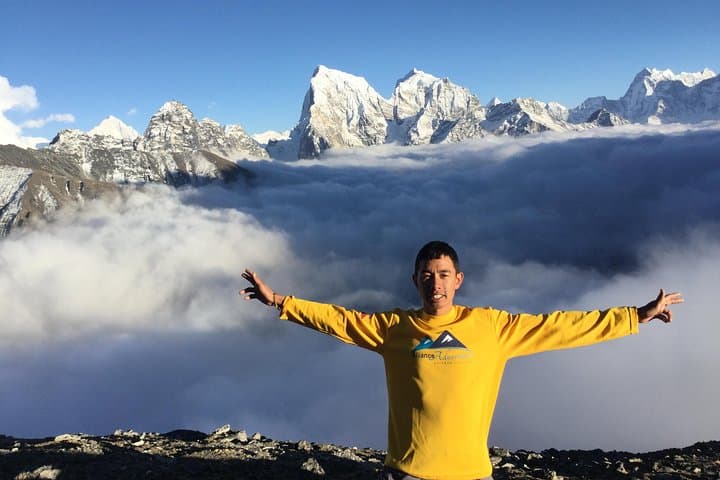
For planning: schedule 12–15 days to move slowly, include at least one acclimatization rest day, and budget for weather-delayed flights into Lukla. Bring a warm down jacket, a reliable sleeping bag, and boots with good ankle support. The reward is a high-altitude lakescape and a clear, 360-degree Himalayan panorama from Gokyo Ri that feels earned at every step.
challenging.
12–15 days.
Good aerobic base; comfortable walking 5–8 hours on uneven mountain trails and able to cope with repeated altitude gains.
The lakes sit around 4,750 m and Gokyo Ri reaches roughly 5,350 m; proper acclimatization is essential.
You need a Sagarmatha National Park permit and a TIMS card—both are checked along the route and obtainable through your operator or in Kathmandu.
Pre-monsoon (March–May) and post-monsoon (late September–November) offer the most stable weather and clear mountain views.
Guides and porters are recommended for safety, logistics, and local knowledge, especially for groups unfamiliar with high-altitude trekking.
The trail runs through Sagarmatha National Park, established in the 1970s and UNESCO-listed; the Sherpa communities here developed trade and guiding traditions tied to Himalayan exploration.
High-altitude ecosystems are fragile—minimize waste, avoid single-use plastics, and stick to marked trails to reduce erosion and disturbance.
Alliance Adventure Pvt. Ltd operates guided outdoor trips and adventures with an emphasis on safety, stewardship, and memorable experiences.
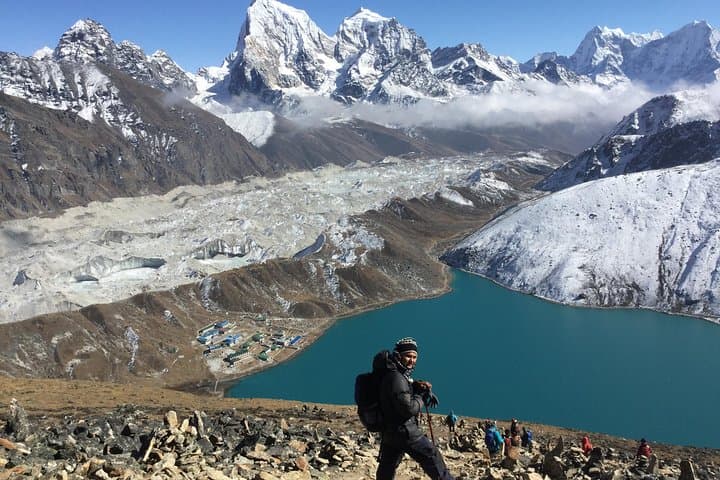
Early-morning clouds lift off the Ngozumpa Glacier and reveal a row of icy-blue lakes that catch the first light — this is Gokyo. Walkers on the Gokyo Lake Trek trade crowds for a quieter Himalayan corridor: narrow trails that climb through rhododendron scrub, cross suspension bridges, and open onto the high basin where Gokyo’s tiered glacial lakes sit at about 4,750 m.
Early-morning clouds lift off the Ngozumpa Glacier and reveal a row of icy-blue lakes that catch the first light — this is Gokyo. Walkers on the Gokyo Lake Trek trade crowds for a quieter Himalayan corridor: narrow trails that climb through rhododendron scrub, cross suspension bridges, and open onto the high basin where Gokyo’s tiered glacial lakes sit at about 4,750 m.
The route threads through Sagarmatha National Park, a protected landscape shaped by uplifted metamorphic rock and the long sweep of the Ngozumpa Glacier. Sherpa villages—Namche Bazaar, Khumjung, Machhermo—offer cultural waypoints: mani stones, prayer flags, and small tea-house economies that have adapted to high-altitude tourism over decades. History here is recent and raw: Himalayan exploration, Buddhist traditions, and the development of trekking routes tied to Lukla’s airstrip.
Expect long days on uneven, often rocky trails, with cumulative elevation gain toward Gokyo Ri (the best viewpoint) at roughly 5,350 m. Weather can flip from sun to wind-driven snow; the air is thin and dry, making hydration and pulse checks essential. Practicalities are straightforward: permits (Sagarmatha NP and TIMS), layered clothing, and gradual acclimatization days in Namche or at intermediate lodges.
For planning: schedule 12–15 days to move slowly, include at least one acclimatization rest day, and budget for weather-delayed flights into Lukla. Bring a warm down jacket, a reliable sleeping bag, and boots with good ankle support. The reward is a high-altitude lakescape and a clear, 360-degree Himalayan panorama from Gokyo Ri that feels earned at every step.