THE ADVENTURE COLLECTIVE® · Independent discovery and booking for outdoor travel

Fly into Lukla, walk through Sherpa villages and stand atop Gokyo Ri for a panorama of Everest, Lhotse and Makalu. This 11‑night lodge trek combines cultural stops in Namche Bazaar with glacial vistas at Gokyo Lake, ideal for trekkers who can manage high altitude and steep trails.
Fly into Lukla, walk through Sherpa villages and stand atop Gokyo Ri for a panorama of Everest, Lhotse and Makalu. This 11‑night lodge trek combines cultural stops in Namche Bazaar with glacial vistas at Gokyo Lake, ideal for trekkers who can manage high altitude and steep trails.
Morning light over Kathmandu fades into a thin, crisp air as the group boards the Lukla flight — the real journey begins where the valley narrows and the mountains start to loom.
Verified experiences and guided adventures in the surrounding area.
Operated by Liberty Holidays · Kathmandu, Province No. 1
Morning light over Kathmandu fades into a thin, crisp air as the group boards the Lukla flight — the real journey begins where the valley narrows and the mountains start to loom.
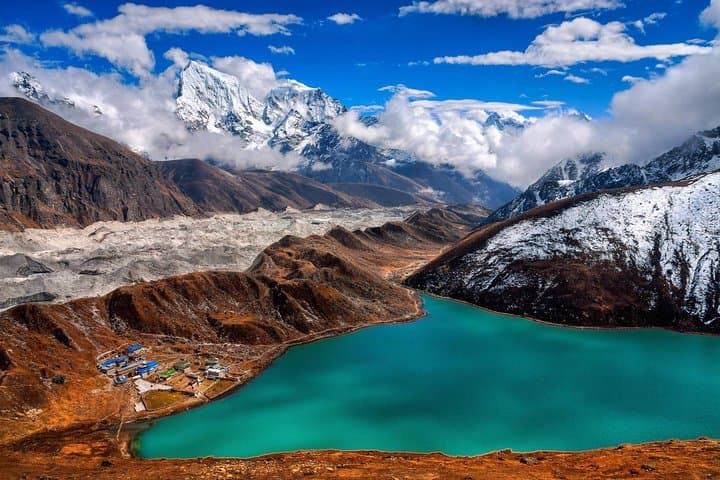
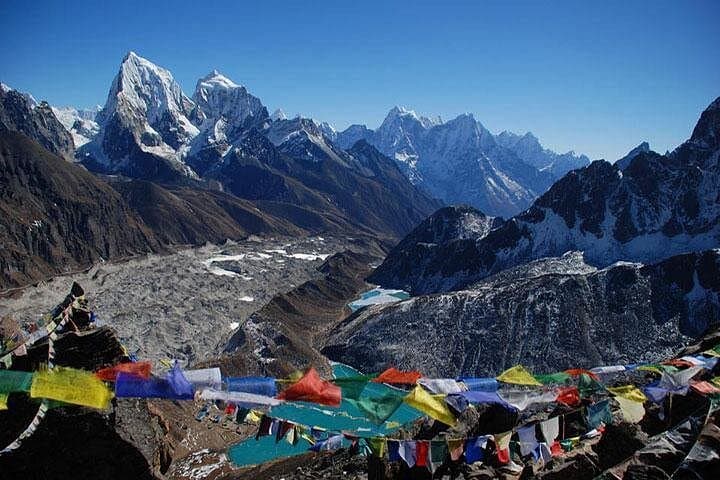
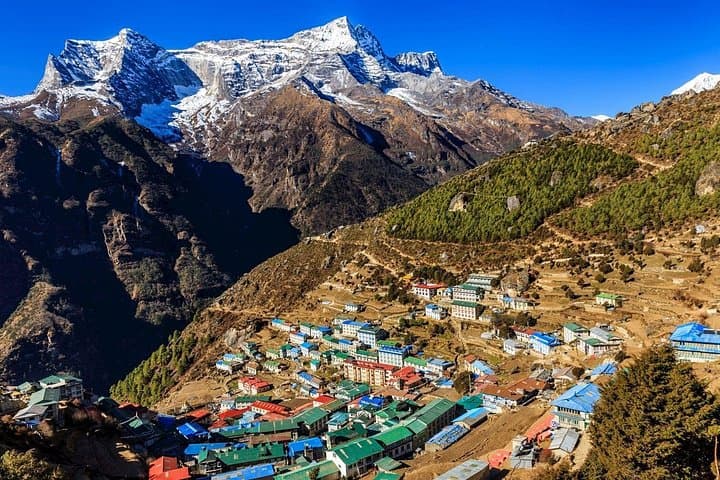
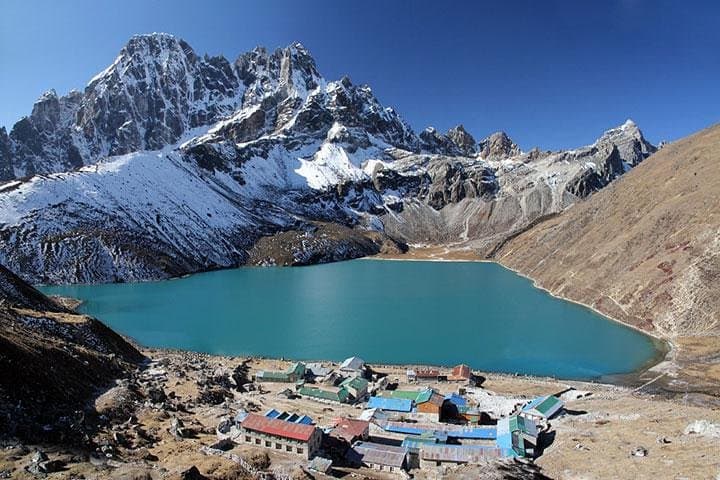
Across eleven nights, trekkers move from the bustle of Kathmandu to the stone teahouses and prayer flags of the Khumbu: Namche Bazaar’s trade routes, Khumjung’s yak pastures and the blue, glacial ponds of Gokyo. Geologically, this is the rising edge of the Tibetan Plateau — steep moraines, the Ngozumpa Glacier’s slow grey spine and exposed strata that reveal millennia of uplift.
Culturally, the route threads Sherpa villages where mani walls and gompas mark spiritual life and trade; local histories are shaped by Himalayan trade, Tibetan influence and the modern era of mountaineering. Expect waterfalls, rhododendron and juniper forests giving way to high alpine tundra as altitude climbs.
Practical guidance: the itinerary includes a Lukla flight, lodge-to-lodge nights and a summit-style push to Gokyo Ri (≈5,483 m). Daily walks average 4–6 hours with steep sections and exposed moraine; altitude is the primary challenge — build rest days and hydrate deliberately. Footwear with stiff soles, layered insulation and a 25 kg porter allowance are standard. Flights to Lukla are weather-dependent; plan buffer days and comprehensive travel insurance that covers high-altitude rescue.
This trek rewards with sweeping Himalayan panoramas at dawn, crystalline glacial lakes and authentic village encounters, but it asks for acclimatization, respect for altitude, and flexible logistics.
challenging.
11–12 days.
Requires good aerobic fitness and prior multi‑day trekking experience; be prepared for sustained uphill days and altitude up to ~5,483 m.
Flights into Lukla are short but weather‑sensitive; mornings are best, but delays or cancellations are common so plan buffer days.
Porters are included for up to 25 kg; many trekkers use a porter and carry a light daypack (≤10 kg) for comfort and safety.
No formal requirement, but prior multi‑day trekking and gradual exposure to altitude greatly improves success and reduces AMS risk.
Trekkers require TIMS and Sagarmatha National Park permits; passport photocopies and photos are needed for permit processing and lodge registration.
The Khumbu region has long been a trans‑Himalayan trade and cultural corridor for Sherpa communities; mountaineering and tourism expanded after the mid‑20th century Everest expeditions.
The area is within Sagarmatha National Park — practice Leave No Trace, avoid single‑use plastics, and support local lodges that follow waste management guidelines.
Liberty Holidays operates guided outdoor trips and adventures with an emphasis on safety, stewardship, and memorable experiences.
Morning light over Kathmandu fades into a thin, crisp air as the group boards the Lukla flight — the real journey begins where the valley narrows and the mountains start to loom.
Morning light over Kathmandu fades into a thin, crisp air as the group boards the Lukla flight — the real journey begins where the valley narrows and the mountains start to loom.
Across eleven nights, trekkers move from the bustle of Kathmandu to the stone teahouses and prayer flags of the Khumbu: Namche Bazaar’s trade routes, Khumjung’s yak pastures and the blue, glacial ponds of Gokyo. Geologically, this is the rising edge of the Tibetan Plateau — steep moraines, the Ngozumpa Glacier’s slow grey spine and exposed strata that reveal millennia of uplift.
Culturally, the route threads Sherpa villages where mani walls and gompas mark spiritual life and trade; local histories are shaped by Himalayan trade, Tibetan influence and the modern era of mountaineering. Expect waterfalls, rhododendron and juniper forests giving way to high alpine tundra as altitude climbs.
Practical guidance: the itinerary includes a Lukla flight, lodge-to-lodge nights and a summit-style push to Gokyo Ri (≈5,483 m). Daily walks average 4–6 hours with steep sections and exposed moraine; altitude is the primary challenge — build rest days and hydrate deliberately. Footwear with stiff soles, layered insulation and a 25 kg porter allowance are standard. Flights to Lukla are weather-dependent; plan buffer days and comprehensive travel insurance that covers high-altitude rescue.
This trek rewards with sweeping Himalayan panoramas at dawn, crystalline glacial lakes and authentic village encounters, but it asks for acclimatization, respect for altitude, and flexible logistics.