THE ADVENTURE COLLECTIVE® · Independent discovery and booking for outdoor travel

A brisk bus ride from Akureyri deposits you at Godafoss, a 12‑meter horseshoe waterfall famed in Icelandic history. This 2½‑hour shore excursion blends easy walking, dramatic geology and photo-ready viewpoints over Eyjafjörður.
A brisk bus ride from Akureyri deposits you at Godafoss, a 12‑meter horseshoe waterfall famed in Icelandic history. This 2½‑hour shore excursion blends easy walking, dramatic geology and photo-ready viewpoints over Eyjafjörður.
You step off the gangway in Akureyri and into a low, bracing wind; the bus eases onto the old mountain road and the town shrinks behind you, replaced by panels of black lava, fields of moss and distant snow-capped peaks. The guide speaks softly about the route while the Eyjafjörður fjord opens like a map, its waters daring the sky to change.
Verified experiences and guided adventures in the surrounding area.
Operated by Soleil de Minuit · Akureyri, Northeast Region
You step off the gangway in Akureyri and into a low, bracing wind; the bus eases onto the old mountain road and the town shrinks behind you, replaced by panels of black lava, fields of moss and distant snow-capped peaks. The guide speaks softly about the route while the Eyjafjörður fjord opens like a map, its waters daring the sky to change.
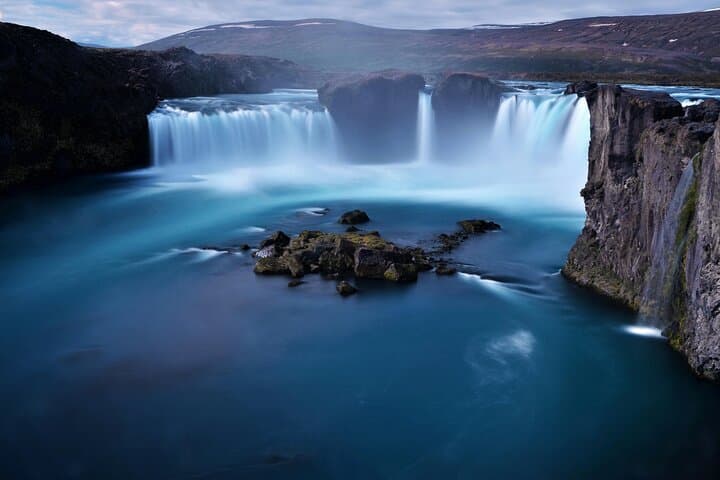
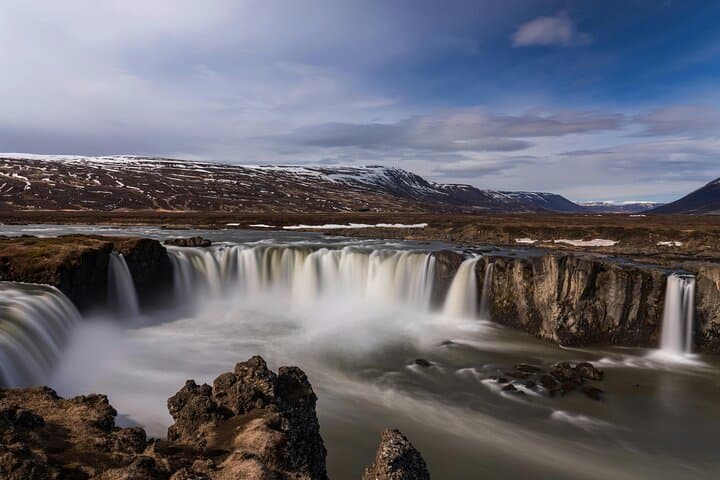
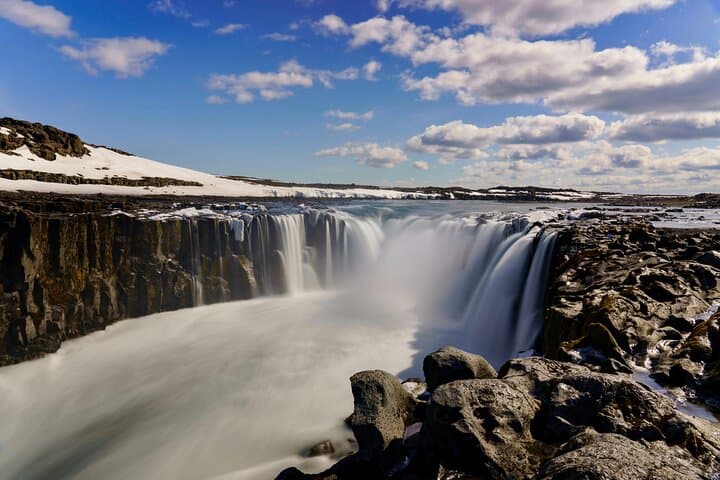
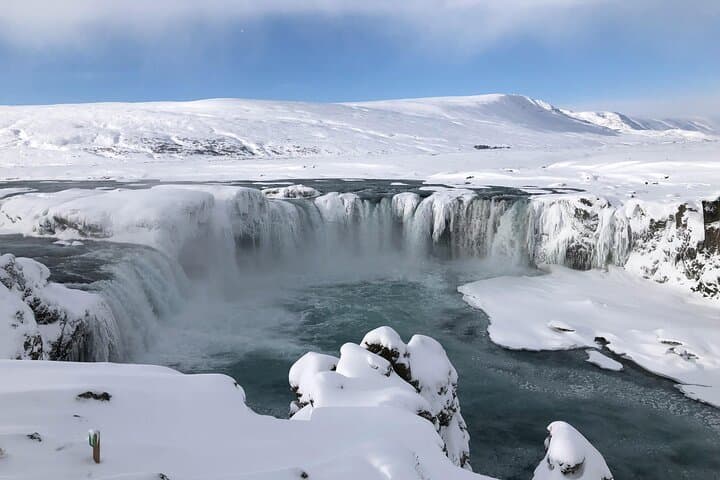
Within an hour the road drops into Fnjóskadalur valley and the river's voice grows louder. At Godafoss the water throws itself over a horseshoe lip—12 meters of drop, 30 meters across—creating a persistent curtain of spray that curls and reforms in the wind. The place earns its name: Goðafoss, the waterfall of the gods, linked in legend to Iceland’s conversion to Christianity around 1000 AD when pagan idols were cast into the torrent.
Geology here is blunt and honest: basalt flows, glacially carved channels and a river that has traced the same course since the last ice retreat. Culture and countryside meet on short walking trails and wooden viewing platforms that make the falls accessible for most visitors.
Practical note: the tour runs about 2½ hours with roughly 45 minutes at Godafoss. Expect gravel and boardwalk surfaces, brief gentle inclines, and wind-driven spray—waterproof outer layers and non-slip footwear are wise. Photography windows favor late afternoon light; mornings bring crisper air and fewer people. Stay behind barriers, respect fragile moss and nesting birds, and you’ll leave with a clear impression of Iceland’s blunt, mobile landscape.
easy.
2–3 hours.
Minimal fitness required; short, mostly flat walks and brief steps to viewpoints.
The typical visit is about 45 minutes—enough time for short walks to multiple viewpoints and photos.
Main viewing areas have boardwalks and short, relatively even paths; many visitors with strollers or limited mobility can manage, but expect some gravel and gentle slopes.
Basic restroom facilities are usually available near the parking area in season; plan ahead if you need specific accessibility features.
Yes—the tour runs as a round trip to Akureyri with a photo stop at the town viewpoint before returning to port.
Goðafoss is linked to the year 1000 when sagas say the lawspeaker threw pagan idols into the falls after Iceland’s conversion to Christianity, giving the site its name.
Stay on established paths and behind barriers—moss and lichens are fragile and take decades to regenerate; pack out all trash and avoid disturbing nesting birds.
Soleil de Minuit operates guided outdoor trips and adventures with an emphasis on safety, stewardship, and memorable experiences.
You step off the gangway in Akureyri and into a low, bracing wind; the bus eases onto the old mountain road and the town shrinks behind you, replaced by panels of black lava, fields of moss and distant snow-capped peaks. The guide speaks softly about the route while the Eyjafjörður fjord opens like a map, its waters daring the sky to change.
You step off the gangway in Akureyri and into a low, bracing wind; the bus eases onto the old mountain road and the town shrinks behind you, replaced by panels of black lava, fields of moss and distant snow-capped peaks. The guide speaks softly about the route while the Eyjafjörður fjord opens like a map, its waters daring the sky to change.
Within an hour the road drops into Fnjóskadalur valley and the river's voice grows louder. At Godafoss the water throws itself over a horseshoe lip—12 meters of drop, 30 meters across—creating a persistent curtain of spray that curls and reforms in the wind. The place earns its name: Goðafoss, the waterfall of the gods, linked in legend to Iceland’s conversion to Christianity around 1000 AD when pagan idols were cast into the torrent.
Geology here is blunt and honest: basalt flows, glacially carved channels and a river that has traced the same course since the last ice retreat. Culture and countryside meet on short walking trails and wooden viewing platforms that make the falls accessible for most visitors.
Practical note: the tour runs about 2½ hours with roughly 45 minutes at Godafoss. Expect gravel and boardwalk surfaces, brief gentle inclines, and wind-driven spray—waterproof outer layers and non-slip footwear are wise. Photography windows favor late afternoon light; mornings bring crisper air and fewer people. Stay behind barriers, respect fragile moss and nesting birds, and you’ll leave with a clear impression of Iceland’s blunt, mobile landscape.