THE ADVENTURE COLLECTIVE® · Independent discovery and booking for outdoor travel

A brisk shore excursion from Akureyri delivers one of Iceland's most photogenic falls in under two hours. Expect short paved walks, dramatic viewpoints, and a slice of Icelandic history at the "Waterfall of the Gods."
A brisk shore excursion from Akureyri delivers one of Iceland's most photogenic falls in under two hours. Expect short paved walks, dramatic viewpoints, and a slice of Icelandic history at the "Waterfall of the Gods."
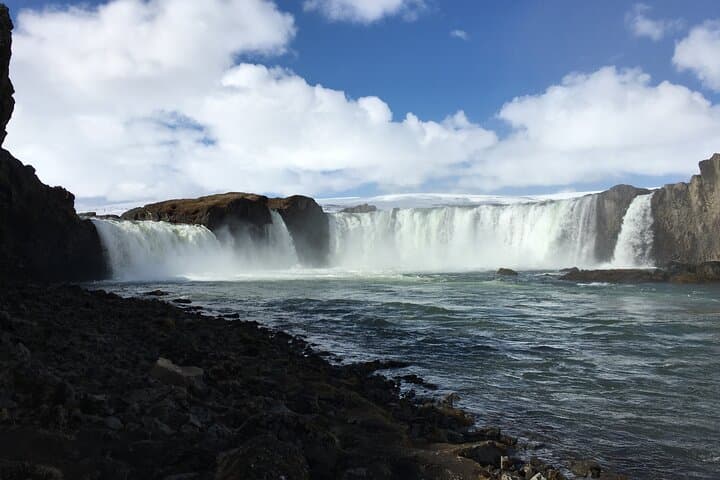
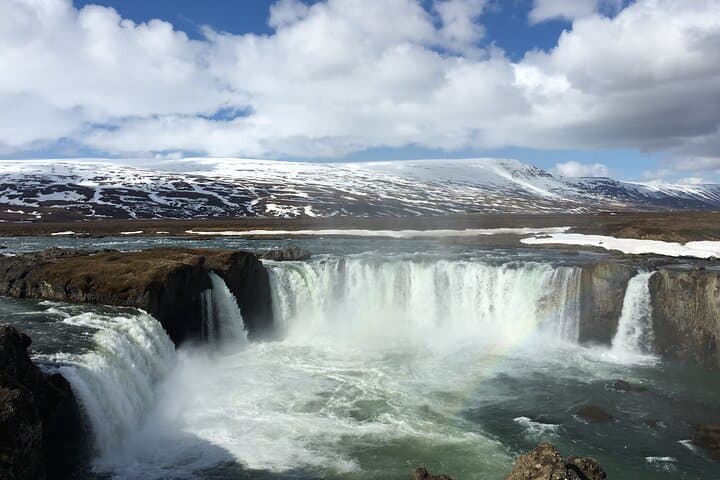
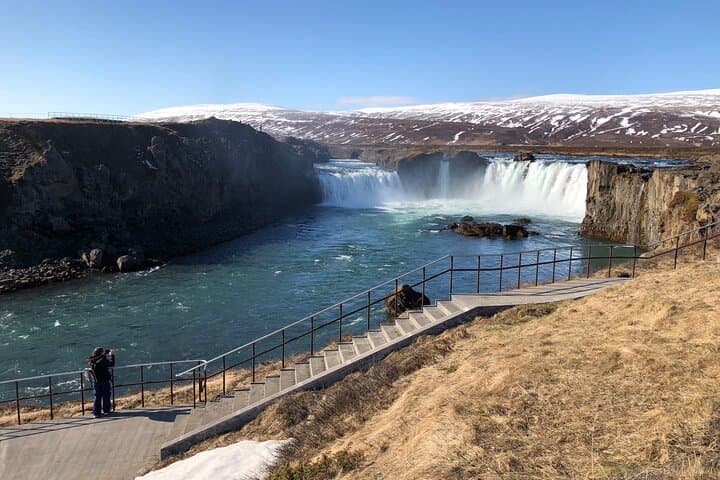
You step off the van onto a wind-creased riverside and the roar arrives before the falls do — cold spray tasting of glacial melt and basalt. Godafoss sits where the Skjálfandafljót river narrows and drops, an open fan of white water rimmed by dark, columnar rock. The itinerary is short and concentrated: a 20–30 minute drive from Akureyri, followed by 30–60 minutes of walking and viewpoint time along paved paths and a few stair sections.
Verified experiences and guided adventures in the surrounding area.
Operated by Imagine Iceland Travel · Akureyri, Northeastern Region
You step off the van onto a wind-creased riverside and the roar arrives before the falls do — cold spray tasting of glacial melt and basalt. Godafoss sits where the Skjálfandafljót river narrows and drops, an open fan of white water rimmed by dark, columnar rock. The itinerary is short and concentrated: a 20–30 minute drive from Akureyri, followed by 30–60 minutes of walking and viewpoint time along paved paths and a few stair sections.
Geologically, Godafoss is cut into layered lava flows shaped by repeated eruptions and later sculpted by glacial runoff; you're seeing a young, energetic river shaping fresh volcanic rock. Culturally the name — "Waterfall of the Gods" — links to the year 1000, when local law-speaker Þorgeir purportedly cast pagan idols into the waters as Iceland accepted Christianity.
Practicalities are straightforward: expect 200–600 m of easy walking total with under ~50 m cumulative elevation change between viewpoints. Paths are well maintained but can be icy in shoulder seasons; a steady footing and waterproof outer layers make the visit comfortable. Photography is best from the western bank for panoramas and from the eastern bank for close-in, dramatic angles. Keep to marked trails to protect fragile moss and avoid cliff edges — currents are deceptively strong.
This brief shore excursion is ideal for cruise passengers who want a decisive taste of Icelandic geology and history without a long transfer. Time your visit for softer light or to avoid the busiest coach arrivals, and leave room to breathe in the scale of river and rock before you head back to port.
easy.
2 hours.
Suitable for most travelers who can manage 200–600 m of walking and a few short stair sections
The drive to Godafoss is roughly 20–30 minutes each way, depending on traffic and coach routing.
Main viewpoints are reachable via short paved paths, but there are stairs at some spots; accessibility varies — check with the operator if mobility is limited.
Yes — tours typically allow 40–60 minutes at the falls, enough for several viewpoint stops and photos if you move efficiently.
Yes — many operators reserve the right to cancel for safety in severe weather; check cancellation and refund policies before booking.
The name refers to a story from around 1000 AD when pagan idols were reportedly thrown into the river as Iceland converted to Christianity.
Trails and banks host fragile moss and lichens — stick to paths, avoid trampling vegetation, and pack out any waste to reduce impact.
Imagine Iceland Travel operates guided outdoor trips and adventures with an emphasis on safety, stewardship, and memorable experiences.

You step off the van onto a wind-creased riverside and the roar arrives before the falls do — cold spray tasting of glacial melt and basalt. Godafoss sits where the Skjálfandafljót river narrows and drops, an open fan of white water rimmed by dark, columnar rock. The itinerary is short and concentrated: a 20–30 minute drive from Akureyri, followed by 30–60 minutes of walking and viewpoint time along paved paths and a few stair sections.
You step off the van onto a wind-creased riverside and the roar arrives before the falls do — cold spray tasting of glacial melt and basalt. Godafoss sits where the Skjálfandafljót river narrows and drops, an open fan of white water rimmed by dark, columnar rock. The itinerary is short and concentrated: a 20–30 minute drive from Akureyri, followed by 30–60 minutes of walking and viewpoint time along paved paths and a few stair sections.
Geologically, Godafoss is cut into layered lava flows shaped by repeated eruptions and later sculpted by glacial runoff; you're seeing a young, energetic river shaping fresh volcanic rock. Culturally the name — "Waterfall of the Gods" — links to the year 1000, when local law-speaker Þorgeir purportedly cast pagan idols into the waters as Iceland accepted Christianity.
Practicalities are straightforward: expect 200–600 m of easy walking total with under ~50 m cumulative elevation change between viewpoints. Paths are well maintained but can be icy in shoulder seasons; a steady footing and waterproof outer layers make the visit comfortable. Photography is best from the western bank for panoramas and from the eastern bank for close-in, dramatic angles. Keep to marked trails to protect fragile moss and avoid cliff edges — currents are deceptively strong.
This brief shore excursion is ideal for cruise passengers who want a decisive taste of Icelandic geology and history without a long transfer. Time your visit for softer light or to avoid the busiest coach arrivals, and leave room to breathe in the scale of river and rock before you head back to port.