THE ADVENTURE COLLECTIVE® · Independent discovery and booking for outdoor travel

A compact, interpretive day trip from Baku that pairs prehistoric petroglyphs with bubbling mud volcanoes. This private tour delivers close-up geology, clear interpretation, and a cultural stop at Bibi-Heybat Mosque on the return.
A compact, interpretive day trip from Baku that pairs prehistoric petroglyphs with bubbling mud volcanoes. This private tour delivers close-up geology, clear interpretation, and a cultural stop at Bibi-Heybat Mosque on the return.
You step out of the air-conditioned minivan onto wind-swept scrub and a carpet of smashed shells and loess. The landscape here is plain but uncompromising—gray-brown hills scored with shallow gullies, punctuated by dark, circular mouths that cough cold, odorous mud into the air. A guide with a measured cadence points to a smooth rock face and the first of many petroglyphs: a horse, a hunter, a spiral. The carvings stare back across millennia; they are at once precise and blunt, pragmatic records of a people who read the land to survive.
Verified experiences and guided adventures in the surrounding area.
Operated by VLA_tourism · Baku, Absheron
You step out of the air-conditioned minivan onto wind-swept scrub and a carpet of smashed shells and loess. The landscape here is plain but uncompromising—gray-brown hills scored with shallow gullies, punctuated by dark, circular mouths that cough cold, odorous mud into the air. A guide with a measured cadence points to a smooth rock face and the first of many petroglyphs: a horse, a hunter, a spiral. The carvings stare back across millennia; they are at once precise and blunt, pragmatic records of a people who read the land to survive.
Gobustan—Qobustan in Azerbaijani—sits on the southern edge of the Absheron Peninsula, where a prehistoric coastline and millennia of human occupation left a dense archive of rock art. The panels here range from early Neolithic impressions to Bronze Age scenes; archaeologists date some motifs to as far back as 40,000 years, although most are younger, tied to fishing and herding cultures that followed changing shorelines.
Geology is the other headline: Azerbaijan hosts a disproportionate share of the planet’s mud volcanoes. These aren’t molten lava—rather, pressurized gases and muddy slurries from deep underground push up through weak points in the surface, sculpting small cones and bubbling pools that hiss and pop. The effect beside the petroglyphs is uncanny: ancient human marks set against a living, evolving earth.
Culturally, the tour stitches modern Baku to older layers—on the drive back you’ll stop at Bibi-Heybat Mosque, a 20th-century reconstruction of a medieval complex that anchors the Islamic history of the region. Guides typically weave in stories of trade routes, nomadic herding, and Soviet-era scientific surveys that catalogued the volcanoes and rock art.
Practical edge: expect light walking—most routes at the reserve are short circuits (1–2 km) with minimal elevation. Bring sun protection, a refillable water bottle, and closed-toe shoes for the rough gravel and sticky mud near cones. Photography is rewarding at low sun; the colors flatten under harsh midday light.
The private tour spans five to six hours door-to-door from Baku, combining guided interpretation with short off-road stops at mud volcano fields. It’s suitable for travelers of most fitness levels, though the terrain can be uneven and windy. For curious travelers it’s an efficient, revealing day trip—one that pairs human history with ongoing geological drama, all within an easy drive of Azerbaijan’s capital.
easy.
5–6 hours.
Light walking around uneven ground; fine for most active travelers.
Expect a full 5–6 hour excursion including hotel pickup, visits to Gobustan Reserve, mud volcanoes, and a stop at Bibi-Heybat Mosque.
Admission to some parts is included according to the itinerary; confirm with the operator at booking for any museum fees.
Yes—this tour is family-friendly, but infants should sit on laps during vehicle transfers and children should be supervised near mud pits.
They are generally safe if you stay back from unstable rims; the guide will keep you at a safe viewing distance from active cones.
Accessibility is limited—paths are uneven and some viewpoints require short walks; contact the operator for specific accommodations.
A professional English-speaking guide is included; other languages may be available on request.
Gobustan’s petroglyphs record millennia of human interaction with a shifting coastline; the area was later mapped and studied extensively during the Soviet period.
The rock art is fragile—stay on designated paths, avoid touching carvings, and pack out all trash to reduce erosion and vandalism.
VLA_tourism operates guided outdoor trips and adventures with an emphasis on safety, stewardship, and memorable experiences.
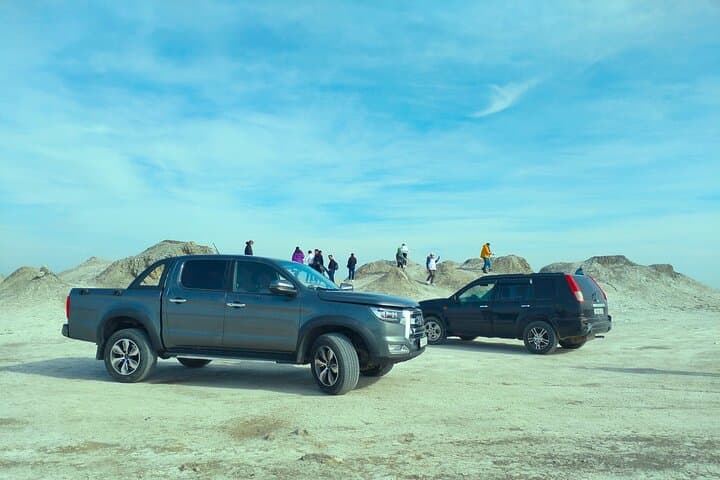
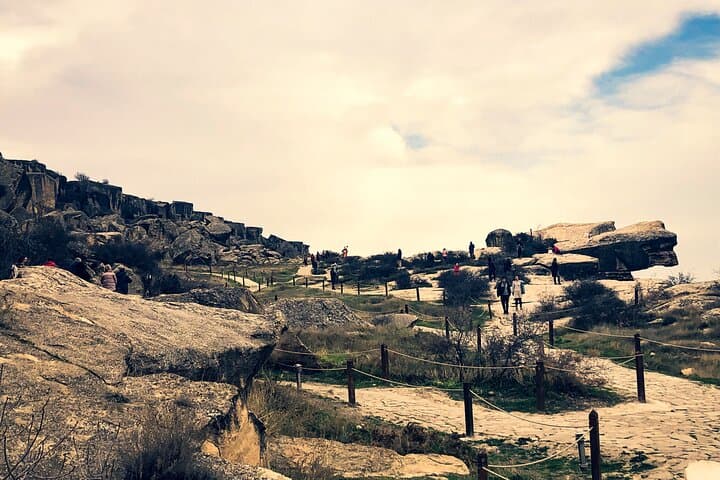
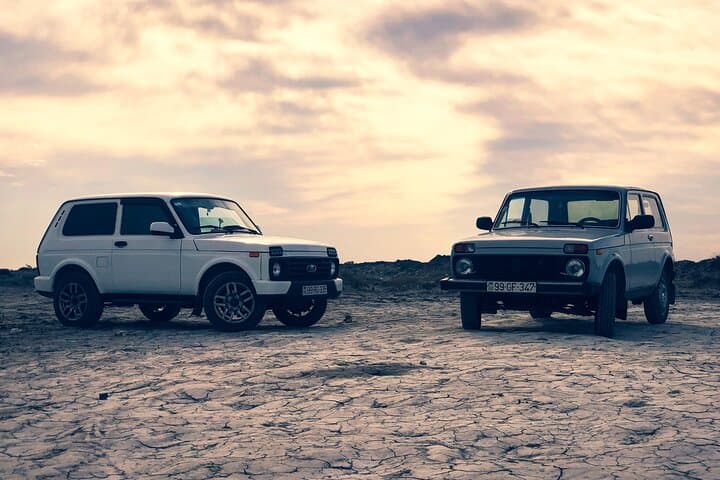
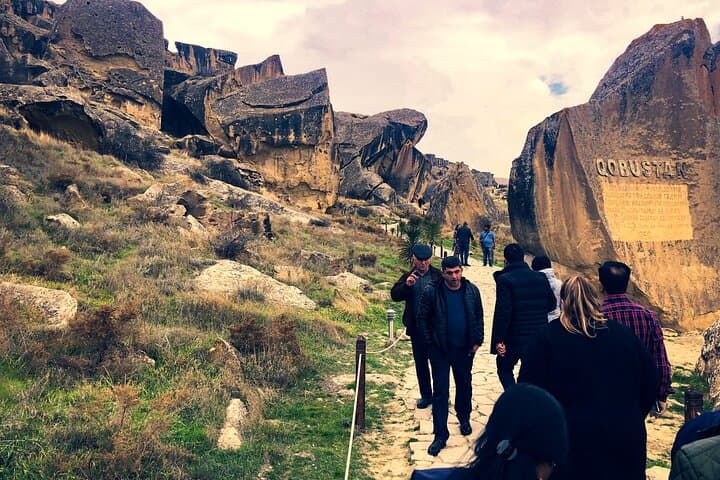
You step out of the air-conditioned minivan onto wind-swept scrub and a carpet of smashed shells and loess. The landscape here is plain but uncompromising—gray-brown hills scored with shallow gullies, punctuated by dark, circular mouths that cough cold, odorous mud into the air. A guide with a measured cadence points to a smooth rock face and the first of many petroglyphs: a horse, a hunter, a spiral. The carvings stare back across millennia; they are at once precise and blunt, pragmatic records of a people who read the land to survive.
You step out of the air-conditioned minivan onto wind-swept scrub and a carpet of smashed shells and loess. The landscape here is plain but uncompromising—gray-brown hills scored with shallow gullies, punctuated by dark, circular mouths that cough cold, odorous mud into the air. A guide with a measured cadence points to a smooth rock face and the first of many petroglyphs: a horse, a hunter, a spiral. The carvings stare back across millennia; they are at once precise and blunt, pragmatic records of a people who read the land to survive.
Gobustan—Qobustan in Azerbaijani—sits on the southern edge of the Absheron Peninsula, where a prehistoric coastline and millennia of human occupation left a dense archive of rock art. The panels here range from early Neolithic impressions to Bronze Age scenes; archaeologists date some motifs to as far back as 40,000 years, although most are younger, tied to fishing and herding cultures that followed changing shorelines.
Geology is the other headline: Azerbaijan hosts a disproportionate share of the planet’s mud volcanoes. These aren’t molten lava—rather, pressurized gases and muddy slurries from deep underground push up through weak points in the surface, sculpting small cones and bubbling pools that hiss and pop. The effect beside the petroglyphs is uncanny: ancient human marks set against a living, evolving earth.
Culturally, the tour stitches modern Baku to older layers—on the drive back you’ll stop at Bibi-Heybat Mosque, a 20th-century reconstruction of a medieval complex that anchors the Islamic history of the region. Guides typically weave in stories of trade routes, nomadic herding, and Soviet-era scientific surveys that catalogued the volcanoes and rock art.
Practical edge: expect light walking—most routes at the reserve are short circuits (1–2 km) with minimal elevation. Bring sun protection, a refillable water bottle, and closed-toe shoes for the rough gravel and sticky mud near cones. Photography is rewarding at low sun; the colors flatten under harsh midday light.
The private tour spans five to six hours door-to-door from Baku, combining guided interpretation with short off-road stops at mud volcano fields. It’s suitable for travelers of most fitness levels, though the terrain can be uneven and windy. For curious travelers it’s an efficient, revealing day trip—one that pairs human history with ongoing geological drama, all within an easy drive of Azerbaijan’s capital.