THE ADVENTURE COLLECTIVE® · Independent discovery and booking for outdoor travel

In a single half-day from Baku you can walk among 40,000-year-old rock engravings and watch steam-fed mud cones bubble open. This Gobustan tour pairs human history with geological theater—compact, scenic, and surprisingly accessible.
In a single half-day from Baku you can walk among 40,000-year-old rock engravings and watch steam-fed mud cones bubble open. This Gobustan tour pairs human history with geological theater—compact, scenic, and surprisingly accessible.
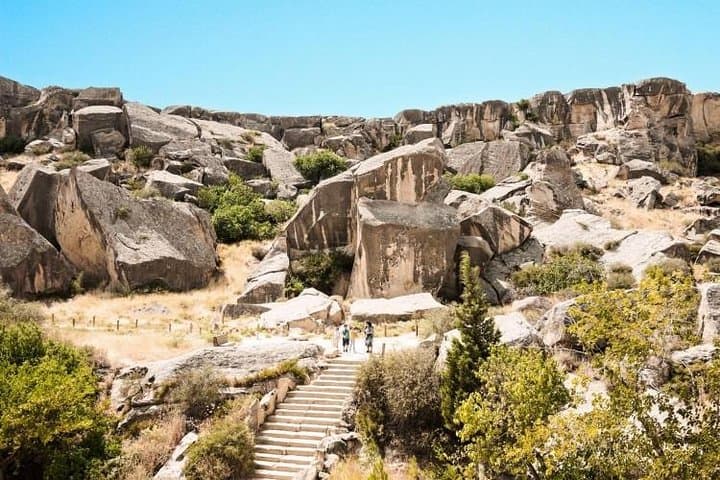
You step out of the air-conditioned van into hard sun and an open stone plain where wind carries a mineral tang—part salt from the Caspian, part methane from the earth. Low, rounded boulders rise like the ribs of an old animal; every weathered face is mapped with scratches and figures. This is Gobustan: a place where human marks and geological drama share the same stage.
Verified experiences and guided adventures in the surrounding area.
Operated by Amazing Azerbaijan · Gobustan, Qobustan District
You step out of the air-conditioned van into hard sun and an open stone plain where wind carries a mineral tang—part salt from the Caspian, part methane from the earth. Low, rounded boulders rise like the ribs of an old animal; every weathered face is mapped with scratches and figures. This is Gobustan: a place where human marks and geological drama share the same stage.
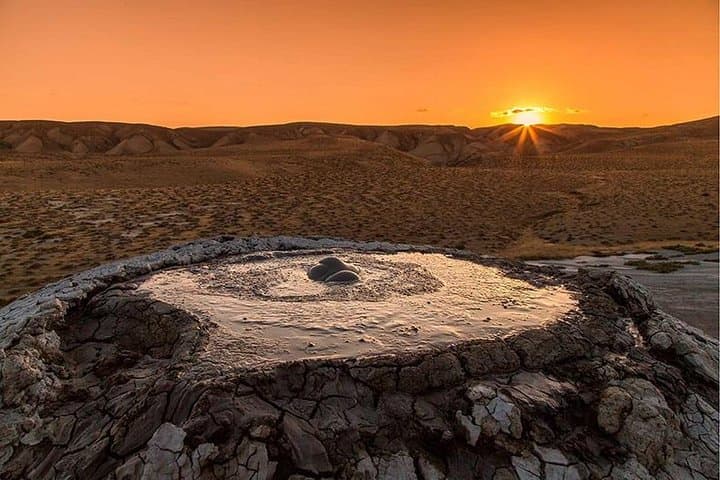
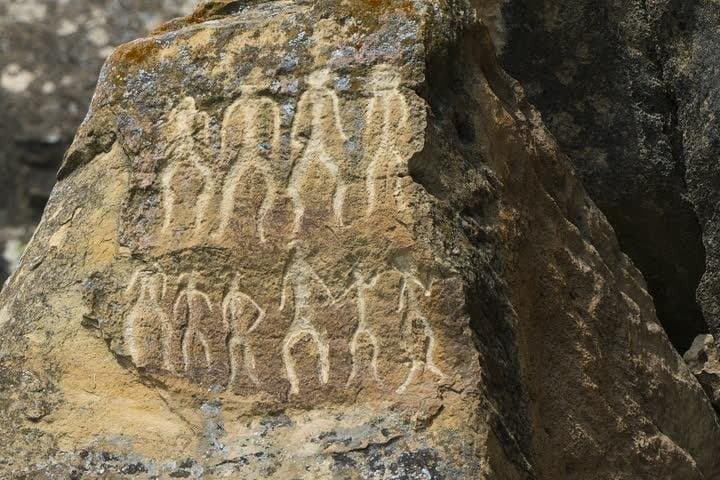
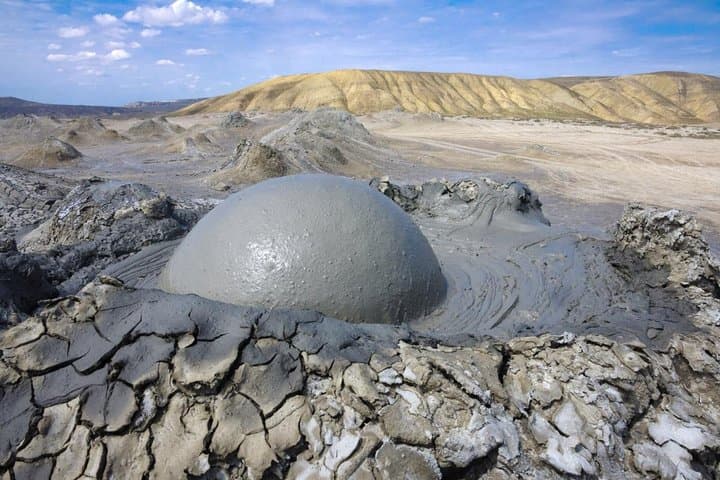
The tour threads two complementary narratives. First, Gobustan Rock Art Cultural Landscape, a UNESCO site that preserves more than 6,000 petroglyphs, some dated to 40,000 years ago. The engravings chart migrations, hunts and ritual life across the post-glacial wet period when rivers braided what is now semi-desert. The second act is rawer: Azerbaijan’s famous mud volcanoes, where pressurized mud and gas bubble up through cracked earth and sometimes spatter the horizon with concentric gray pools.
Geologically, Gobustan sits on an uplifted plateau of Cretaceous–Paleogene sandstone and shale; the petroglyph panels occur on exposed pavements and boulders that resist erosion. Mud volcanoes in the region are driven by pressurized hydrocarbons—gas and saltwater—forcing soft sediments upward into dome-like cones. Together these features tell a twin story of human persistence and restless geology.
Culturally, the site is a crossroads. Archaeologists have traced hunting scenes, boats and ritual icons that connect Mesolithic foragers to later Bronze Age communities and medieval settlements. Local guides link those images to folk memory; small visitor centers explain excavation finds and conservation needs.
Practically, expect a five-hour outing from central Baku: roughly a 45–75 minute drive each way depending on traffic, and about 60 minutes exploring the petroglyph panels on relatively flat but rocky paths (plan for 1–2 km of walking with minimal elevation gain). The road to the mud volcanoes is rough—operators switch to local taxis for the last leg—so wear sturdy shoes. Bring sun protection, plenty of water (bottled water is provided, but carry extra if you run hot), and a light jacket for wind near the plateau rim.
Timing matters: morning departures avoid the midday heat and often catch the best light for photographing carved reliefs; late afternoon softens the landscape and cools the ride back to the city. Respect the panels—don’t touch or climb on petroglyphs—and follow your guide’s route to reduce erosion and preserve the site. For travelers who want an efficient, layered introduction to Azerbaijan’s natural forces and deep past, this half-day tour delivers both spectacle and context without demanding technical skill.
easy.
5 hours (total, including transport).
Minimal fitness required — able to walk 1–2 km over uneven rocky ground and board local taxis for the rough final stretch.
Travel time is typically 45–75 minutes each way from central Baku depending on traffic; expect the full tour to last about five hours including transport.
Many panels are accessible from short, defined paths; guides will direct you to viewing platforms — avoid touching or climbing on the rock art to protect fragile surfaces.
Yes, the last section is bumpy and unpaved; the operator includes a transfer to local taxis for that stretch to reach the mud fields.
Yes; the tour is rated easy with minimal walking, but uneven ground may be challenging for very young children or guests with mobility issues.
Sun protection, sturdy shoes, a light layer for wind, and small local currency for snacks or restroom fees are recommended.
Most eruptions are minor bubbling and mud flows, but some volcanoes have had stronger activity — stay behind guide barriers and follow instructions for safety.
Gobustan’s rock art records human occupation from the Upper Paleolithic through the Middle Ages and helped secure its 2007 inscription as a UNESCO World Heritage site.
The petroglyphs are vulnerable to weathering and vandalism; visitors must stay on marked paths and avoid touching rock surfaces to help preserve them.
Amazing Azerbaijan operates guided outdoor trips and adventures with an emphasis on safety, stewardship, and memorable experiences.
You step out of the air-conditioned van into hard sun and an open stone plain where wind carries a mineral tang—part salt from the Caspian, part methane from the earth. Low, rounded boulders rise like the ribs of an old animal; every weathered face is mapped with scratches and figures. This is Gobustan: a place where human marks and geological drama share the same stage.
You step out of the air-conditioned van into hard sun and an open stone plain where wind carries a mineral tang—part salt from the Caspian, part methane from the earth. Low, rounded boulders rise like the ribs of an old animal; every weathered face is mapped with scratches and figures. This is Gobustan: a place where human marks and geological drama share the same stage.
The tour threads two complementary narratives. First, Gobustan Rock Art Cultural Landscape, a UNESCO site that preserves more than 6,000 petroglyphs, some dated to 40,000 years ago. The engravings chart migrations, hunts and ritual life across the post-glacial wet period when rivers braided what is now semi-desert. The second act is rawer: Azerbaijan’s famous mud volcanoes, where pressurized mud and gas bubble up through cracked earth and sometimes spatter the horizon with concentric gray pools.
Geologically, Gobustan sits on an uplifted plateau of Cretaceous–Paleogene sandstone and shale; the petroglyph panels occur on exposed pavements and boulders that resist erosion. Mud volcanoes in the region are driven by pressurized hydrocarbons—gas and saltwater—forcing soft sediments upward into dome-like cones. Together these features tell a twin story of human persistence and restless geology.
Culturally, the site is a crossroads. Archaeologists have traced hunting scenes, boats and ritual icons that connect Mesolithic foragers to later Bronze Age communities and medieval settlements. Local guides link those images to folk memory; small visitor centers explain excavation finds and conservation needs.
Practically, expect a five-hour outing from central Baku: roughly a 45–75 minute drive each way depending on traffic, and about 60 minutes exploring the petroglyph panels on relatively flat but rocky paths (plan for 1–2 km of walking with minimal elevation gain). The road to the mud volcanoes is rough—operators switch to local taxis for the last leg—so wear sturdy shoes. Bring sun protection, plenty of water (bottled water is provided, but carry extra if you run hot), and a light jacket for wind near the plateau rim.
Timing matters: morning departures avoid the midday heat and often catch the best light for photographing carved reliefs; late afternoon softens the landscape and cools the ride back to the city. Respect the panels—don’t touch or climb on petroglyphs—and follow your guide’s route to reduce erosion and preserve the site. For travelers who want an efficient, layered introduction to Azerbaijan’s natural forces and deep past, this half-day tour delivers both spectacle and context without demanding technical skill.