THE ADVENTURE COLLECTIVE® · Independent discovery and booking for outdoor travel

In under four hours from Baku you can stand beside ancient rock art and peer into steaming mud volcanoes. This private tour pairs Gobustan’s petroglyphs with the raw geology of Dashgil — a compact, vivid half‑day outside the city.
In under four hours from Baku you can stand beside ancient rock art and peer into steaming mud volcanoes. This private tour pairs Gobustan’s petroglyphs with the raw geology of Dashgil — a compact, vivid half‑day outside the city.
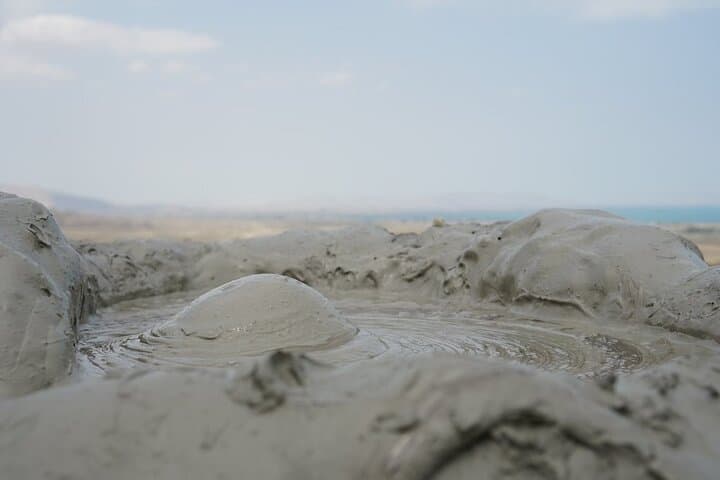
The morning sun hits the semi-arid plain west of Baku and the ground seems to breathe — a slow, bubbling exhale from mounds of gray clay. On the drive from the city the asphalt thins and the Caspian’s scent fades; the landscape becomes wind-sculpted, sparse, and stubbornly ancient. At Gobustan, a guide opens a gate and the past steps forward in stone: petroglyph panels carved by hunters and herders, and a short drive away, the Dashgil mud volcanoes spatter and simmer like a living geology lesson.
Verified experiences and guided adventures in the surrounding area.
Operated by AZTERRA TRAVEL · Gobustan, Gobustan District
The morning sun hits the semi-arid plain west of Baku and the ground seems to breathe — a slow, bubbling exhale from mounds of gray clay. On the drive from the city the asphalt thins and the Caspian’s scent fades; the landscape becomes wind-sculpted, sparse, and stubbornly ancient. At Gobustan, a guide opens a gate and the past steps forward in stone: petroglyph panels carved by hunters and herders, and a short drive away, the Dashgil mud volcanoes spatter and simmer like a living geology lesson.
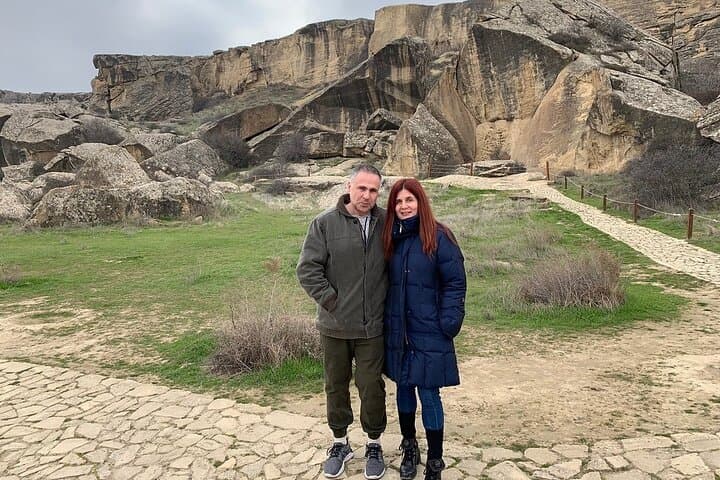
Gobustan National Park is both archive and laboratory. The rock art here dates back thousands of years — images of boats, ibex, and human figures that record changes in climate and culture across the late Pleistocene and Holocene. Geologically, the mud volcanoes are a different kind of archive: methane and underground fluids force fine sediments upward, building cones and craters that continue to shift with every small eruption. Locals have known these features for centuries; Soviet-era scientists catalogued them, and today the site is part of Azerbaijan’s larger cultural landscape, a UNESCO World Heritage spot that pairs human history with active earth processes.
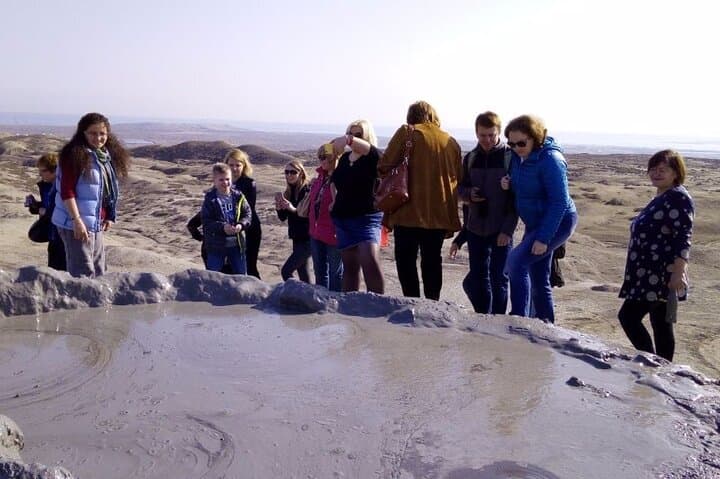
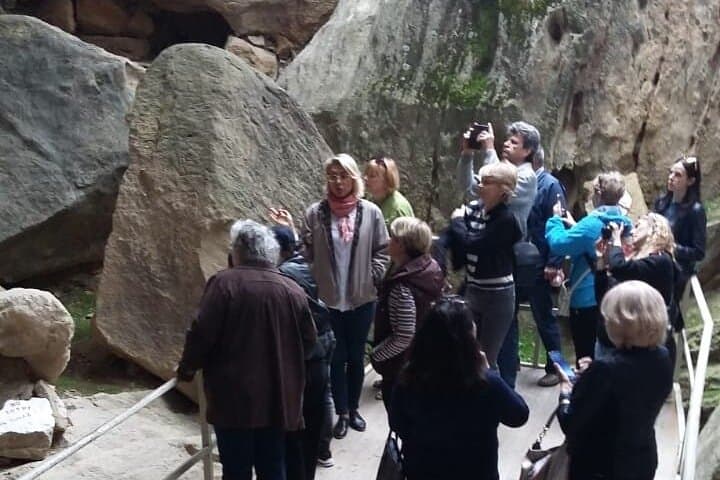
The experience is immediate and tactile. In the open-air museum, panels sit beneath wind and sun; you’ll trace carved lines that insist on being read literally — hunting scenes, ritual marks, boats that hint at an earlier shoreline. Then, at Dashgil, the mud is warm underfoot, gurgling and glossy. Guides will lead visitors to stable viewing points and explain what causes the bubbling: trapped hydrocarbons and pressurized clay. Nature here has personality — the mud cones cough and spit, daring you to approach while the hills keep their patient distance.
Practically, this private, four-hour tour from Baku compresses geology, archaeology, and a short field walk into a half-day outing. Because the trail surfaces are rocky and uneven, wear sturdy shoes and bring sun protection; the wind is a constant actor. Timing matters: mornings are cooler and the light flatters the petroglyphs, while late afternoon brings warm tones across the plain for photos. The tour includes private vehicle transport and a guide; entry to the open-air site is typically straightforward but bring cash for small onsite fees or museum extras.
For travelers who want context, add time in Baku to sample Mugham music or the national museum before you go; many guides will weave local folklore into their explanations of images and mud cones. Above all, move deliberately: the site rewards slow looking and a little patience — both with the slow work of earth and the slow, stubborn traces humans leave on rock.
easy.
4 hours.
Light walking on uneven ground with short climbs; suitable for most fitness levels
The itinerary is about four hours total, including transport and time at the museum, petroglyph site, and mud volcano viewpoint.
The tour typically includes transport and guide services; check if museum admission is covered or if small site fees need to be paid on arrival.
Yes — the operator notes it’s suitable for all fitness levels, but children should be supervised near uneven rock and the mud volcano edges.
Guides usually allow close viewing from safe edges but discourage entering active craters for safety and conservation reasons.
The tour lists an English-speaking guide; ask at booking if you prefer another language or need translation services.
Yes — hotel and cruise-port pickup is available; confirm exact pickup time with the local operator before the tour.
Gobustan’s petroglyphs span millennia, recording changing environments and human lifeways from the Stone Age to recent millennia; the site is part of Azerbaijan’s UNESCO-listed cultural landscape.
The rock art is fragile — stay on trails, avoid touching carvings, and follow guide instructions to minimize impact on both cultural and geological features.
AZTERRA TRAVEL operates guided outdoor trips and adventures with an emphasis on safety, stewardship, and memorable experiences.
The morning sun hits the semi-arid plain west of Baku and the ground seems to breathe — a slow, bubbling exhale from mounds of gray clay. On the drive from the city the asphalt thins and the Caspian’s scent fades; the landscape becomes wind-sculpted, sparse, and stubbornly ancient. At Gobustan, a guide opens a gate and the past steps forward in stone: petroglyph panels carved by hunters and herders, and a short drive away, the Dashgil mud volcanoes spatter and simmer like a living geology lesson.
The morning sun hits the semi-arid plain west of Baku and the ground seems to breathe — a slow, bubbling exhale from mounds of gray clay. On the drive from the city the asphalt thins and the Caspian’s scent fades; the landscape becomes wind-sculpted, sparse, and stubbornly ancient. At Gobustan, a guide opens a gate and the past steps forward in stone: petroglyph panels carved by hunters and herders, and a short drive away, the Dashgil mud volcanoes spatter and simmer like a living geology lesson.
Gobustan National Park is both archive and laboratory. The rock art here dates back thousands of years — images of boats, ibex, and human figures that record changes in climate and culture across the late Pleistocene and Holocene. Geologically, the mud volcanoes are a different kind of archive: methane and underground fluids force fine sediments upward, building cones and craters that continue to shift with every small eruption. Locals have known these features for centuries; Soviet-era scientists catalogued them, and today the site is part of Azerbaijan’s larger cultural landscape, a UNESCO World Heritage spot that pairs human history with active earth processes.
The experience is immediate and tactile. In the open-air museum, panels sit beneath wind and sun; you’ll trace carved lines that insist on being read literally — hunting scenes, ritual marks, boats that hint at an earlier shoreline. Then, at Dashgil, the mud is warm underfoot, gurgling and glossy. Guides will lead visitors to stable viewing points and explain what causes the bubbling: trapped hydrocarbons and pressurized clay. Nature here has personality — the mud cones cough and spit, daring you to approach while the hills keep their patient distance.
Practically, this private, four-hour tour from Baku compresses geology, archaeology, and a short field walk into a half-day outing. Because the trail surfaces are rocky and uneven, wear sturdy shoes and bring sun protection; the wind is a constant actor. Timing matters: mornings are cooler and the light flatters the petroglyphs, while late afternoon brings warm tones across the plain for photos. The tour includes private vehicle transport and a guide; entry to the open-air site is typically straightforward but bring cash for small onsite fees or museum extras.
For travelers who want context, add time in Baku to sample Mugham music or the national museum before you go; many guides will weave local folklore into their explanations of images and mud cones. Above all, move deliberately: the site rewards slow looking and a little patience — both with the slow work of earth and the slow, stubborn traces humans leave on rock.