THE ADVENTURE COLLECTIVE® · Independent discovery and booking for outdoor travel

A short day tour from Baku that pairs the otherworldly activity of mud volcanoes with the oldest open‑air gallery of petroglyphs in the Caucasus. Expect geological surprises, Roman graffiti and practical walking over uneven stone.
A short day tour from Baku that pairs the otherworldly activity of mud volcanoes with the oldest open‑air gallery of petroglyphs in the Caucasus. Expect geological surprises, Roman graffiti and practical walking over uneven stone.
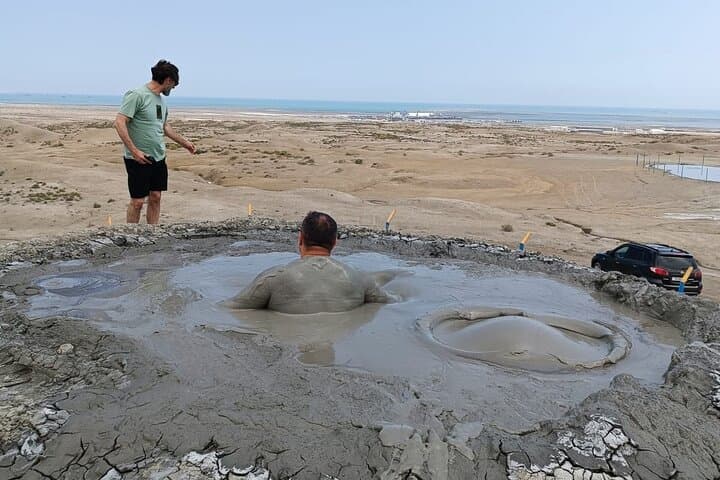
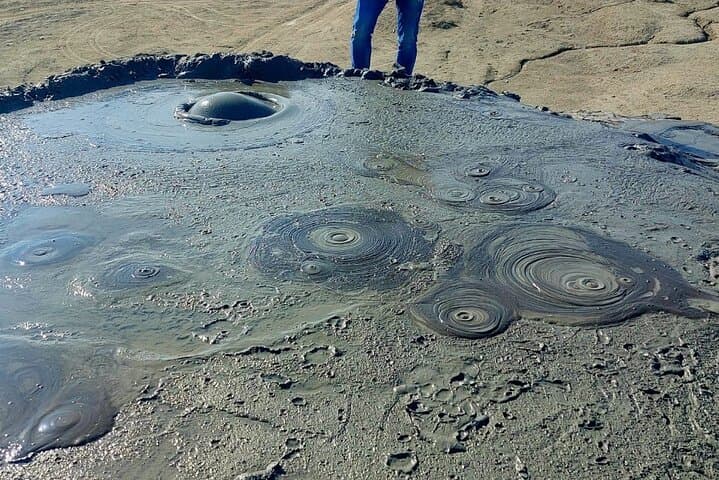
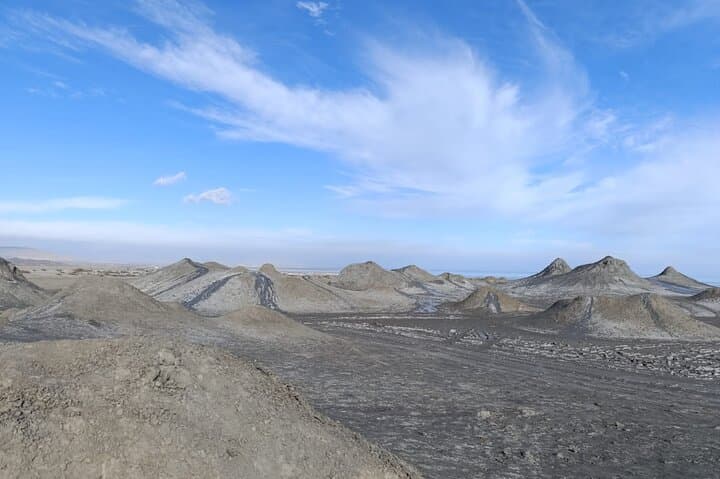
You step from an air-conditioned minivan onto a wind-scalloped plain where earth and sky argue over color. The ground underfoot is gray and granular, dotted with low cones that cough mud and hiss faint gases; beyond them, flat stone plates carry human marks older than cities. In Gobustan, the land still speaks in eruptions and etchings, and a five-hour guided loop turns the raw geology and archaeology of Azerbaijan into a readable route.
Verified experiences and guided adventures in the surrounding area.
Operated by Tour guide Baku · Gobustan, Gobustan District
You step from an air-conditioned minivan onto a wind-scalloped plain where earth and sky argue over color. The ground underfoot is gray and granular, dotted with low cones that cough mud and hiss faint gases; beyond them, flat stone plates carry human marks older than cities. In Gobustan, the land still speaks in eruptions and etchings, and a five-hour guided loop turns the raw geology and archaeology of Azerbaijan into a readable route.
The rock art here records hunting scenes, ritual dances and even Roman graffiti — an easternmost autograph left by a centurion of the XII Legion. Those petroglyphs, carved into limestone pavements at varying depths, map human life across millennia. Geologically, the mud volcanoes are younger but decisive: high-pressure methane and hydrocarbons force clay and fluid up through faults, building cones that periodically spurt and bubble. The modern economy of Baku started nearby; the first commercial oil wells drilled in the mid-19th century transformed the region, and even now abandoned pumpjacks and small derricks punctuate the approach to Bibi-Heybat.
A good guide in Gobustan does more than narrate dates; they translate the landscape. Expect stories of nomadic bands, rites captured in line work on rock faces, and the mosque of Bibi-Heybat — a reconstructed 20th-century jewel that anchors spiritual history at the edge of oil fields. Local guides also point out faint Arabic inscriptions and explain the ecological fragility of the semi-arid steppe: trampling and souvenir-chasing accelerate deterioration.
Practicalities are straightforward. The tour runs roughly five hours including round-trip transport from central Baku; most walking is short but over uneven limestone and loose mud around volcanoes. Bring sturdy shoes, sun protection and a small daypack. Water is supplied on the tour, but a personal refillable bottle keeps you comfortable on windy days. Photographers should set aside a wide-angle lens for panoramas and a telephoto for close-up views of carved panels without approaching fragile surfaces.
Timing matters. Midday light flattens carvings; early morning or late afternoon adds sculptural contrast to petroglyph grooves and makes the mud cones glow. Weather can be brisk and dusty — a light windbreaker and layers are useful year-round. Respect tape lines and posted signs: the rock art is nonrenewable. With a knowledgeable guide who adapts the route to your interests, Gobustan becomes a compact field school in human resilience, resource extraction and landscape change — an hourglass of history and geology poured across a windswept plain.
easy.
5 hours.
Suitable for travelers in average physical condition—short walks over uneven terrain with occasional stairs or slopes.
The tour runs about five hours and includes round-trip transport from central Baku, bottled water and an air-conditioned vehicle; entrance to the Gobustan Reserve is typically covered.
Short distances around the reserve are manageable, but petroglyph panels and mud volcano areas have uneven surfaces; strollers are not practical at the rock sites.
Basic facilities exist near the visitor center; options at the mud volcano fields are limited, so plan accordingly before departing Baku.
You may approach designated viewing areas, but touching or climbing on panels is prohibited—use a telephoto lens for closer compositions without contact.
Mud volcanoes are intermittently active; you may see bubbling or fresh deposits, but strong eruptions are rare and unpredictable.
The tour is generally easy but requires short walks on uneven ground; travelers with limited mobility should check in advance and may need assistance.
Gobustan preserves rock art spanning from the Upper Paleolithic through the Bronze Age and includes inscriptions left by Roman soldiers and early Islamic visitors.
Conservation efforts focus on controlling visitor access to fragile panels and educating tourists—the arid climate slows weathering, but human abrasion remains the main threat.
Tour guide Baku operates guided outdoor trips and adventures with an emphasis on safety, stewardship, and memorable experiences.
You step from an air-conditioned minivan onto a wind-scalloped plain where earth and sky argue over color. The ground underfoot is gray and granular, dotted with low cones that cough mud and hiss faint gases; beyond them, flat stone plates carry human marks older than cities. In Gobustan, the land still speaks in eruptions and etchings, and a five-hour guided loop turns the raw geology and archaeology of Azerbaijan into a readable route.
You step from an air-conditioned minivan onto a wind-scalloped plain where earth and sky argue over color. The ground underfoot is gray and granular, dotted with low cones that cough mud and hiss faint gases; beyond them, flat stone plates carry human marks older than cities. In Gobustan, the land still speaks in eruptions and etchings, and a five-hour guided loop turns the raw geology and archaeology of Azerbaijan into a readable route.
The rock art here records hunting scenes, ritual dances and even Roman graffiti — an easternmost autograph left by a centurion of the XII Legion. Those petroglyphs, carved into limestone pavements at varying depths, map human life across millennia. Geologically, the mud volcanoes are younger but decisive: high-pressure methane and hydrocarbons force clay and fluid up through faults, building cones that periodically spurt and bubble. The modern economy of Baku started nearby; the first commercial oil wells drilled in the mid-19th century transformed the region, and even now abandoned pumpjacks and small derricks punctuate the approach to Bibi-Heybat.
A good guide in Gobustan does more than narrate dates; they translate the landscape. Expect stories of nomadic bands, rites captured in line work on rock faces, and the mosque of Bibi-Heybat — a reconstructed 20th-century jewel that anchors spiritual history at the edge of oil fields. Local guides also point out faint Arabic inscriptions and explain the ecological fragility of the semi-arid steppe: trampling and souvenir-chasing accelerate deterioration.
Practicalities are straightforward. The tour runs roughly five hours including round-trip transport from central Baku; most walking is short but over uneven limestone and loose mud around volcanoes. Bring sturdy shoes, sun protection and a small daypack. Water is supplied on the tour, but a personal refillable bottle keeps you comfortable on windy days. Photographers should set aside a wide-angle lens for panoramas and a telephoto for close-up views of carved panels without approaching fragile surfaces.
Timing matters. Midday light flattens carvings; early morning or late afternoon adds sculptural contrast to petroglyph grooves and makes the mud cones glow. Weather can be brisk and dusty — a light windbreaker and layers are useful year-round. Respect tape lines and posted signs: the rock art is nonrenewable. With a knowledgeable guide who adapts the route to your interests, Gobustan becomes a compact field school in human resilience, resource extraction and landscape change — an hourglass of history and geology poured across a windswept plain.