THE ADVENTURE COLLECTIVE® · Independent discovery and booking for outdoor travel

Explore Gobustan’s ancient petroglyphs and nearby mud volcanoes on a compact private tour from Baku. Expect easy walks on rocky panels, dramatic geological features, and practical guidance for photographing and protecting the site.
Explore Gobustan’s ancient petroglyphs and nearby mud volcanoes on a compact private tour from Baku. Expect easy walks on rocky panels, dramatic geological features, and practical guidance for photographing and protecting the site.
You step out of an air-conditioned vehicle onto wind-swept limestone and immediately feel the past underfoot — grooves, pecked animals and boats carved into slabs that slope toward the Caspian.
Verified experiences and guided adventures in the surrounding area.
Operated by azbakutours · Gobustan, Gobustan District
You step out of an air-conditioned vehicle onto wind-swept limestone and immediately feel the past underfoot — grooves, pecked animals and boats carved into slabs that slope toward the Caspian.
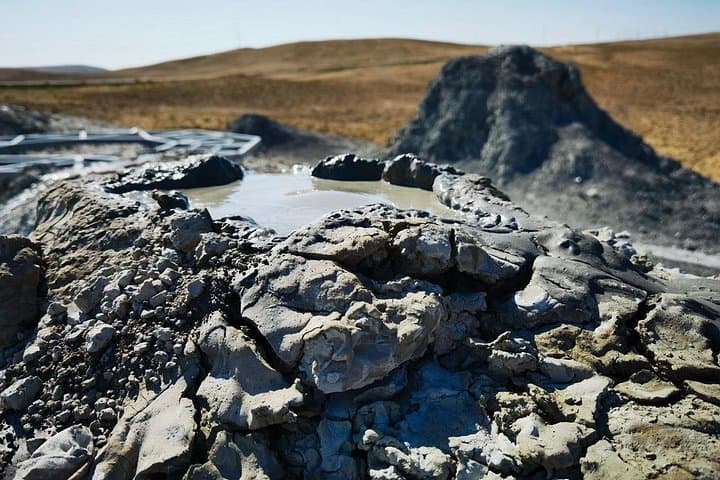
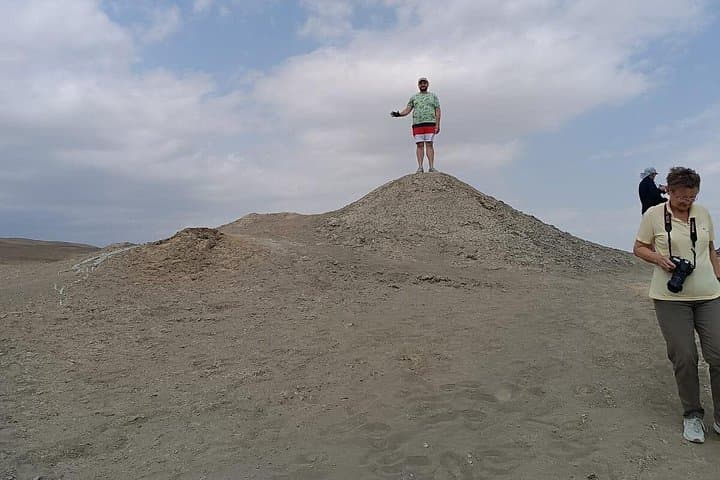
The four-hour private tour moves deliberately: a guided walk across Gobustan National Park’s rock panels, then a short drive to fields of mud volcanoes where bubbling cones hiss and spit. Gobustan’s petroglyphs span millennia, recording hunting scenes, ritual figures and boats; geologically the area is a shallow coastal shelf sculpted by sea-level change and seismic activity. The mud volcanoes are driven by gas and clay — Azerbaijan hosts hundreds of these cold seeps — and their grey flows have been used locally for balneotherapy.
Culturally, Gobustan sits on routes between the Caucasus and the Caspian; the park’s open-air museum and small visitor center give context to excavated tools and domestic shelters carved into rock. The landscape rewards steady observation: wind-polished ridges, the distant glint of the Caspian, and prints left by herders and hunters across time.
Practically, expect short, uneven walks on hard rock and loose scree, plus short stretches over compacted dirt to reach mud cones. Wear sturdy shoes, sun protection and bring water; the guide typically provides bottled water and handles park admissions. Timing a mid-morning or late-afternoon visit eases heat and brings better light for photographing petroglyphs. The tour is private and suitable for most fitness levels — bring a camera, keep to marked paths, and resist applying mud beyond a small sample if you’re testing its reputed properties.
easy.
4 hours.
Suitable for most travelers; requires light walking on uneven rock for up to 2 hours.
Expect about 1–2 hours of walking total across rock panels and viewpoint trails; paths are short but uneven.
The tour description indicates park admission is included as part of the private tour arrangements.
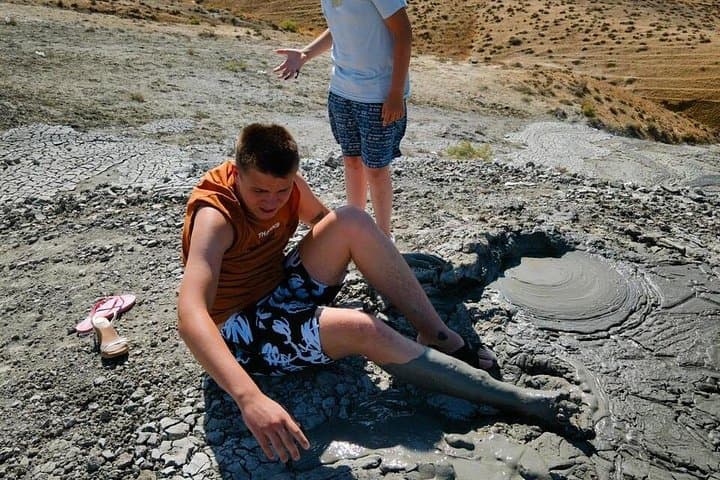
Local guides may allow limited application on hands; avoid extensive use and follow your guide’s safety advice, especially if you have skin sensitivities.
Yes — the private tour includes pickup and drop-off from your accommodation in Baku in an air-conditioned vehicle.
Gobustan’s carved panels record human activity from the Paleolithic through the Bronze Age, showing boats, fauna and ritual scenes that trace coastal and inland life over millennia.
Gobustan is protected and managed to preserve fragile rock art; visitors should stay on marked trails, avoid touching carvings and follow guide instructions to reduce wear and erosion.
azbakutours operates guided outdoor trips and adventures with an emphasis on safety, stewardship, and memorable experiences.
You step out of an air-conditioned vehicle onto wind-swept limestone and immediately feel the past underfoot — grooves, pecked animals and boats carved into slabs that slope toward the Caspian.
You step out of an air-conditioned vehicle onto wind-swept limestone and immediately feel the past underfoot — grooves, pecked animals and boats carved into slabs that slope toward the Caspian.
The four-hour private tour moves deliberately: a guided walk across Gobustan National Park’s rock panels, then a short drive to fields of mud volcanoes where bubbling cones hiss and spit. Gobustan’s petroglyphs span millennia, recording hunting scenes, ritual figures and boats; geologically the area is a shallow coastal shelf sculpted by sea-level change and seismic activity. The mud volcanoes are driven by gas and clay — Azerbaijan hosts hundreds of these cold seeps — and their grey flows have been used locally for balneotherapy.
Culturally, Gobustan sits on routes between the Caucasus and the Caspian; the park’s open-air museum and small visitor center give context to excavated tools and domestic shelters carved into rock. The landscape rewards steady observation: wind-polished ridges, the distant glint of the Caspian, and prints left by herders and hunters across time.
Practically, expect short, uneven walks on hard rock and loose scree, plus short stretches over compacted dirt to reach mud cones. Wear sturdy shoes, sun protection and bring water; the guide typically provides bottled water and handles park admissions. Timing a mid-morning or late-afternoon visit eases heat and brings better light for photographing petroglyphs. The tour is private and suitable for most fitness levels — bring a camera, keep to marked paths, and resist applying mud beyond a small sample if you’re testing its reputed properties.