THE ADVENTURE COLLECTIVE® · Independent discovery and booking for outdoor travel

A single-day loop from Baku that pairs ancient rock art and bubbling mud volcanoes with two of Absheron’s living flames: Ateshgah and Yanar Dag. Expect uneven ground, off-road sections in a Lada, and up-close views of natural gas fires.
A single-day loop from Baku that pairs ancient rock art and bubbling mud volcanoes with two of Absheron’s living flames: Ateshgah and Yanar Dag. Expect uneven ground, off-road sections in a Lada, and up-close views of natural gas fires.
You leave Baku’s glass-and-stone shoreline and the city recedes into a flat, wind-swept plain. The road runs past salt flats and scrub; the air tastes faintly of the Caspian. By the time the reserve appears—scattered dark boulders and low ridgelines—your guide has already pointed out the first petroglyphs: shallow, ancient grooves that seem to watch the modern world roll past.
Verified experiences and guided adventures in the surrounding area.
Operated by Azerbaijanguide.az · Baku, Absheron
You leave Baku’s glass-and-stone shoreline and the city recedes into a flat, wind-swept plain. The road runs past salt flats and scrub; the air tastes faintly of the Caspian. By the time the reserve appears—scattered dark boulders and low ridgelines—your guide has already pointed out the first petroglyphs: shallow, ancient grooves that seem to watch the modern world roll past.
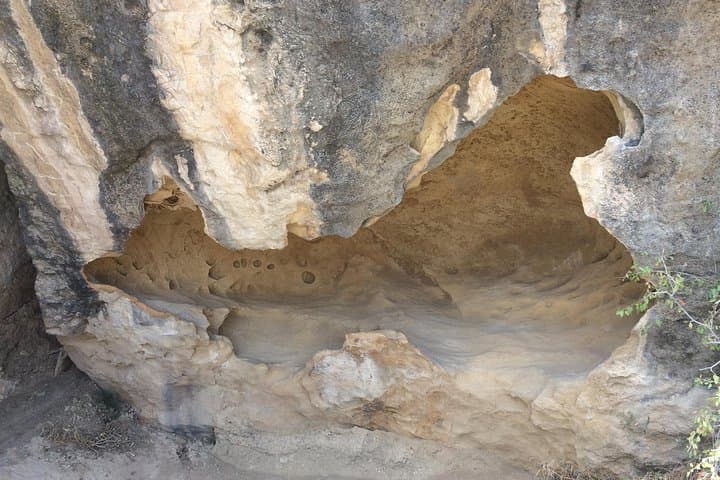
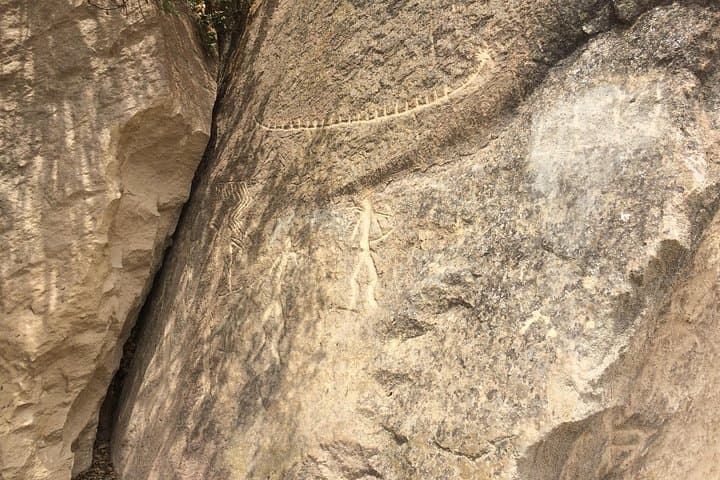
Gobustan (Qobustan) is where human marks meet raw geology. The UNESCO Rock Art Cultural Landscape preserves more than 6,000 engravings spanning 5,000–40,000 years, scenes of hunters, boats and spirals carved into weathered sandstone. Nearby, mud volcanoes burp and bubble—iron-rich clays pushed up by subterranean gasses. The route to some of them is rough enough that the tour swaps into classic Soviet Lada vehicles, turning the short drive into an impromptu safari over rutted track.
Ateshgah Fire Temple, a stone quadrangle with Sanskrit inscriptions and a central altar, shows the religious crossroads of Absheron. Merchants, Zoroastrians and Hindu-Parsis all left marks here, drawn by naturally emitting gases and ritual flames. Later the day, Yanar Dag (Fire Mountain) stares back at you: a ribbon of natural gas that flames from porous sandstone, shooting steady tongues of fire roughly three metres into the air, as if the hillside itself refuses to stay quiet.
Geology and culture sit side by side on this route. The mud volcanoes are reminders of Azerbaijan’s subterranean energy; the petroglyphs map ancient life during wetter periods after the last Ice Age; the fire sites recall continuous human fascination with natural flames. Guides usually add local stories—how caravans paused here, how the land was used for seasonal grazing—bringing context to each stop.
Practicalities: the tour runs about 6–7 hours, with roughly 60 km from Baku to Qobustan. Walking is short but on uneven, often dusty rock and soft mud near volcanoes. Expect a mix of paved and unpaved roads; the mud volcano segment involves bumpy, off-road conditions. Facilities at sites are basic; a buffet lunch near Ateshgah is included and bottled water provided on the vehicle.
Timing matters: mornings and late afternoons are best for light and heat; summer can be very hot and windy, winter brisk and gusty. Wear sturdy shoes, sun protection and layers for changing conditions. Stay on marked paths at Gobustan—petroglyphs are fragile and protected. Bring a camera with polarizer for low-angle light at the rock art and a zoom for Yanar Dag’s flames.
This is a compact, sensory day trip where landscape, fire and human history press close together—an efficient way to read Azerbaijan’s geology and culture in one long, unforgettable afternoon.
easy.
6–7 hours.
Suitable for travelers with basic mobility; involves short walks on uneven ground and a few steps at viewpoints
The tour lasts about 6–7 hours total; Qobustan National Reserve is roughly 60 km from central Baku, a one-hour drive each way depending on traffic.
Admission to the listed sites and a local buffet lunch near Ateshgah are included; bottled water is provided on the vehicle.
Yes; the road to some mud volcanoes is unpaved and bumpy, and the tour switches to robust Lada vehicles for that segment.
The operator notes the tour is physically easy overall, but the mud volcano areas and rock art sites have uneven surfaces; some mobility limitations may make portions difficult.
Yanar Dag is open in the evening and flames are visible then, but this full-day itinerary visits during daylight; check separate evening options if you prefer night visits.
No. Gobustan’s petroglyphs and the mud volcanoes are protected; touching, climbing on engravings or removing samples is prohibited to preserve them.
Gobustan records human activity from the Paleolithic through the Neolithic and was inscribed on the UNESCO list for its rock art and archaeological remains.
Sites are sensitive—stick to paths, avoid taking geological samples, and follow guide instructions to minimize erosion and damage to petroglyphs.
Azerbaijanguide.az operates guided outdoor trips and adventures with an emphasis on safety, stewardship, and memorable experiences.
You leave Baku’s glass-and-stone shoreline and the city recedes into a flat, wind-swept plain. The road runs past salt flats and scrub; the air tastes faintly of the Caspian. By the time the reserve appears—scattered dark boulders and low ridgelines—your guide has already pointed out the first petroglyphs: shallow, ancient grooves that seem to watch the modern world roll past.
You leave Baku’s glass-and-stone shoreline and the city recedes into a flat, wind-swept plain. The road runs past salt flats and scrub; the air tastes faintly of the Caspian. By the time the reserve appears—scattered dark boulders and low ridgelines—your guide has already pointed out the first petroglyphs: shallow, ancient grooves that seem to watch the modern world roll past.
Gobustan (Qobustan) is where human marks meet raw geology. The UNESCO Rock Art Cultural Landscape preserves more than 6,000 engravings spanning 5,000–40,000 years, scenes of hunters, boats and spirals carved into weathered sandstone. Nearby, mud volcanoes burp and bubble—iron-rich clays pushed up by subterranean gasses. The route to some of them is rough enough that the tour swaps into classic Soviet Lada vehicles, turning the short drive into an impromptu safari over rutted track.
Ateshgah Fire Temple, a stone quadrangle with Sanskrit inscriptions and a central altar, shows the religious crossroads of Absheron. Merchants, Zoroastrians and Hindu-Parsis all left marks here, drawn by naturally emitting gases and ritual flames. Later the day, Yanar Dag (Fire Mountain) stares back at you: a ribbon of natural gas that flames from porous sandstone, shooting steady tongues of fire roughly three metres into the air, as if the hillside itself refuses to stay quiet.
Geology and culture sit side by side on this route. The mud volcanoes are reminders of Azerbaijan’s subterranean energy; the petroglyphs map ancient life during wetter periods after the last Ice Age; the fire sites recall continuous human fascination with natural flames. Guides usually add local stories—how caravans paused here, how the land was used for seasonal grazing—bringing context to each stop.
Practicalities: the tour runs about 6–7 hours, with roughly 60 km from Baku to Qobustan. Walking is short but on uneven, often dusty rock and soft mud near volcanoes. Expect a mix of paved and unpaved roads; the mud volcano segment involves bumpy, off-road conditions. Facilities at sites are basic; a buffet lunch near Ateshgah is included and bottled water provided on the vehicle.
Timing matters: mornings and late afternoons are best for light and heat; summer can be very hot and windy, winter brisk and gusty. Wear sturdy shoes, sun protection and layers for changing conditions. Stay on marked paths at Gobustan—petroglyphs are fragile and protected. Bring a camera with polarizer for low-angle light at the rock art and a zoom for Yanar Dag’s flames.
This is a compact, sensory day trip where landscape, fire and human history press close together—an efficient way to read Azerbaijan’s geology and culture in one long, unforgettable afternoon.