THE ADVENTURE COLLECTIVE® · Independent discovery and booking for outdoor travel

A day trip from Baku that stitches together Gobustan’s ancient petroglyphs, steaming mud volcanoes and Absheron’s eternal flames. Expect geology, ritual sites and easy walking with an interpretive guide.
A day trip from Baku that stitches together Gobustan’s ancient petroglyphs, steaming mud volcanoes and Absheron’s eternal flames. Expect geology, ritual sites and easy walking with an interpretive guide.
You step out of Baku’s coastal bustle and the road unfurls across scrubbed plains toward a landscape that seems to test gravity: low, dark mounds wink with steam and patches of baked clay scatter like an ancient kiln. The guide eases the van onto a pullout and the earth itself takes center stage — mud volcanoes bubbling with mineral-scented slurry, and beyond them, the faint, wind-carved silhouettes of rock panels that keep a slow, human history.
Verified experiences and guided adventures in the surrounding area.
Operated by Baku Life Travel · Baku, Baku
You step out of Baku’s coastal bustle and the road unfurls across scrubbed plains toward a landscape that seems to test gravity: low, dark mounds wink with steam and patches of baked clay scatter like an ancient kiln. The guide eases the van onto a pullout and the earth itself takes center stage — mud volcanoes bubbling with mineral-scented slurry, and beyond them, the faint, wind-carved silhouettes of rock panels that keep a slow, human history.
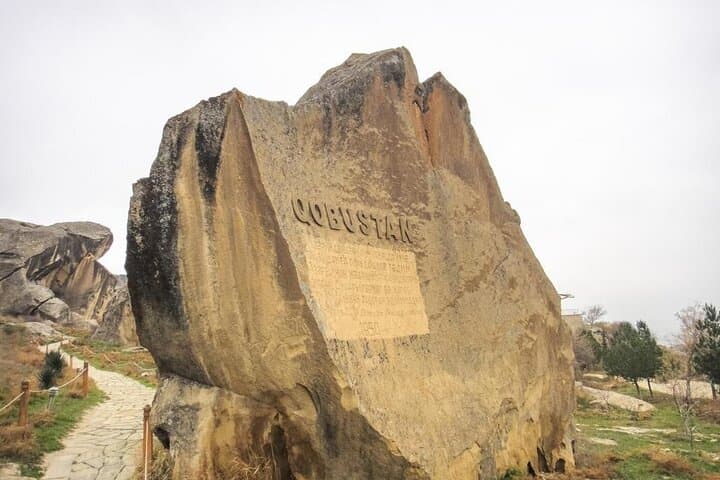
Gobustan’s petroglyphs are the first argument for taking the trip seriously. Carved into weather-hardened sandstone, figures of ibex, boats, and hunting scenes record livelihoods and cosmologies from the late Pleistocene to the Bronze Age. Geologically, the region is an interface of Caspian hydrocarbons and tectonic compression; the mud volcanoes you’ll see owe their behavior to subterranean gases finding a release. On the Absheron side, Ateshgah’s ringed altars and Yanardag’s perpetual flame reveal how natural gas shaped local ritual and identity: fire here was both resource and worship.
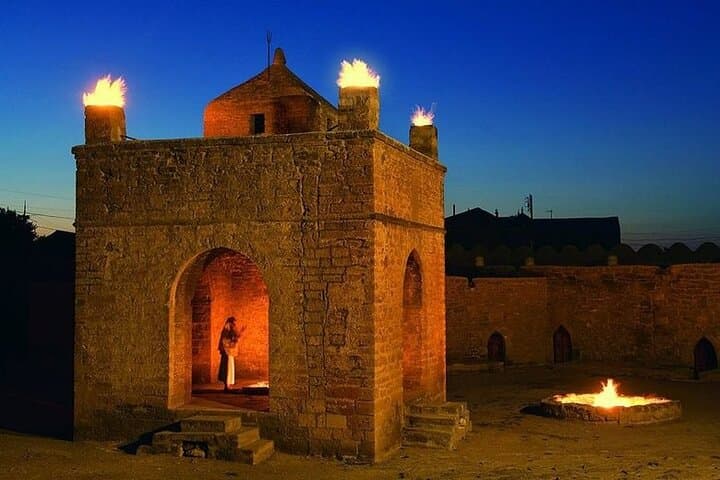
Culturally, the tour compresses centuries into a day. Ateshgah preserves the traces of Zoroastrian, Hindu and Sikh pilgrimages; its courtyard architecture reads like a crossroads of faiths and trade. Yanardag, the so-called Burning Mountain, still exhales a steady orange tongue at sunset — a reminder that the ground here is working, quietly and continuously.
Practicalities are straightforward. The full-day trip runs about 7–8 hours with hotel pickup in Baku and return to the Old City meeting point. Wear sturdy shoes—surfaces are uneven and sometimes claggy near mud volcanoes—and bring sun protection and a wind layer; the Absheron peninsula can be surprisingly exposed. Photography lovers should target late afternoon for rock-art reliefs and dusk for Yanardag’s flame, when the contrast is richest. Entrance fees are included with most options; budget a little local cash for snacks at roadside bistros.
The terrain is accessible and the walking moderate: short climbs to viewpoints, boardwalks around the main petroglyph panels, and flat laneways at Ateshgah. Guides typically narrate in several languages and point out details that don’t read easily from guidebooks—ancient motifs, small telltale fractures in the rock, or the precise chemistry that makes certain mud cones bubble.
For travelers who want a compact primer on Azerbaijan’s elemental history — geology rubbing shoulders with human ritual — this day tour delivers. It’s an efficient, sensory-rich loop that leaves you with salt-wind hair, a pocketful of images, and a clearer sense of how fire and earth shaped life on the Caspian shore.
easy.
7–8 hours.
Light walking and short climbs; suitable for most fitness levels
The tour runs about 7–8 hours (420–480 minutes) including transport from Baku and time at each site.
Entrance fees for Gobustan, Ateshgah and Yanardag are included if you select the all-inclusive option—confirm at booking.
Yes—logistics note wheelchair accessibility and stroller access, though some outdoor paths are uneven.
Guides are typically available in English, Arabic, Russian, Spanish and Turkish.
Yes—if weather forces cancellation you’ll be offered an alternative date or a full refund per the supplier policy.
Bottled water is included; there’s usually time for snacks at a local bistro but meals are not typically provided.
Gobustan’s rock art records human presence from the Upper Paleolithic through the Bronze Age, while Absheron’s natural gas seeps shaped ritual life at Ateshgah and Yanardag.
The sites are sensitive to erosion and visitor impact; stay on pathways, avoid touching carvings and follow guide instructions to reduce wear.
Baku Life Travel operates guided outdoor trips and adventures with an emphasis on safety, stewardship, and memorable experiences.
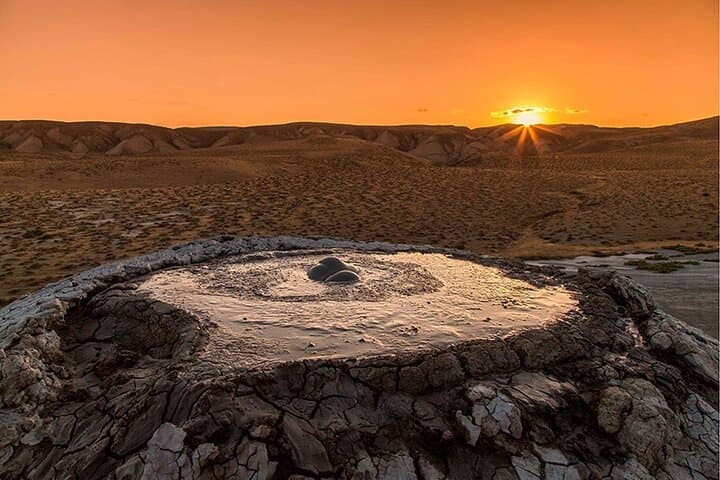
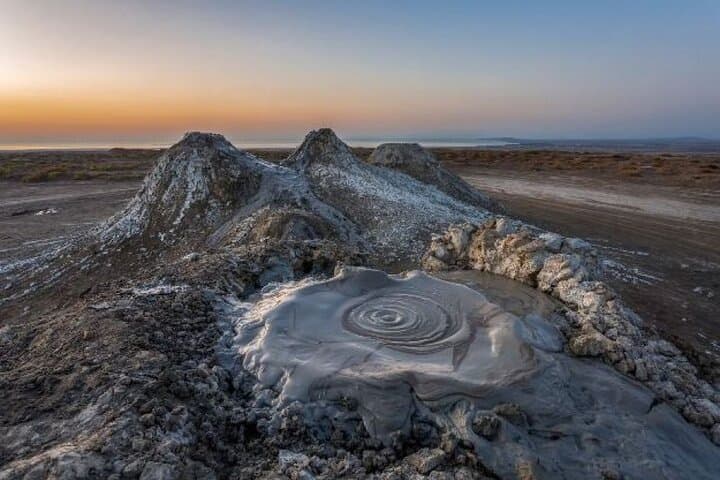
You step out of Baku’s coastal bustle and the road unfurls across scrubbed plains toward a landscape that seems to test gravity: low, dark mounds wink with steam and patches of baked clay scatter like an ancient kiln. The guide eases the van onto a pullout and the earth itself takes center stage — mud volcanoes bubbling with mineral-scented slurry, and beyond them, the faint, wind-carved silhouettes of rock panels that keep a slow, human history.
You step out of Baku’s coastal bustle and the road unfurls across scrubbed plains toward a landscape that seems to test gravity: low, dark mounds wink with steam and patches of baked clay scatter like an ancient kiln. The guide eases the van onto a pullout and the earth itself takes center stage — mud volcanoes bubbling with mineral-scented slurry, and beyond them, the faint, wind-carved silhouettes of rock panels that keep a slow, human history.
Gobustan’s petroglyphs are the first argument for taking the trip seriously. Carved into weather-hardened sandstone, figures of ibex, boats, and hunting scenes record livelihoods and cosmologies from the late Pleistocene to the Bronze Age. Geologically, the region is an interface of Caspian hydrocarbons and tectonic compression; the mud volcanoes you’ll see owe their behavior to subterranean gases finding a release. On the Absheron side, Ateshgah’s ringed altars and Yanardag’s perpetual flame reveal how natural gas shaped local ritual and identity: fire here was both resource and worship.
Culturally, the tour compresses centuries into a day. Ateshgah preserves the traces of Zoroastrian, Hindu and Sikh pilgrimages; its courtyard architecture reads like a crossroads of faiths and trade. Yanardag, the so-called Burning Mountain, still exhales a steady orange tongue at sunset — a reminder that the ground here is working, quietly and continuously.
Practicalities are straightforward. The full-day trip runs about 7–8 hours with hotel pickup in Baku and return to the Old City meeting point. Wear sturdy shoes—surfaces are uneven and sometimes claggy near mud volcanoes—and bring sun protection and a wind layer; the Absheron peninsula can be surprisingly exposed. Photography lovers should target late afternoon for rock-art reliefs and dusk for Yanardag’s flame, when the contrast is richest. Entrance fees are included with most options; budget a little local cash for snacks at roadside bistros.
The terrain is accessible and the walking moderate: short climbs to viewpoints, boardwalks around the main petroglyph panels, and flat laneways at Ateshgah. Guides typically narrate in several languages and point out details that don’t read easily from guidebooks—ancient motifs, small telltale fractures in the rock, or the precise chemistry that makes certain mud cones bubble.
For travelers who want a compact primer on Azerbaijan’s elemental history — geology rubbing shoulders with human ritual — this day tour delivers. It’s an efficient, sensory-rich loop that leaves you with salt-wind hair, a pocketful of images, and a clearer sense of how fire and earth shaped life on the Caspian shore.