THE ADVENTURE COLLECTIVE® · Independent discovery and booking for outdoor travel

Traverse the Gobi over eight days—sand dunes that sing, icy gorges, fossil-rich cliffs and granite mazes—while staying in ger camps and traveling with local guides. This itinerary pairs hard geological landscapes with close cultural encounters.
Traverse the Gobi over eight days—sand dunes that sing, icy gorges, fossil-rich cliffs and granite mazes—while staying in ger camps and traveling with local guides. This itinerary pairs hard geological landscapes with close cultural encounters.
A wind-swept morning on the Khongor Sand Dunes puts you in the middle of the Gobi’s scale: a ridgeline that rises and falls like the spine of the earth, sand sliding and “singing” underfoot. Days here move between sharp light and cold shadow—ice hiding in shaded gorges, red cliffs that glow at sunset, and granite outcrops that keep centuries of stories in their cracks.
Verified experiences and guided adventures in the surrounding area.
Operated by Mongolian explorer · Ulaanbaatar, Ulaanbaatar
A wind-swept morning on the Khongor Sand Dunes puts you in the middle of the Gobi’s scale: a ridgeline that rises and falls like the spine of the earth, sand sliding and “singing” underfoot. Days here move between sharp light and cold shadow—ice hiding in shaded gorges, red cliffs that glow at sunset, and granite outcrops that keep centuries of stories in their cracks.
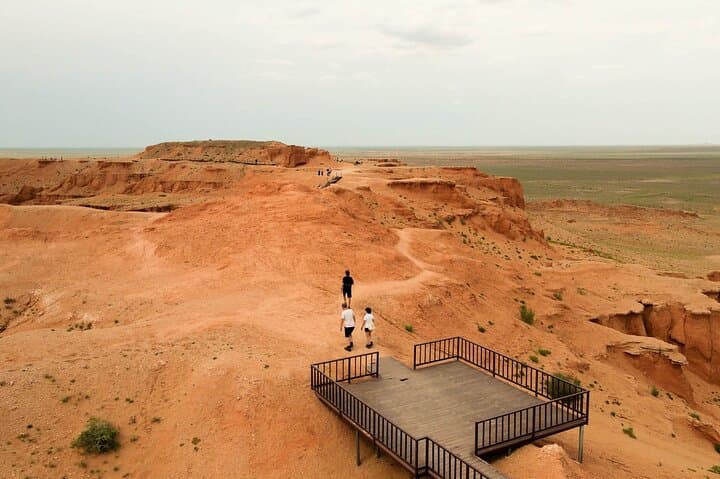
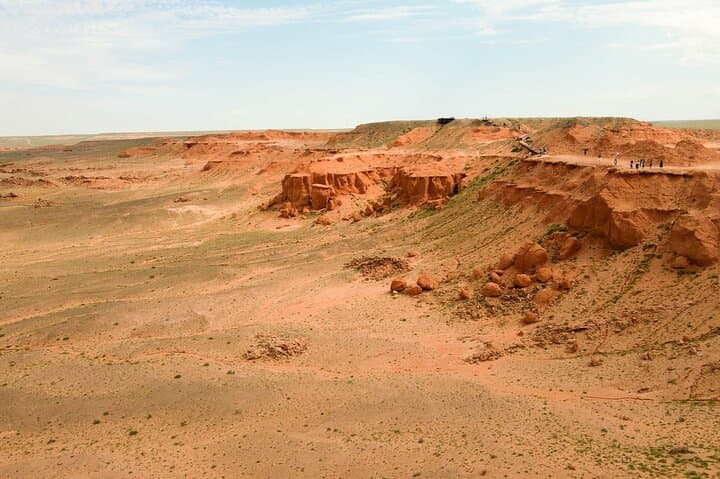
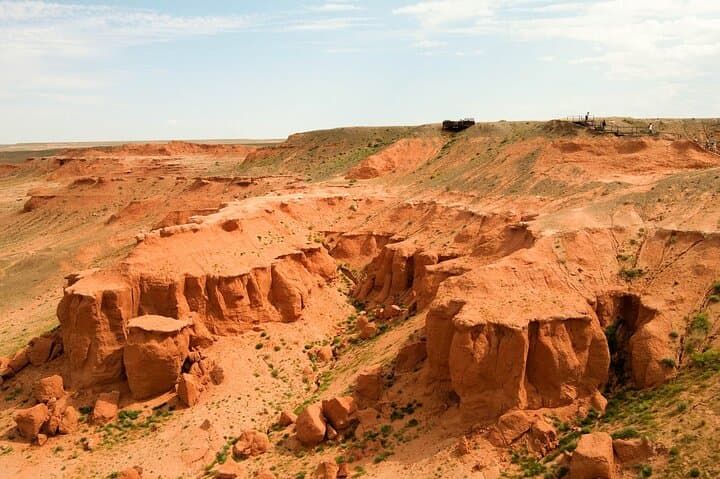
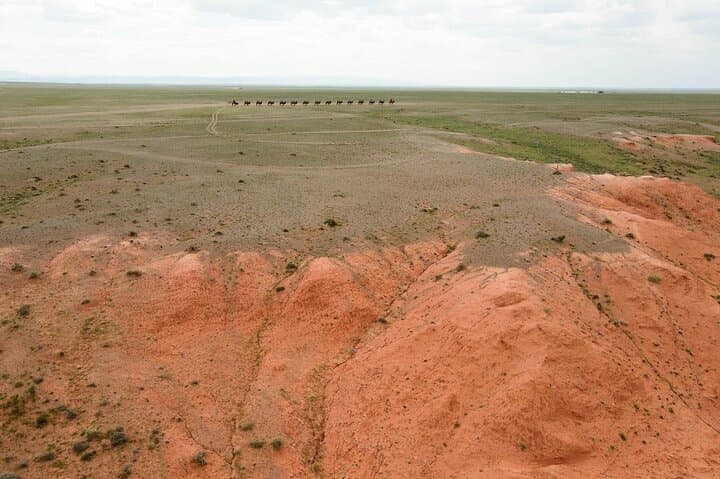
This eight-day route threads key geological and cultural sites: Tsagaan Suvarga’s layered cliffs reveal ten million years of sedimentary history; Yolyn Am’s shaded gorge preserves summer ice thanks to its north-facing walls; Bayanzag’s Flaming Cliffs made headlines in the 1920s when Roy Chapman Andrews uncovered dinosaur eggs; Baga Gazriin Chuluu shows granite sculpted into a natural maze by wind and frost.
Culturally, the trip balances nomadic life and urban Mongolia—overnights in ger camps, camel rides across steppe, and a beginning and end in Ulaanbaatar where modern city life meets Buddhist monastic roots.
Practical guidance: expect long drives on gravel and dirt roads—vehicle transfers are included—so pack layers, sun protection, and sturdy boots for dune ascents and rocky hikes. Altitude is modest but temperatures swing dramatically between day and night; hydrate and carry a warm midlayer even in summer. Guided stops are timed for softer light—arrival at dunes for sunrise or sunset yields the clearest views and best photos. Bring spare batteries and copies of travel documents; mobile coverage is intermittent across the Gobi, and the landscape rewards patience more than speed.
moderate.
8 days (multi-day).
Participants should have moderate fitness for dune walks, short hikes, and long vehicle transfers; basic mobility on uneven terrain is required.
Expect multiple long drives—some days include 4–6 hour transfers across gravel and dirt roads; travel time is part of the experience and includes scenic stops.
Nights alternate between 3–4* hotels in Ulaanbaatar and traditional ger tourist camps in the Gobi, offering basic to comfortable facilities with shared or private amenities depending on camp selection.
Visa requirements depend on your nationality—many travelers can obtain a visa on arrival or must apply in advance; check official Mongolian consular guidance before travel.
Families with older children who tolerate long drives and basic ger-camp conditions can enjoy this trip, but it’s not recommended for very young children or those with mobility issues.
Bayanzag became internationally known after early 20th-century paleontological finds (including dinosaur eggs) that reshaped our understanding of Mesozoic life in Asia.
The Gobi’s fragile ecosystems recover slowly from disturbance—stay on established tracks, avoid removing fossils or flora, and support camps that use local waste-management practices.
Mongolian explorer operates guided outdoor trips and adventures with an emphasis on safety, stewardship, and memorable experiences.
A wind-swept morning on the Khongor Sand Dunes puts you in the middle of the Gobi’s scale: a ridgeline that rises and falls like the spine of the earth, sand sliding and “singing” underfoot. Days here move between sharp light and cold shadow—ice hiding in shaded gorges, red cliffs that glow at sunset, and granite outcrops that keep centuries of stories in their cracks.
A wind-swept morning on the Khongor Sand Dunes puts you in the middle of the Gobi’s scale: a ridgeline that rises and falls like the spine of the earth, sand sliding and “singing” underfoot. Days here move between sharp light and cold shadow—ice hiding in shaded gorges, red cliffs that glow at sunset, and granite outcrops that keep centuries of stories in their cracks.
This eight-day route threads key geological and cultural sites: Tsagaan Suvarga’s layered cliffs reveal ten million years of sedimentary history; Yolyn Am’s shaded gorge preserves summer ice thanks to its north-facing walls; Bayanzag’s Flaming Cliffs made headlines in the 1920s when Roy Chapman Andrews uncovered dinosaur eggs; Baga Gazriin Chuluu shows granite sculpted into a natural maze by wind and frost.
Culturally, the trip balances nomadic life and urban Mongolia—overnights in ger camps, camel rides across steppe, and a beginning and end in Ulaanbaatar where modern city life meets Buddhist monastic roots.
Practical guidance: expect long drives on gravel and dirt roads—vehicle transfers are included—so pack layers, sun protection, and sturdy boots for dune ascents and rocky hikes. Altitude is modest but temperatures swing dramatically between day and night; hydrate and carry a warm midlayer even in summer. Guided stops are timed for softer light—arrival at dunes for sunrise or sunset yields the clearest views and best photos. Bring spare batteries and copies of travel documents; mobile coverage is intermittent across the Gobi, and the landscape rewards patience more than speed.