THE ADVENTURE COLLECTIVE® · Independent discovery and booking for outdoor travel

Traverse nine days of Mongolia’s most dramatic landscapes — from the singing dunes of Khongoryn Els to fossil-rich Flaming Cliffs and the Orkhon Valley. This expedition blends geology, nomadic culture, and long desert drives with accessible hikes and ger-camp nights.
Traverse nine days of Mongolia’s most dramatic landscapes — from the singing dunes of Khongoryn Els to fossil-rich Flaming Cliffs and the Orkhon Valley. This expedition blends geology, nomadic culture, and long desert drives with accessible hikes and ger-camp nights.
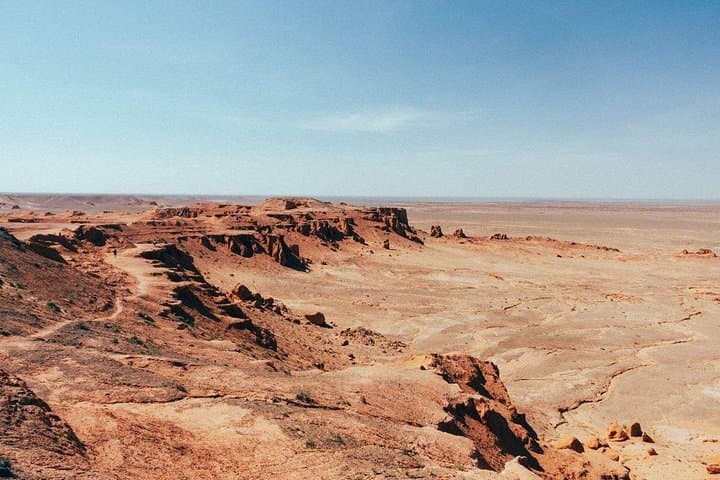
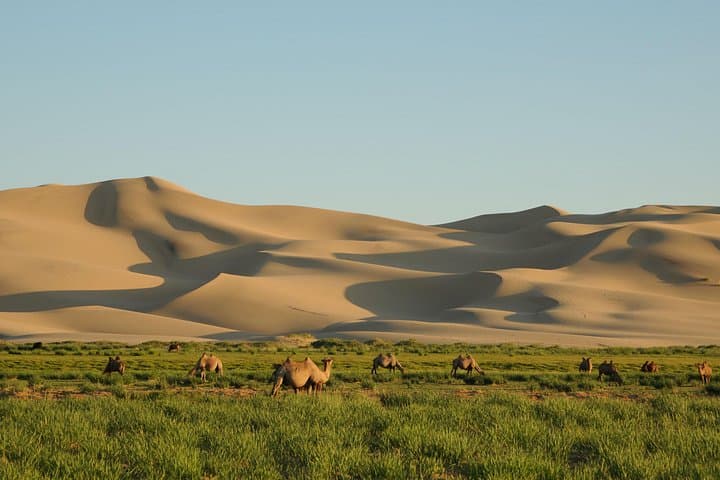
You wake before dawn in a ger and step into a sky that feels closer here — wind already pushing grains of sand along Khongoryn Els, the “Singing Dunes,” which rise in dark arcs against the wide steppe. Over nine days you move from limestone teeth at Tsagaan Suvarga to the cool, narrow shade of Yolyn Am and the red glow of the Flaming Cliffs as evening light sets the sandstone alight.
Verified experiences and guided adventures in the surrounding area.
Operated by Rara Avis Travel · Dalanzadgad, Ömnögovi Province
You wake before dawn in a ger and step into a sky that feels closer here — wind already pushing grains of sand along Khongoryn Els, the “Singing Dunes,” which rise in dark arcs against the wide steppe. Over nine days you move from limestone teeth at Tsagaan Suvarga to the cool, narrow shade of Yolyn Am and the red glow of the Flaming Cliffs as evening light sets the sandstone alight.
This route threads geology and history: Tsagaan Suvarga’s layered limestone reaches roughly 30 meters high, carved by millennia of wind and water; Khongoryn Els runs more than 100 km with dunes up to several hundred meters tall; Bayan Zag has produced some of Mongolia’s most important dinosaur fossils, connecting you directly to deep time. Culturally, the trip mixes nomadic hospitality in family-run ger camps with visits to Erdene Zuu and Kharkhorin, centers of Mongolian Buddhism and imperial history.
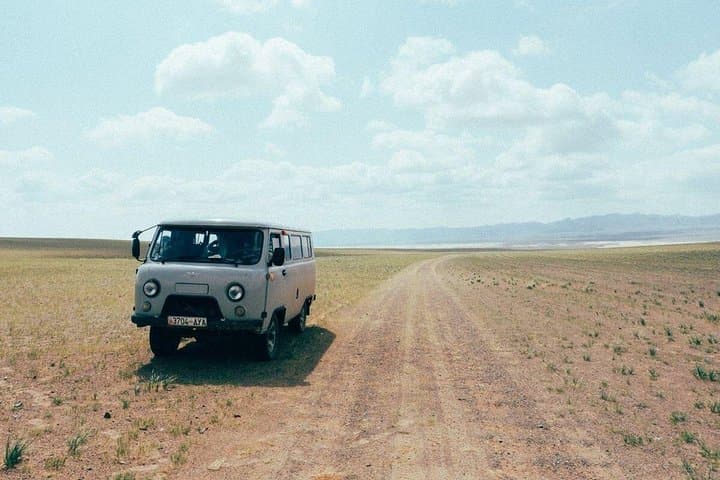
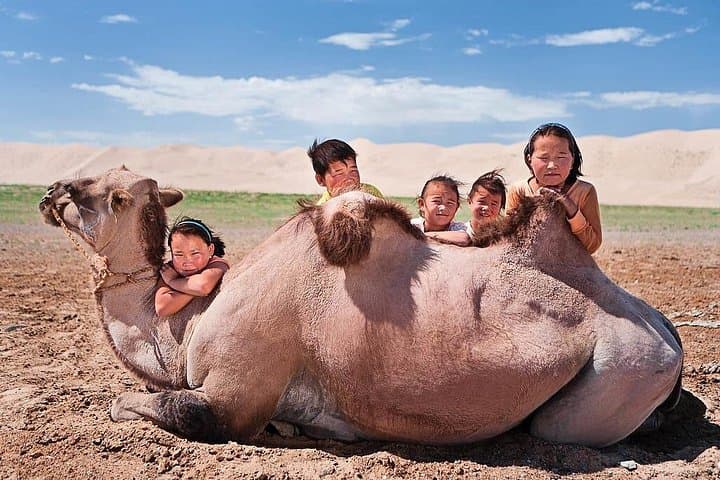
Expect long drives across the central steppe (several 4–6 hour stretches between sites), short to moderate hikes (ice-canyon walks and waterfall approaches) and a camel ride across the dunes. Nights are cold even after hot days — the desert breathes temperature extremes.
Practical guidance: carry 2–3 liters of water per day, wear sturdy hiking boots and sun protection, and bring layered clothing for chilly nights. Pack motion-sickness remedies for rough roads, a small first-aid kit, and enough cash for remote purchases. Respect local customs at ger camps and leave no trace — the Gobi’s silence depends on it.
moderate.
9 days.
Recommended: moderate fitness able to manage multiple short hikes, standing camel rides, and long vehicle transfers.
Moderately demanding: most activity is low-impact (walks in canyons, dune climbs) but long vehicle transfers and variable terrain require decent stamina.
Nights are primarily in traditional Mongolian gers (yurts) at family-run camps with basic facilities; some nights include simple guesthouse options.
Families with older children who tolerate long drives can manage this trip; seniors should assess mobility and tolerance for bumpy roads and remote settings.
Travel insurance that covers remote evacuation is recommended; no special permits are typically required for the main sites visited on this itinerary.
The route traverses areas tied to the Mongol Empire and early Buddhist centers like Kharkhorin; Bayan Zag is a celebrated paleontological site where dinosaur fossils were first found in Mongolia.
The Gobi is ecologically fragile — stick to established tracks, avoid disturbing fossil sites, and support local ger camps to channel tourism revenues into the region.
Rara Avis Travel operates guided outdoor trips and adventures with an emphasis on safety, stewardship, and memorable experiences.
You wake before dawn in a ger and step into a sky that feels closer here — wind already pushing grains of sand along Khongoryn Els, the “Singing Dunes,” which rise in dark arcs against the wide steppe. Over nine days you move from limestone teeth at Tsagaan Suvarga to the cool, narrow shade of Yolyn Am and the red glow of the Flaming Cliffs as evening light sets the sandstone alight.
You wake before dawn in a ger and step into a sky that feels closer here — wind already pushing grains of sand along Khongoryn Els, the “Singing Dunes,” which rise in dark arcs against the wide steppe. Over nine days you move from limestone teeth at Tsagaan Suvarga to the cool, narrow shade of Yolyn Am and the red glow of the Flaming Cliffs as evening light sets the sandstone alight.
This route threads geology and history: Tsagaan Suvarga’s layered limestone reaches roughly 30 meters high, carved by millennia of wind and water; Khongoryn Els runs more than 100 km with dunes up to several hundred meters tall; Bayan Zag has produced some of Mongolia’s most important dinosaur fossils, connecting you directly to deep time. Culturally, the trip mixes nomadic hospitality in family-run ger camps with visits to Erdene Zuu and Kharkhorin, centers of Mongolian Buddhism and imperial history.
Expect long drives across the central steppe (several 4–6 hour stretches between sites), short to moderate hikes (ice-canyon walks and waterfall approaches) and a camel ride across the dunes. Nights are cold even after hot days — the desert breathes temperature extremes.
Practical guidance: carry 2–3 liters of water per day, wear sturdy hiking boots and sun protection, and bring layered clothing for chilly nights. Pack motion-sickness remedies for rough roads, a small first-aid kit, and enough cash for remote purchases. Respect local customs at ger camps and leave no trace — the Gobi’s silence depends on it.