THE ADVENTURE COLLECTIVE® · Independent discovery and booking for outdoor travel

See the famously nimble goats that climb argan trees on a short drive from Agadir. This easy, three-hour excursion combines cultural context on argan oil with close-up wildlife viewing and comfortable transport.
See the famously nimble goats that climb argan trees on a short drive from Agadir. This easy, three-hour excursion combines cultural context on argan oil with close-up wildlife viewing and comfortable transport.
You pull off the coastal road and the air shifts—dry, warm, and threaded with the faint nutty aroma of crushed argan leaves. In the low scrub above Agadir, goats balance on contorted argan limbs, heads low as they browse, a curious local scene that has become an unexpected lure for visitors.
Verified experiences and guided adventures in the surrounding area.
Operated by Marvels Tours · Agadir, Souss-Massa
You pull off the coastal road and the air shifts—dry, warm, and threaded with the faint nutty aroma of crushed argan leaves. In the low scrub above Agadir, goats balance on contorted argan limbs, heads low as they browse, a curious local scene that has become an unexpected lure for visitors.
The argan tree is a survivor of Morocco’s semi-arid southwest: a gnarled, deep-rooted species that grew in isolation for millennia. Local Berber communities long tapped the fruit for oil, and when herders discovered goats could climb the trees the landscape acquired a living, moving presence. The argan ecosystem is part natural history and part cultural economy—women’s cooperatives pressing oil nearby and souks selling small-batch products back in town.
Geology here is simple and stubborn: stony plains, scattered acacias, and pockets of richer soil where argan can hold on. Culturally, the trip is brief and observational—guides explain the argan harvest, goat behavior, and local efforts to balance grazing with reforestation.
Practical guidance: tours run about three hours and include hotel pickup and air-conditioned transport. Expect short walks on uneven, dusty tracks; bring sun protection, water, and a camera with a moderate zoom. Observe quietly—do not chase or feed the goats. Mornings are cooler and best for light photography; late spring and autumn offer the most comfortable temperatures. Note: this is a short, easy excursion best combined with time at Agadir’s beaches or a longer inland visit to Paradise Valley.
easy.
3 hours.
Suitable for most fitness levels; involves short, flat to gently uneven walking.
The excursion is about three hours total, including a roughly 45-minute drive each way from Agadir and short on-site stops.
Yes; most departures include hotel pickup and air-conditioned transportation as part of the tour.
No—guides advise observing without feeding or touching to protect both visitors and animals.
This particular offering lists all sales as final; confirm details with the operator before booking.
The argan tree is endemic to southwestern Morocco; its oil has been produced by Berber communities for centuries and the argan forest is recognized for its ecological and cultural value.
Argan habitat faces pressure from overgrazing and land use change; supporting local cooperatives and following low-impact viewing practices helps reduce strain.
Marvels Tours operates guided outdoor trips and adventures with an emphasis on safety, stewardship, and memorable experiences.
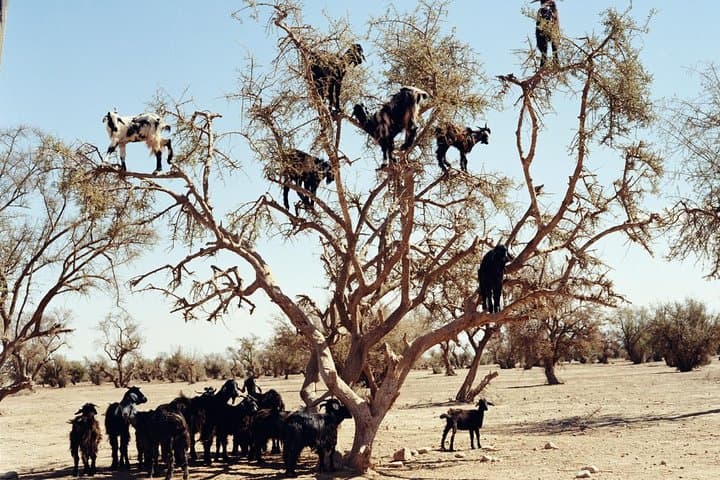
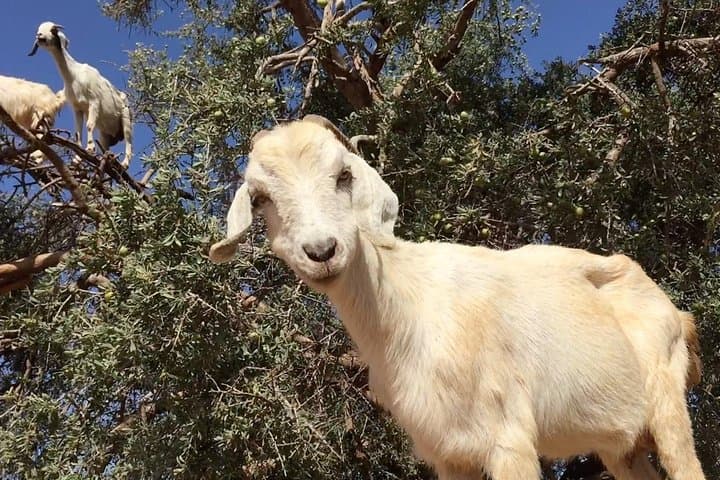
You pull off the coastal road and the air shifts—dry, warm, and threaded with the faint nutty aroma of crushed argan leaves. In the low scrub above Agadir, goats balance on contorted argan limbs, heads low as they browse, a curious local scene that has become an unexpected lure for visitors.
You pull off the coastal road and the air shifts—dry, warm, and threaded with the faint nutty aroma of crushed argan leaves. In the low scrub above Agadir, goats balance on contorted argan limbs, heads low as they browse, a curious local scene that has become an unexpected lure for visitors.
The argan tree is a survivor of Morocco’s semi-arid southwest: a gnarled, deep-rooted species that grew in isolation for millennia. Local Berber communities long tapped the fruit for oil, and when herders discovered goats could climb the trees the landscape acquired a living, moving presence. The argan ecosystem is part natural history and part cultural economy—women’s cooperatives pressing oil nearby and souks selling small-batch products back in town.
Geology here is simple and stubborn: stony plains, scattered acacias, and pockets of richer soil where argan can hold on. Culturally, the trip is brief and observational—guides explain the argan harvest, goat behavior, and local efforts to balance grazing with reforestation.
Practical guidance: tours run about three hours and include hotel pickup and air-conditioned transport. Expect short walks on uneven, dusty tracks; bring sun protection, water, and a camera with a moderate zoom. Observe quietly—do not chase or feed the goats. Mornings are cooler and best for light photography; late spring and autumn offer the most comfortable temperatures. Note: this is a short, easy excursion best combined with time at Agadir’s beaches or a longer inland visit to Paradise Valley.