THE ADVENTURE COLLECTIVE® · Independent discovery and booking for outdoor travel

Shore dives at Goat Island Marine Reserve deliver dramatic kelp forests, curious snapper, and eagle rays on sandy flats. This guided shore dive offers two in-water sessions and teaches you to read currents and sites while protecting a pioneering marine reserve.
Shore dives at Goat Island Marine Reserve deliver dramatic kelp forests, curious snapper, and eagle rays on sandy flats. This guided shore dive offers two in-water sessions and teaches you to read currents and sites while protecting a pioneering marine reserve.
You step off the shoreline into cool, clear water and the reserve takes you in. Kelp fronds sway like slow hands, schools of silver fish flash away from cliff faces, and the sand flats hold the lazy silhouettes of eagle rays that seem to glide with intent. A shore entry and a short surface swim place you inside Cape Rodney–Okakari Point Marine Reserve, where the underwater world moves around you.
Verified experiences and guided adventures in the surrounding area.
Operated by Goat Island Dive & Snorkel · Leigh, Auckland Region
You step off the shoreline into cool, clear water and the reserve takes you in. Kelp fronds sway like slow hands, schools of silver fish flash away from cliff faces, and the sand flats hold the lazy silhouettes of eagle rays that seem to glide with intent. A shore entry and a short surface swim place you inside Cape Rodney–Okakari Point Marine Reserve, where the underwater world moves around you.
The reserve was New Zealand’s first marine reserve (established in 1975), set aside to protect rocky reefs and kelp forests shaped by volcanic shelf and wave-cut platforms. Local fishing villages and Maori communities have long read the rhythms of these waters; today the reserve protects spawning grounds for snapper and habitat for crayfish and octopus.
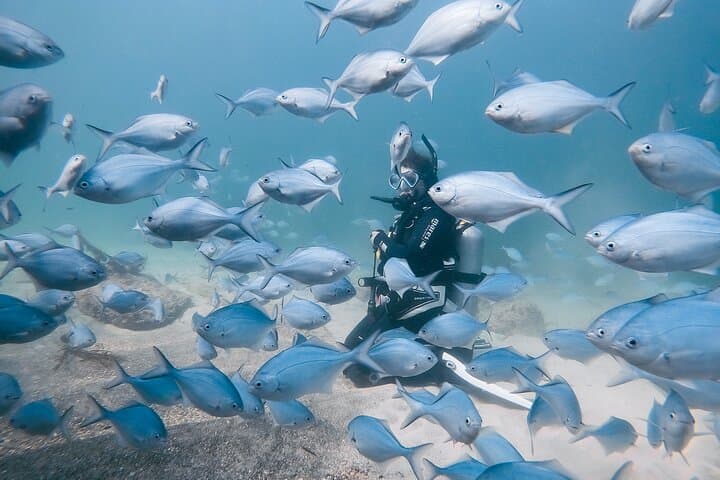
Expect a sequence of micro-environments: kelp gardens at Shag Rock, crevice-rich sponge gardens hosting macro life, sandy flats where eagle rays forage, and reef channels that concentrate schools of kahawai and trevally. Currents and tides dictate which sites are safe on any given day—dive guides choose entries accordingly.
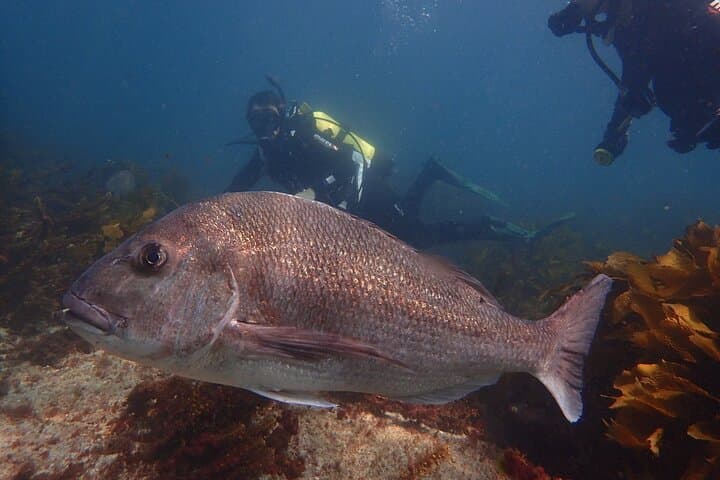
Practically: be ready for a 4‑hour outing with two guided dives from shore, bring proof of certification and recent dive history (within 18 months), and plan for variable exposure needs—water can be cool year-round. Good buoyancy, brushless finning for kelp, and comfort with shore entries/swims make this more enjoyable. Follow your guide’s brief, respect no-take rules, and surface in clearings to minimize impact. The best encounters come to those who pace themselves and watch closely—tiny nudibranchs hide in crevices and curious snapper will inspect your fins.
moderate.
4 hours.
Moderate fitness recommended: comfortable with surface swims, shore entries and repeated finning.
Yes — participants must hold a scuba certification (Open Water or equivalent) and present proof at check-in.
The operator monitors tides and currents and will move you to a sheltered site or cancel if conditions are unsafe; refunds follow the stated policy.
The standard outing includes two guided shore dives within the 4‑hour schedule, with surface intervals and gear support.
Full scuba gear (BCD, regulator, tank, weights) and guide/divemaster services are included; bring your own mask and boots for best fit if possible.
Cape Rodney–Okakari Point Marine Reserve was established in 1975 as New Zealand’s first marine reserve to protect reef and kelp ecosystems.
The reserve is strictly no-take; visitors are asked to avoid touching or collecting organisms and to follow guides to minimize footprints on sensitive reef habitats.
Goat Island Dive & Snorkel operates guided outdoor trips and adventures with an emphasis on safety, stewardship, and memorable experiences.
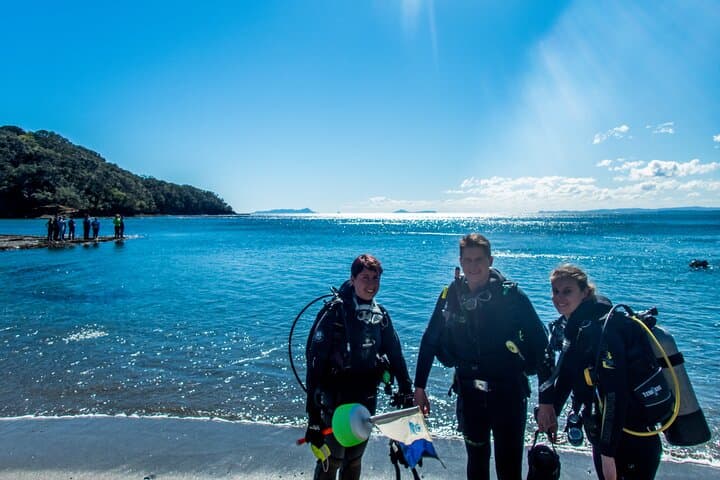
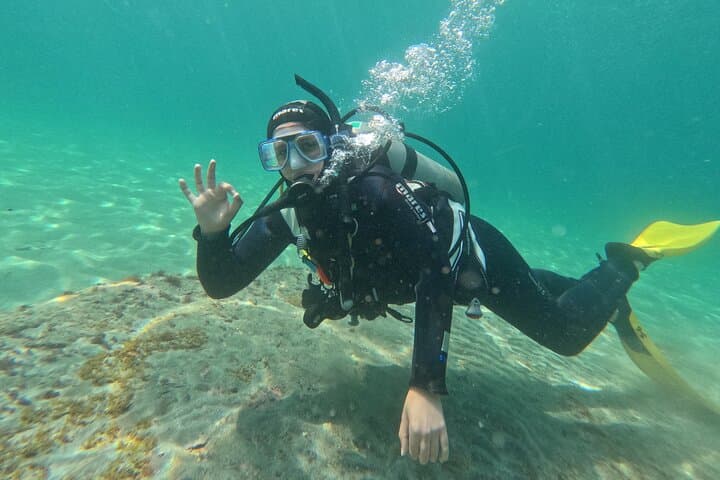
You step off the shoreline into cool, clear water and the reserve takes you in. Kelp fronds sway like slow hands, schools of silver fish flash away from cliff faces, and the sand flats hold the lazy silhouettes of eagle rays that seem to glide with intent. A shore entry and a short surface swim place you inside Cape Rodney–Okakari Point Marine Reserve, where the underwater world moves around you.
You step off the shoreline into cool, clear water and the reserve takes you in. Kelp fronds sway like slow hands, schools of silver fish flash away from cliff faces, and the sand flats hold the lazy silhouettes of eagle rays that seem to glide with intent. A shore entry and a short surface swim place you inside Cape Rodney–Okakari Point Marine Reserve, where the underwater world moves around you.
The reserve was New Zealand’s first marine reserve (established in 1975), set aside to protect rocky reefs and kelp forests shaped by volcanic shelf and wave-cut platforms. Local fishing villages and Maori communities have long read the rhythms of these waters; today the reserve protects spawning grounds for snapper and habitat for crayfish and octopus.
Expect a sequence of micro-environments: kelp gardens at Shag Rock, crevice-rich sponge gardens hosting macro life, sandy flats where eagle rays forage, and reef channels that concentrate schools of kahawai and trevally. Currents and tides dictate which sites are safe on any given day—dive guides choose entries accordingly.
Practically: be ready for a 4‑hour outing with two guided dives from shore, bring proof of certification and recent dive history (within 18 months), and plan for variable exposure needs—water can be cool year-round. Good buoyancy, brushless finning for kelp, and comfort with shore entries/swims make this more enjoyable. Follow your guide’s brief, respect no-take rules, and surface in clearings to minimize impact. The best encounters come to those who pace themselves and watch closely—tiny nudibranchs hide in crevices and curious snapper will inspect your fins.