THE ADVENTURE COLLECTIVE® · Independent discovery and booking for outdoor travel

Explore Panjim on foot—market alleys, Indo‑Portuguese architecture and Fontainhas’ painted facades—on a four‑hour guided tour that blends history, food and local color. Plan for heat, cobbled streets and cash transactions.
Explore Panjim on foot—market alleys, Indo‑Portuguese architecture and Fontainhas’ painted facades—on a four‑hour guided tour that blends history, food and local color. Plan for heat, cobbled streets and cash transactions.
You step off the tuk‑tuk into a Panjim lane where the market's rhythm takes over—fish crates clatter, a vendor calls out spice names, and the Mandovi river keeps time just out of sight. The air tastes of salt and tamarind; the city itself feels like a living archive, walls and balconies holding stories from two centuries of Portuguese rule.
Verified experiences and guided adventures in the surrounding area.
Operated by GeTS Holidays · Panaji, Goa
You step off the tuk‑tuk into a Panjim lane where the market's rhythm takes over—fish crates clatter, a vendor calls out spice names, and the Mandovi river keeps time just out of sight. The air tastes of salt and tamarind; the city itself feels like a living archive, walls and balconies holding stories from two centuries of Portuguese rule.
This four‑hour walking tour threads through Panjim’s Head Post Office, the old secretariat blocks and the summer palace of Yusuf Adil Shah—one of Goa’s earliest surviving structures from the 1500s—before immersing you in the fish, vegetable and spice markets. The route finishes in Fontainhas, the Latin‑quarter whose narrow streets and ochre facades recall Iberian towns. Along the way your guide points out Indo‑Portuguese architecture, the Abbe Faria statue and the white facade of Our Lady of the Immaculate Conception church (1560s), a clear link to Goa’s colonial past.
Geologically the city sits on low coastal plains and reclaimed marshes; expect flat, paved streets, occasional stairways and tight alleys rather than steep climbs. Culturally, markets are social centers—bartering, sampling and conversation are part of the experience. Practical notes: wear sturdy walking shoes, carry sunscreen and small change for market purchases, and plan an early start to avoid midday heat. The tour includes a short tuk‑tuk transfer, a locally brewed beer or cashew feni at a café and bottled water. Not wheelchair accessible; infants must sit on laps. Bring curiosity and respect—this is a living neighborhood, not a museum.
easy.
4 hours.
Suitable for most fitness levels; involves several hours of walking on flat, paved streets with occasional stairs
The tour is approximately 4 hours and includes guided walks through markets, a tuk‑tuk transfer to Fontainhas, a local drink (beer or cashew feni), bottled water and hotel pickup by private vehicle.
Yes—children are welcome but infants must sit on an adult’s lap; the route includes busy markets and narrow lanes, so supervise young children closely.
No, the tour is not wheelchair accessible due to narrow streets, steps and market crowds.
Yes—inform the operator at booking about dietary needs; non‑alcoholic options can generally be provided in place of the local liquor.
Panjim reflects centuries of Portuguese rule (16th–20th century) visible in churches, colonial administrative buildings and the Latin Quarter of Fontainhas; Yusuf Adil Shah’s palace predates Portuguese dominance as a regional sultanate estate.
Markets generate plastic and fish waste—support vendors who use minimal packaging, carry a reusable bag, and avoid single‑use plastics to reduce local impact.
GeTS Holidays operates guided outdoor trips and adventures with an emphasis on safety, stewardship, and memorable experiences.


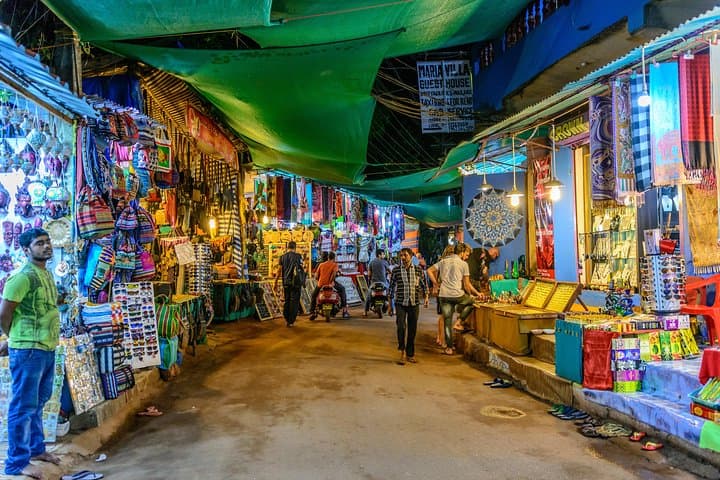
You step off the tuk‑tuk into a Panjim lane where the market's rhythm takes over—fish crates clatter, a vendor calls out spice names, and the Mandovi river keeps time just out of sight. The air tastes of salt and tamarind; the city itself feels like a living archive, walls and balconies holding stories from two centuries of Portuguese rule.
You step off the tuk‑tuk into a Panjim lane where the market's rhythm takes over—fish crates clatter, a vendor calls out spice names, and the Mandovi river keeps time just out of sight. The air tastes of salt and tamarind; the city itself feels like a living archive, walls and balconies holding stories from two centuries of Portuguese rule.
This four‑hour walking tour threads through Panjim’s Head Post Office, the old secretariat blocks and the summer palace of Yusuf Adil Shah—one of Goa’s earliest surviving structures from the 1500s—before immersing you in the fish, vegetable and spice markets. The route finishes in Fontainhas, the Latin‑quarter whose narrow streets and ochre facades recall Iberian towns. Along the way your guide points out Indo‑Portuguese architecture, the Abbe Faria statue and the white facade of Our Lady of the Immaculate Conception church (1560s), a clear link to Goa’s colonial past.
Geologically the city sits on low coastal plains and reclaimed marshes; expect flat, paved streets, occasional stairways and tight alleys rather than steep climbs. Culturally, markets are social centers—bartering, sampling and conversation are part of the experience. Practical notes: wear sturdy walking shoes, carry sunscreen and small change for market purchases, and plan an early start to avoid midday heat. The tour includes a short tuk‑tuk transfer, a locally brewed beer or cashew feni at a café and bottled water. Not wheelchair accessible; infants must sit on laps. Bring curiosity and respect—this is a living neighborhood, not a museum.