THE ADVENTURE COLLECTIVE® · Independent discovery and booking for outdoor travel

Paddle Spike’s River through tight mangrove channels where otters dart and kingfishers flare. This two-hour guided kayak tour combines accessible flat-water paddling with high wildlife payoff and local coastal color.
Paddle Spike’s River through tight mangrove channels where otters dart and kingfishers flare. This two-hour guided kayak tour combines accessible flat-water paddling with high wildlife payoff and local coastal color.
Fogged light breaks across Spike’s River as paddles dip and rise, sending ripples that catch the bells from a nearby temple. The route threads under low-hanging branches of dense mangrove, channels narrowing to a tangle of roots and shadow where otters slip like dark commas through the water and crabs cling to exposed prop roots.
Verified experiences and guided adventures in the surrounding area.
Operated by SITA World Tours · Panaji, Goa
Fogged light breaks across Spike’s River as paddles dip and rise, sending ripples that catch the bells from a nearby temple. The route threads under low-hanging branches of dense mangrove, channels narrowing to a tangle of roots and shadow where otters slip like dark commas through the water and crabs cling to exposed prop roots.
Geology here is recent—silt-filled estuaries and tidal flats built by the Mandovi’s coastal system—creating the sheltered channels mangroves need. The dominant trees (Avicennia and Rhizophora varieties) anchor the bank and slow storms; local fishermen still drop simple crab traps from skiffs, and the area’s rhythms are as much cultural as natural, punctuated by temple bells and coastal Konkani life.
Expect a flat-water paddle of roughly 3–6 km over two hours, largely dictated by tide. Currents can push you deeper into the maze or ease you back to Spike’s Bridge; there’s no elevation gain but there is a lot of low, narrow maneuvering. Wildlife viewing is the draw—kingfishers, egrets, cormorants and occasional sea-eagles are common; watch along the mud banks for crab trails and the swift backlit play of otters.
Practically: go in the cooler morning or late afternoon, favoring higher tide to reach inner channels. Wear quick-dry clothing, reef or water shoes, and insect repellent; the operator supplies life vests, paddles, bottled water and a local guide. Keep noise low, avoid touching roots, and pack out all trash—these mangroves are fragile but resilient if treated respectfully.
moderate.
2 hours.
Moderate fitness—comfortable with light paddling and short bursts of effort; not suitable for those with significant heart or back issues.
The experience is approximately two hours total including briefing, paddling through the mangroves and return to Spike’s Bridge.
No—basic paddling instruction is provided, but participants should have moderate fitness and be comfortable in small boats.
Common sightings include kingfishers, egrets, cormorants, herons, occasional sea-eagles, crabs on the mudflats and playful otters in quieter channels.
Yes—operators supply life vests, paddles, leashes and two bottles of mineral water per person; briefings cover currents and safety.
Goa’s mangrove-lined estuaries have supported coastal communities for centuries, supplying fish, crabs and firewood while shaping local fishing techniques and festivals.
Mangroves are vital coastal buffers and nursery habitat; visitors should avoid trampling roots, minimize noise, and carry out all waste to reduce impact.
SITA World Tours operates guided outdoor trips and adventures with an emphasis on safety, stewardship, and memorable experiences.
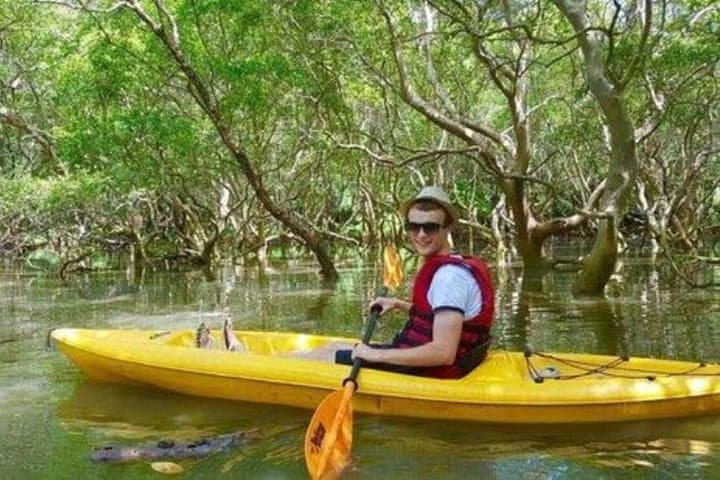
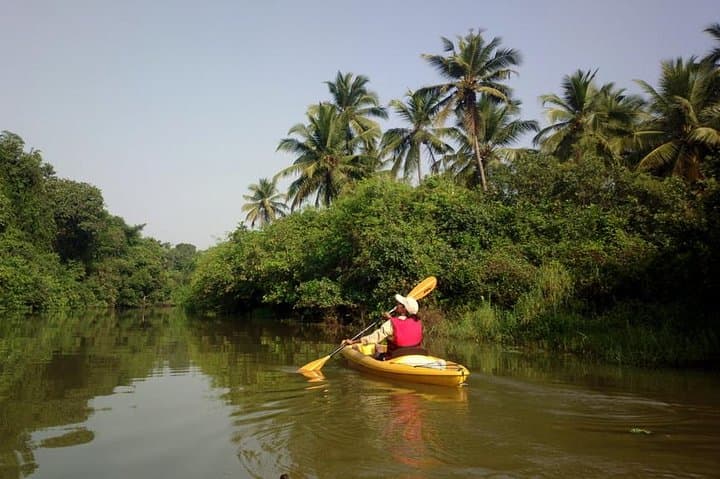
Fogged light breaks across Spike’s River as paddles dip and rise, sending ripples that catch the bells from a nearby temple. The route threads under low-hanging branches of dense mangrove, channels narrowing to a tangle of roots and shadow where otters slip like dark commas through the water and crabs cling to exposed prop roots.
Fogged light breaks across Spike’s River as paddles dip and rise, sending ripples that catch the bells from a nearby temple. The route threads under low-hanging branches of dense mangrove, channels narrowing to a tangle of roots and shadow where otters slip like dark commas through the water and crabs cling to exposed prop roots.
Geology here is recent—silt-filled estuaries and tidal flats built by the Mandovi’s coastal system—creating the sheltered channels mangroves need. The dominant trees (Avicennia and Rhizophora varieties) anchor the bank and slow storms; local fishermen still drop simple crab traps from skiffs, and the area’s rhythms are as much cultural as natural, punctuated by temple bells and coastal Konkani life.
Expect a flat-water paddle of roughly 3–6 km over two hours, largely dictated by tide. Currents can push you deeper into the maze or ease you back to Spike’s Bridge; there’s no elevation gain but there is a lot of low, narrow maneuvering. Wildlife viewing is the draw—kingfishers, egrets, cormorants and occasional sea-eagles are common; watch along the mud banks for crab trails and the swift backlit play of otters.
Practically: go in the cooler morning or late afternoon, favoring higher tide to reach inner channels. Wear quick-dry clothing, reef or water shoes, and insect repellent; the operator supplies life vests, paddles, bottled water and a local guide. Keep noise low, avoid touching roots, and pack out all trash—these mangroves are fragile but resilient if treated respectfully.