THE ADVENTURE COLLECTIVE® · Independent discovery and booking for outdoor travel

Jump onto a two-seater ATV and carve a three-hour loop across Curaçao’s clay desert, salt flats and a hidden cave before cooling off at Kokomo Beach. This off-road tour pairs adrenaline with island geology and local color.
Jump onto a two-seater ATV and carve a three-hour loop across Curaçao’s clay desert, salt flats and a hidden cave before cooling off at Kokomo Beach. This off-road tour pairs adrenaline with island geology and local color.
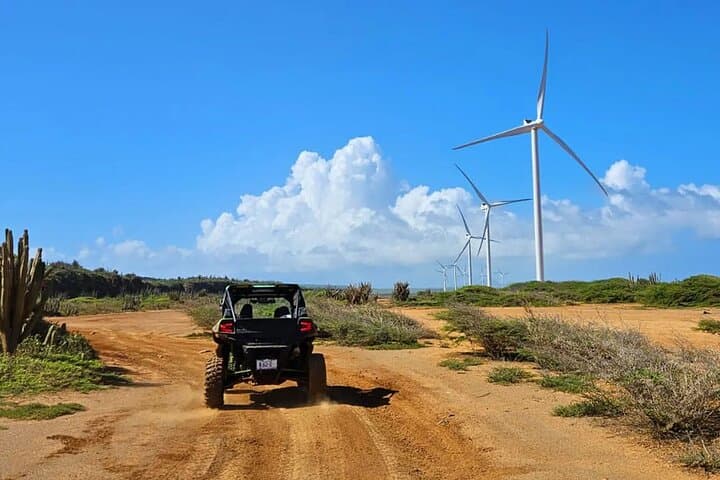
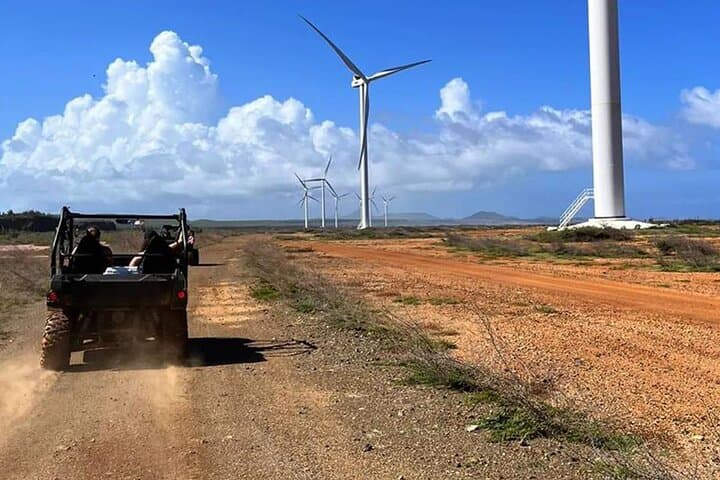
The engine kicks, gravel spits from the rear tires and the island’s wind takes the dust into long, bleaching plumes. On the Go West ATV tour you aren’t an observer — you’re the one making the tracks. For three hours you’ll race across Curaçao’s clay desert, dip into salt flats where flamingos pick at the shallows, slip through a natural cave and end the romp with a swim at Kokomo Beach.
Verified experiences and guided adventures in the surrounding area.
Operated by BlueFinn Charters · Willemstad, Curaçao
The engine kicks, gravel spits from the rear tires and the island’s wind takes the dust into long, bleaching plumes. On the Go West ATV tour you aren’t an observer — you’re the one making the tracks. For three hours you’ll race across Curaçao’s clay desert, dip into salt flats where flamingos pick at the shallows, slip through a natural cave and end the romp with a swim at Kokomo Beach.
This stretch of western Curaçao feels older than the boardwalks of Willemstad: the rocks here are part of the Middle of Curaçao Formation, a hard, sculpted limestone horizon that records the island’s volcanic past and the slow hand of the sea. The clay “desert” is not sand so much as wind-scoured earth that grips tires and throws up textures. Salt pans—man-made and natural—collect water in shallow sheets and become temporary mirrors, and in the right season flamingos wade like living punctuation marks against the white crust.
The island’s culture threads through the landscape. Small fishing hamlets and coral-stone ruins keep the memory of colonial salt extraction and plantation-era routes. Locals in Papiamentu will wave at the convoy; stop briefly and you’ll hear stories about how beaches are local meeting places at sunset. Geology and human history intersect here: caves used by indigenous Arawak people and later by sailors still show faint marks of hands and shelter.
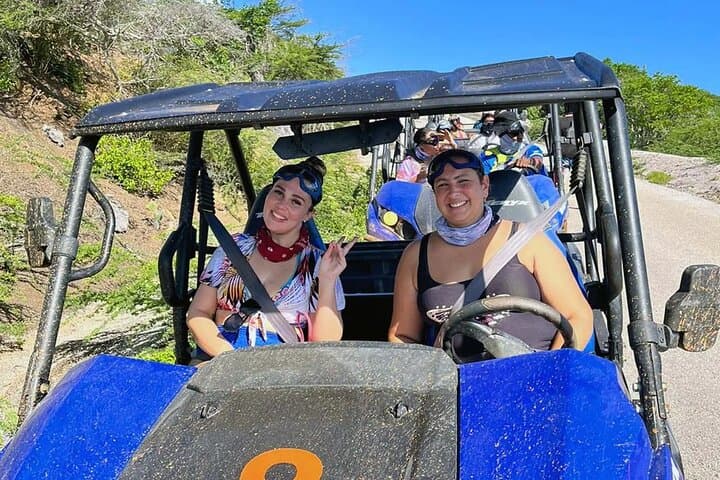
Practical edge: the tour runs about three hours and starts at the Dreams Hotel parking lot in Willemstad. The operator supplies a two-seater ATV and a mandatory safety briefing — drivers must be 21+ with a valid driver’s license; passengers must be at least 12 years old and 1.20 meters tall. Terrain alternates between hard limestone, rutted clay tracks and the flat, reflective salt pans; there’s light hiking if you want to explore the cave, and a final beach stop for swimming and rinsing off dust.
What to bring: closed-toe shoes, long-sleeve sun protection, a hydration pack and a towel for the ocean dip. Expect sun, wind and salt spray; sunglasses and a bandana will keep dust from settling into your teeth. Fitness matters — you’ll be on uneven ground and managing an ATV for hours. The reward is immediate: salt flats that dare you to step closer, a cave that cools like a pocket of shade, and Kokomo’s water where the day ends in salt-laced laughter.
challenging.
3 hours.
Suitable for people with good cardiovascular fitness and core strength; expect extended periods managing an ATV over uneven terrain.
All riders meet at the Dreams Hotel parking lot in Willemstad; check-in begins 20–30 minutes prior to the scheduled departure.
Yes — drivers must be at least 21 years old and hold a valid driver’s license; passengers need to be at least 12 years old and 1.20 m tall.
The operator requires a safety briefing before departure and provides helmets and basic protective gear as part of the ATV rental.
Novice riders can participate but should have a reasonable fitness level and follow the instructor’s guidance; the route includes rutted clay and uneven limestone.
Yes — the tour ends at Kokomo Beach where you can swim in clear water; bring a towel and a change of clothes.
The tour runs in most weather but heavy storms may prompt rescheduling; cancellation rules typically require 24-hour notice for a full refund.
The western coast’s salt flats and limestone formations were shaped by sea level changes and historical salt production that supported local communities for centuries.
Stick to the marked tracks to avoid fragile salt-flat crusts and nesting grounds; operators emphasize minimal disturbance to birdlife and shoreline habitats.
BlueFinn Charters operates guided outdoor trips and adventures with an emphasis on safety, stewardship, and memorable experiences.

The engine kicks, gravel spits from the rear tires and the island’s wind takes the dust into long, bleaching plumes. On the Go West ATV tour you aren’t an observer — you’re the one making the tracks. For three hours you’ll race across Curaçao’s clay desert, dip into salt flats where flamingos pick at the shallows, slip through a natural cave and end the romp with a swim at Kokomo Beach.
The engine kicks, gravel spits from the rear tires and the island’s wind takes the dust into long, bleaching plumes. On the Go West ATV tour you aren’t an observer — you’re the one making the tracks. For three hours you’ll race across Curaçao’s clay desert, dip into salt flats where flamingos pick at the shallows, slip through a natural cave and end the romp with a swim at Kokomo Beach.
This stretch of western Curaçao feels older than the boardwalks of Willemstad: the rocks here are part of the Middle of Curaçao Formation, a hard, sculpted limestone horizon that records the island’s volcanic past and the slow hand of the sea. The clay “desert” is not sand so much as wind-scoured earth that grips tires and throws up textures. Salt pans—man-made and natural—collect water in shallow sheets and become temporary mirrors, and in the right season flamingos wade like living punctuation marks against the white crust.
The island’s culture threads through the landscape. Small fishing hamlets and coral-stone ruins keep the memory of colonial salt extraction and plantation-era routes. Locals in Papiamentu will wave at the convoy; stop briefly and you’ll hear stories about how beaches are local meeting places at sunset. Geology and human history intersect here: caves used by indigenous Arawak people and later by sailors still show faint marks of hands and shelter.
Practical edge: the tour runs about three hours and starts at the Dreams Hotel parking lot in Willemstad. The operator supplies a two-seater ATV and a mandatory safety briefing — drivers must be 21+ with a valid driver’s license; passengers must be at least 12 years old and 1.20 meters tall. Terrain alternates between hard limestone, rutted clay tracks and the flat, reflective salt pans; there’s light hiking if you want to explore the cave, and a final beach stop for swimming and rinsing off dust.
What to bring: closed-toe shoes, long-sleeve sun protection, a hydration pack and a towel for the ocean dip. Expect sun, wind and salt spray; sunglasses and a bandana will keep dust from settling into your teeth. Fitness matters — you’ll be on uneven ground and managing an ATV for hours. The reward is immediate: salt flats that dare you to step closer, a cave that cools like a pocket of shade, and Kokomo’s water where the day ends in salt-laced laughter.