THE ADVENTURE COLLECTIVE® · Independent discovery and booking for outdoor travel

Learn to ride Vietnam’s accessible beach breaks on a 90-minute surf lesson in Da Nang and Hoi An. Expect hands-on coaching, softboards and morning lineups that favor beginners and returning surfers alike.
Learn to ride Vietnam’s accessible beach breaks on a 90-minute surf lesson in Da Nang and Hoi An. Expect hands-on coaching, softboards and morning lineups that favor beginners and returning surfers alike.
The Pacific roars along Vietnam's central shoreline and the morning lineup along Da Nang and Hoi An feels alive: low, glassy waves pushing toward sandy shallows, fishermen untangling nets behind you, and a humid breeze that lifts the salt from the sea. A surf class here places you in that moving scene—on a softboard, paddling into shoulder-high breaks while an instructor times the push that turns a flat paddle into forward motion.
Verified experiences and guided adventures in the surrounding area.
Operated by Go Surfing · Da Nang, Da Nang
The Pacific roars along Vietnam's central shoreline and the morning lineup along Da Nang and Hoi An feels alive: low, glassy waves pushing toward sandy shallows, fishermen untangling nets behind you, and a humid breeze that lifts the salt from the sea. A surf class here places you in that moving scene—on a softboard, paddling into shoulder-high breaks while an instructor times the push that turns a flat paddle into forward motion.
Geologically, the coast is a sweep of recent alluvial plain interrupted by the limestone outcrops of the Marble Mountains and the volcanic headland of Son Tra—features that shape local currents and create consistent, user-friendly beach breaks. Culturally, surfing sits beside centuries-old maritime life; Hoi An’s riverfront traders once followed similar swell patterns for small-boat navigation, and modern surf schools now bring an international line-up to these beaches.
Expect a 90-minute lesson focused on safety, pop-up drills, and guided wave attempts. Instructors typically provide rash vests and softboards; sessions accommodate beginners and those refining basics. Timing matters: early morning or late afternoon offers smaller crowds and cleaner lines, while onshore afternoon winds can chop the water.
Practical guidance: be comfortable in waist-deep water, practice basic paddling and the pop-up on sand before entering waves, and protect skin with reef-safe sunscreen. Hydrate, watch local flags and listen to instructors about rip currents. After the session, explore a quiet stretch of sand or a local seafood stall—surf here blends straightforward ocean learning with tangible local rhythm.
moderate.
1.5 hours.
Moderate; you should be able to swim and handle repeated paddling and short bursts of exertion
No—classes cater to first-timers and those refining basics; instructors start with land drills then move into small, supervised waves.
Instructors cover rip current recognition, basic wave etiquette and when to bail; always follow their guidance and remain within supervised zones.
Yes—most schools supply soft-top boards and rash vests; bring your own swimwear and sunscreen.
Early morning or late afternoon offers the cleanest conditions; onshore winds typically pick up midday and can make waves choppy.
The coastline served centuries of small-boat trade; Hoi An’s river port once connected this stretch to wider Southeast Asian maritime routes, influencing coastal settlements.
Use reef-safe sunscreen and avoid trampling dune vegetation; local operators commonly support beach clean-ups to reduce plastic and preserve nearby marine life.
Go Surfing operates guided outdoor trips and adventures with an emphasis on safety, stewardship, and memorable experiences.



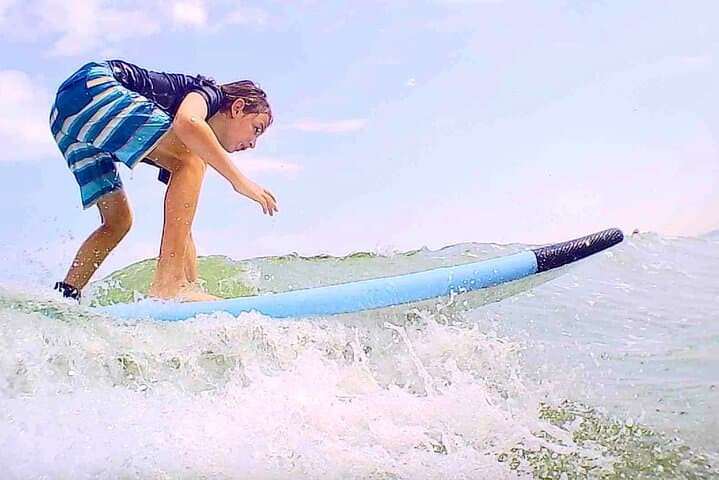
The Pacific roars along Vietnam's central shoreline and the morning lineup along Da Nang and Hoi An feels alive: low, glassy waves pushing toward sandy shallows, fishermen untangling nets behind you, and a humid breeze that lifts the salt from the sea. A surf class here places you in that moving scene—on a softboard, paddling into shoulder-high breaks while an instructor times the push that turns a flat paddle into forward motion.
The Pacific roars along Vietnam's central shoreline and the morning lineup along Da Nang and Hoi An feels alive: low, glassy waves pushing toward sandy shallows, fishermen untangling nets behind you, and a humid breeze that lifts the salt from the sea. A surf class here places you in that moving scene—on a softboard, paddling into shoulder-high breaks while an instructor times the push that turns a flat paddle into forward motion.
Geologically, the coast is a sweep of recent alluvial plain interrupted by the limestone outcrops of the Marble Mountains and the volcanic headland of Son Tra—features that shape local currents and create consistent, user-friendly beach breaks. Culturally, surfing sits beside centuries-old maritime life; Hoi An’s riverfront traders once followed similar swell patterns for small-boat navigation, and modern surf schools now bring an international line-up to these beaches.
Expect a 90-minute lesson focused on safety, pop-up drills, and guided wave attempts. Instructors typically provide rash vests and softboards; sessions accommodate beginners and those refining basics. Timing matters: early morning or late afternoon offers smaller crowds and cleaner lines, while onshore afternoon winds can chop the water.
Practical guidance: be comfortable in waist-deep water, practice basic paddling and the pop-up on sand before entering waves, and protect skin with reef-safe sunscreen. Hydrate, watch local flags and listen to instructors about rip currents. After the session, explore a quiet stretch of sand or a local seafood stall—surf here blends straightforward ocean learning with tangible local rhythm.