THE ADVENTURE COLLECTIVE® · Independent discovery and booking for outdoor travel

Paddle through mangrove tunnels in clear, LED-lit kayaks and watch marine life come alive beneath your hull. This 2–2.5 hour guided tour focuses on observation, local ecology and gentle paddling—ideal for nature-minded travelers.
Paddle through mangrove tunnels in clear, LED-lit kayaks and watch marine life come alive beneath your hull. This 2–2.5 hour guided tour focuses on observation, local ecology and gentle paddling—ideal for nature-minded travelers.
Night folds over the gulf and the water answers with tiny stars—only these are living things, silhouetted beneath a clear hull. Guests slide into LED-lit transparent kayaks and paddle slowly into mangrove tunnels where roots arc like ribs and the current nudges you along. Light from the boats pulls plankton, minnows and the occasional passing crab into view, turning the shallow seagrass flats into a moving aquarium that nearly feels inquisitive.
Verified experiences and guided adventures in the surrounding area.
Operated by Get Up And Go Kayaking - Fort Pierce · Sanibel, Florida
Night folds over the gulf and the water answers with tiny stars—only these are living things, silhouetted beneath a clear hull. Guests slide into LED-lit transparent kayaks and paddle slowly into mangrove tunnels where roots arc like ribs and the current nudges you along. Light from the boats pulls plankton, minnows and the occasional passing crab into view, turning the shallow seagrass flats into a moving aquarium that nearly feels inquisitive.
The islands of southwest Florida were shaped by sea-level changes and sediment from the Caloosahatchee; mangroves grew where salt and fresh water meet and have long sheltered both wildlife and the region’s fishing culture. Local guides typically weave in natural history—how mangroves trap sand, why juvenile fish rely on root systems, and the role of nearby preserves like the J.N. "Ding" Darling refuge in protecting bird populations.
Practically, the tour lasts about 2–2.5 hours and is paced for observation rather than speed. Guides supply life vests, dry bags and basic paddling coaching; there’s a 250 lb per-person weight limit and 425 lb per tandem kayak cap. Expect narrow, shaded channels, occasional low branches and tidal shifts that affect access. Bring a refillable water bottle, quick-dry clothing and a light jacket for breezy evenings. If you go after dusk, the LED glow makes marine life easier to see but keep movements measured—sudden splashes scatter the animals. The route is family-friendly for those comfortable in kayaks and rewards patience with close-up views of manatees, wading birds and schools of fish.
moderate.
2–2.5 hours.
Moderate fitness for steady paddling and occasional re-positioning in shallow water; suitable for active beginners.
Yes—tours are guided, include life vests and basic instruction; the boats are stable and designed for observation rather than speed.
Expect wading birds, mullet and small reef fish; manatees and turtles are possible depending on season and tides.
Children can join but must sit on an adult’s lap if infants; operators often set age or weight guidelines—check when booking.
No—guides teach basic paddling and safety, but guests should be comfortable in open water and able to follow instructions.
The coast was historically used by indigenous Calusa communities and later developed for fishing and shelling; conservation efforts in the 20th century established refuges to protect bird and marine habitats.
Mangroves are protected for shoreline stabilization and nursery habitat—stay in designated channels, avoid trampling roots and follow guide instructions to minimize disturbance.
Get Up And Go Kayaking - Fort Pierce operates guided outdoor trips and adventures with an emphasis on safety, stewardship, and memorable experiences.
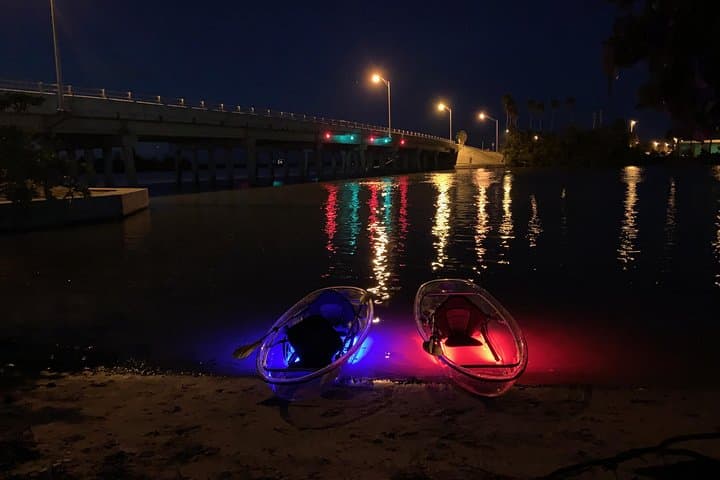
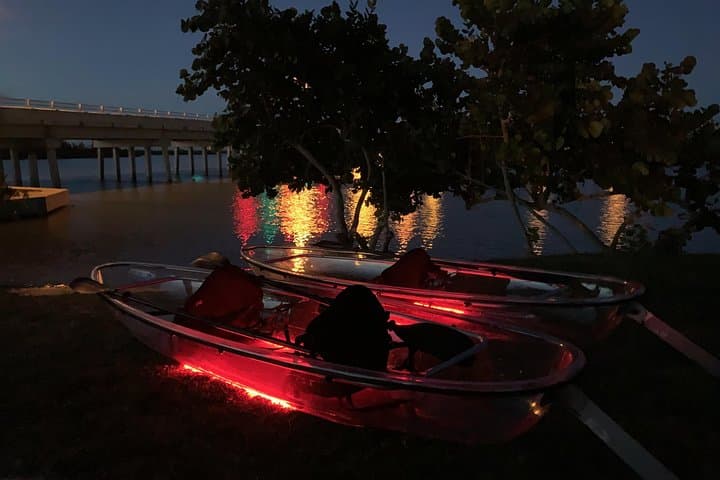
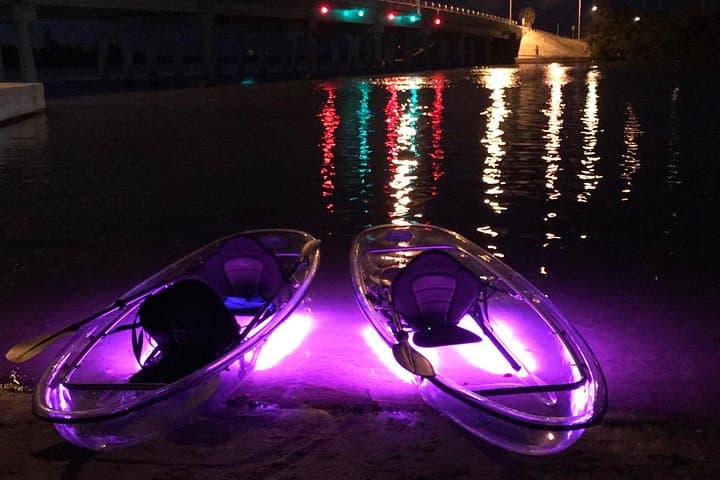
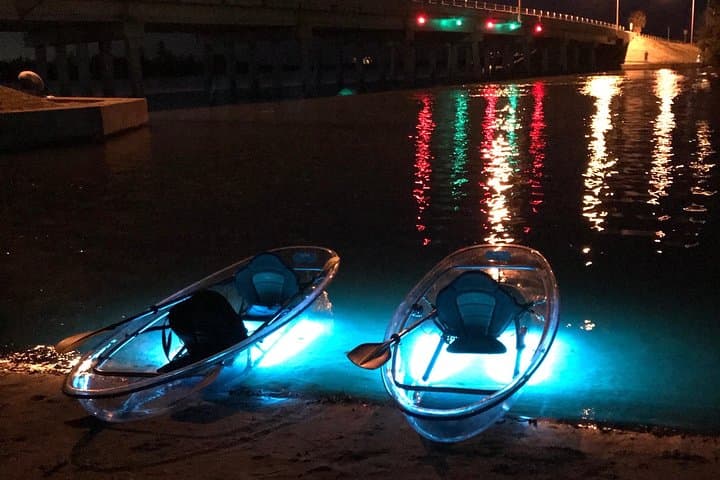
Night folds over the gulf and the water answers with tiny stars—only these are living things, silhouetted beneath a clear hull. Guests slide into LED-lit transparent kayaks and paddle slowly into mangrove tunnels where roots arc like ribs and the current nudges you along. Light from the boats pulls plankton, minnows and the occasional passing crab into view, turning the shallow seagrass flats into a moving aquarium that nearly feels inquisitive.
Night folds over the gulf and the water answers with tiny stars—only these are living things, silhouetted beneath a clear hull. Guests slide into LED-lit transparent kayaks and paddle slowly into mangrove tunnels where roots arc like ribs and the current nudges you along. Light from the boats pulls plankton, minnows and the occasional passing crab into view, turning the shallow seagrass flats into a moving aquarium that nearly feels inquisitive.
The islands of southwest Florida were shaped by sea-level changes and sediment from the Caloosahatchee; mangroves grew where salt and fresh water meet and have long sheltered both wildlife and the region’s fishing culture. Local guides typically weave in natural history—how mangroves trap sand, why juvenile fish rely on root systems, and the role of nearby preserves like the J.N. "Ding" Darling refuge in protecting bird populations.
Practically, the tour lasts about 2–2.5 hours and is paced for observation rather than speed. Guides supply life vests, dry bags and basic paddling coaching; there’s a 250 lb per-person weight limit and 425 lb per tandem kayak cap. Expect narrow, shaded channels, occasional low branches and tidal shifts that affect access. Bring a refillable water bottle, quick-dry clothing and a light jacket for breezy evenings. If you go after dusk, the LED glow makes marine life easier to see but keep movements measured—sudden splashes scatter the animals. The route is family-friendly for those comfortable in kayaks and rewards patience with close-up views of manatees, wading birds and schools of fish.